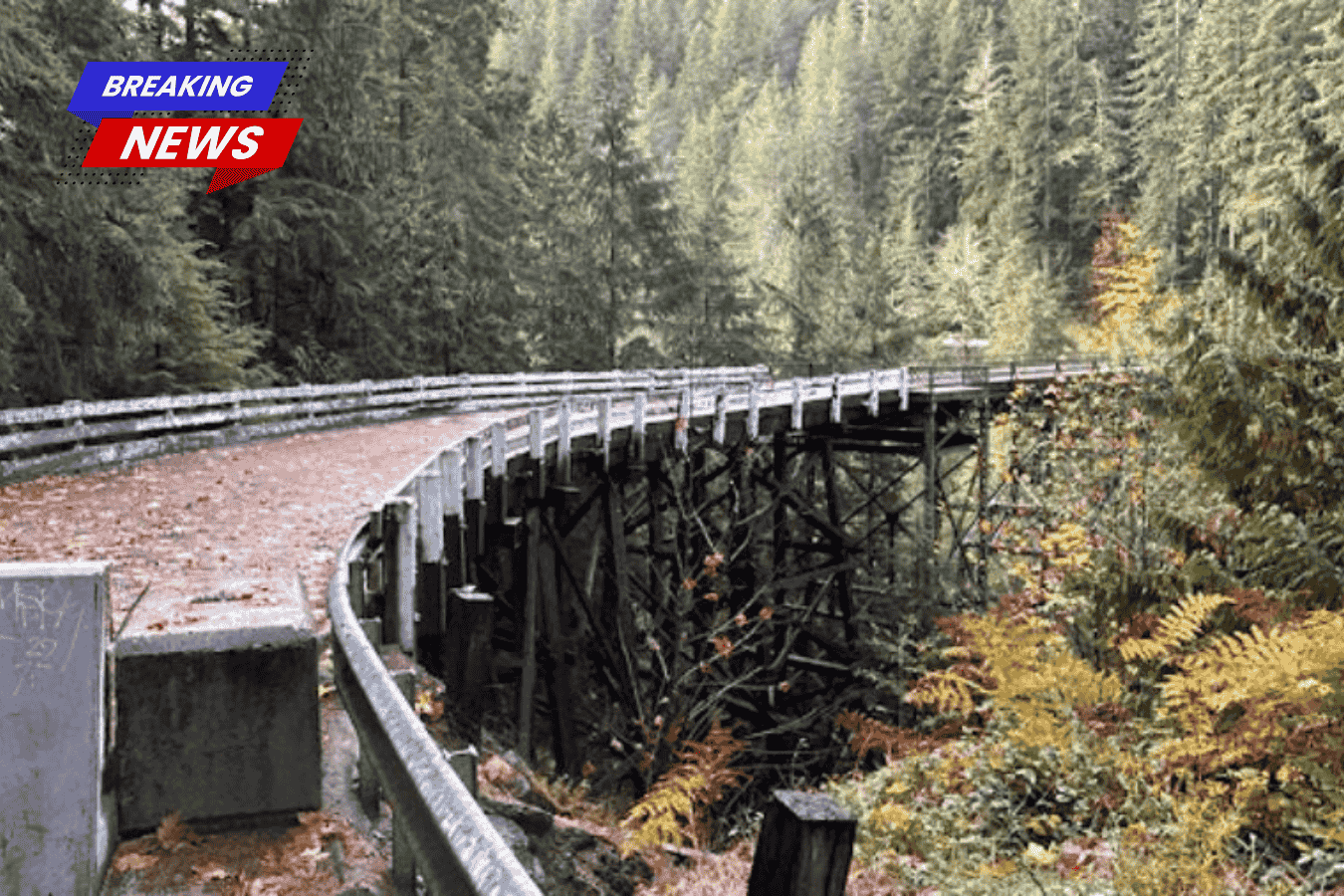
For over a century, the Carbon River Bridge in Washington’s Pierce County served as a vital link for people living in the small towns of Carbonado and Wilkeson, near Mt. Rainier. But after being shut down due to safety concerns, the future of this historic bridge remains unclear—and residents are still left waiting for a permanent solution.
Why the Bridge Was Closed
In early 2024, engineers found serious structural damage on the 104-year-old bridge. One of the support columns was buckling, and several steel plates that held the bridge’s wooden beams together had badly deteriorated. Because of this, the bridge was declared unsafe and shut down. Since then, the communities south of the Carbon River have had no direct public road access across the canyon.
Temporary Bypass, But No Long-Term Fix Yet
After the closure, officials arranged a temporary nine-mile bypass route using a private gravel logging road. This gated path was made possible with help from five private landowners who agreed to let residents pass through. Keys were issued to locals, but the road is not open to the general public and is not meant to be a long-term fix.
The state has also partnered with the Department of Commerce to install automatic gates on this bypass route for better security and easier access in the future.
The Delay: Environmental and Geological Studies
Unfortunately, any permanent solution is still years away. Washington State Department of Transportation (WSDOT) says that a required environmental study—mandated under the National Environmental Policy Act (NEPA)—could take up to two more years. This law requires agencies to study how the new bridge might affect the environment before any construction begins.
At the same time, geological testing is also needed to check if the land in this steep, forested area is stable enough to support a new bridge. This part of the process will take six to twelve months because it’s hard to even get heavy equipment like drill rigs into the area due to the rough terrain.
Three Main Options on the Table
WSDOT has completed a planning study that outlines three possible paths forward:
- Demolish the current bridge and rebuild at the same location
- Construct a new bridge slightly north of the current one
- Do not replace the bridge at all and permanently close the highway
Of these, permanently closing the road was the least supported option. In open house meetings and online surveys, over 2,800 people submitted feedback, with most strongly opposing a full closure.
Historical Significance of the Bridge
There’s another factor slowing things down: the bridge is listed in the National Register of Historic Places. That means it falls under Section 106 of the National Historic Preservation Act, which requires special care to preserve historical sites. Any decision involving demolition or major change must go through additional reviews to ensure the historic value is respected.
What’s Next for the Carbon River Bridge
While it may take another two years to finish all the required studies and paperwork, the state is preparing to move forward. $7 million from the 2025–27 Transportation Budget has been set aside to transition from planning to design and environmental reviews.
Officials are working to make sure whatever decision is made will serve both the environment and the people who rely on this bridge every day.