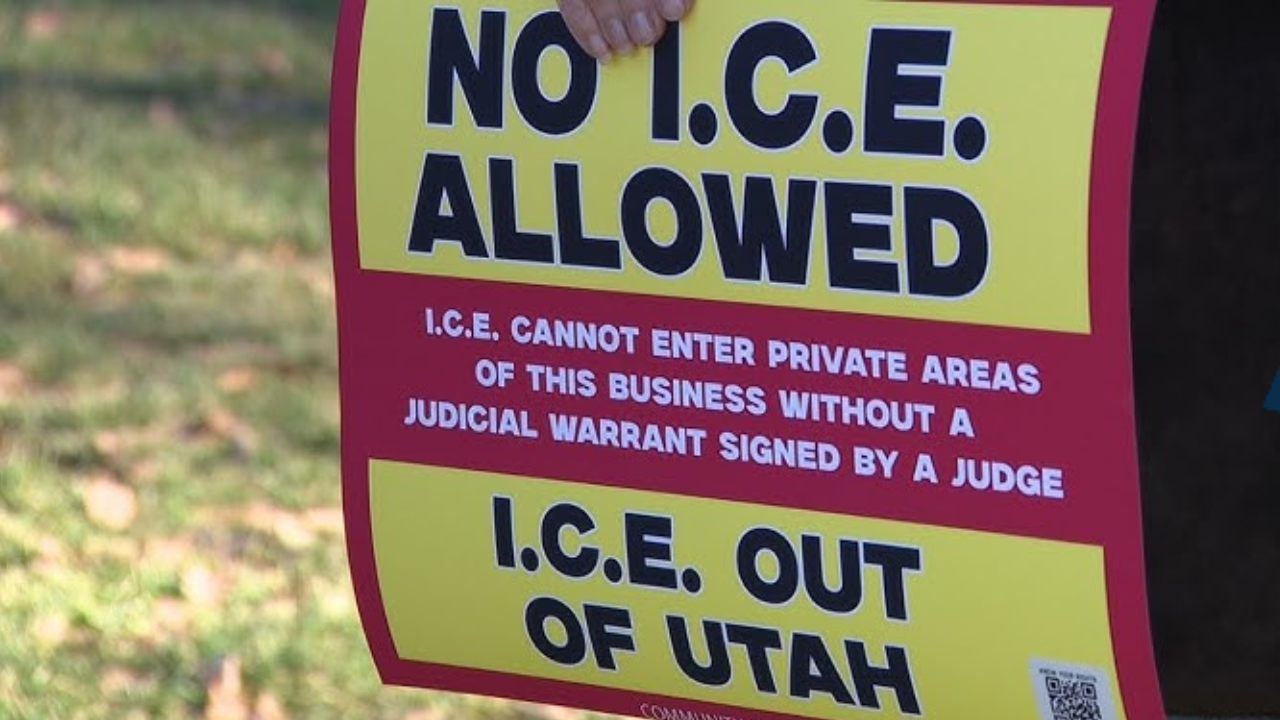
Multiple businesses throughout West Valley City have begun displaying signs restricting Immigration and Customs Enforcement access following months of heightened detention activity across Utah. The grassroots campaign represents a coordinated community response to what advocacy organizations describe as concerning enforcement patterns.
Advocacy Groups Launch Sign Distribution Campaign
Local advocacy organizations Salt Lake Indivisible and Comunidades Unidas initiated the sign distribution effort after observing similar initiatives in other states. Sarah Buck, representing Salt Lake Indivisible, explained that her organization researched programs elsewhere and adapted the concept for Utah communities.
The signs feature straightforward messaging stating “No entry for I.C.E.” along with a QR code directing users to a website containing detailed guidance about interacting with immigration enforcement agents. This digital component provides businesses and individuals with accessible legal information during potentially stressful encounters.
Buck emphasized that the signs serve educational purposes beyond simple prohibition. They help property owners understand their rights and the legal distinctions between different types of warrants that immigration agents might present.
Legal Distinctions Between Warrant Types
A critical component of the advocacy campaign involves educating community members about warrant requirements for immigration enforcement. Buck explained that ICE agents often arrive with administrative warrants issued by Homeland Security, which differ significantly from judicial warrants in their legal authority.
Administrative warrants from Homeland Security do not compel property owners to grant agents access to private workplaces or residences. These documents represent internal agency paperwork rather than court orders carrying judicial authority. Property owners maintain the legal right to refuse entry when agents present only administrative documentation.
Federal warrants issued by judges carry substantially greater legal weight and create different obligations for property owners. The educational materials provided through the QR code include visual examples of both warrant types, enabling businesses and individuals to recognize these crucial distinctions during actual encounters.
Understanding these legal nuances empowers community members to assert their rights appropriately while avoiding actions that could create legal complications. The advocacy organizations emphasize that people should never feel obligated to grant access based on administrative paperwork alone.
Widespread Business Participation
Salt Lake Indivisible has distributed hundreds of signs throughout the region, with Buck reporting strong receptivity from business owners. While not every establishment currently displays the signs publicly, nearly all businesses approached accepted the materials, suggesting broad support for the initiative even among those choosing discretion.
This acceptance rate indicates that concerns about immigration enforcement extend across the business community, affecting establishments serving diverse customer bases. Business owners must balance multiple considerations including supporting their communities, protecting employees, and managing potential economic or political implications of taking public stances.
Some businesses may choose to keep signs available without prominent display, ready to post them if situations warrant. This approach allows flexibility while maintaining access to the educational resources the signs provide.
Community Training Sessions Address Enforcement Encounters
Beyond sign distribution, Salt Lake Indivisible conducts training sessions throughout the Salt Lake area teaching community members practical strategies for responding to ICE presence. These sessions cover legal rights, communication techniques, and coordinated response methods.
One distinctive element involves “whistle training,” where participants learn to use whistles as alert systems when immigration agents appear in neighborhoods or commercial areas. This audible warning system enables rapid community notification, allowing people to take protective actions or gather witnesses to document encounters.
The whistle system reflects organizing traditions used by immigrant communities worldwide to create mutual protection networks. By coordinating responses, communities can ensure that enforcement actions don’t occur in isolation without witnesses or documentation.
Training sessions also thoroughly review individual rights during ICE encounters, including the right to remain silent, the right to refuse consent for searches, and the importance of not signing documents without legal counsel. These sessions emphasize that both citizens and non-citizens possess constitutional protections during law enforcement interactions.
Community Members Express Concerns
Residents outside the Citizenship and Immigration Services office in Salt Lake City shared their perspectives on recent detention activities. Black Mowen questioned the detention facility conditions, describing the situation as “sketchy” and raising concerns about how detained individuals are treated.
Christian Fleshier, a local resident assisting friends with asylum applications, expressed being “sickened” by social media videos showing some ICE arrests. His comments reflect broader anxiety within communities affected by immigration enforcement, where even people pursuing legal immigration pathways express fear of detention.
Fleshier’s experience highlights how enforcement activities create ripple effects beyond their immediate targets. People engaged in legitimate immigration processes report feeling unsafe and uncertain, even when following proper legal procedures. This atmosphere of fear affects entire communities regardless of individual immigration status.
Asylum Seekers Navigate Uncertain Environment
The concerns expressed by community members reflect particular anxieties among asylum seekers and others pursuing legal immigration remedies. Asylum represents a legitimate legal pathway protected under both domestic and international law, yet applicants report feeling vulnerable to detention despite their legal status.
The asylum process requires individuals to physically present themselves to immigration authorities and navigate complex bureaucratic procedures over extended periods. During this time, applicants often live in communities while awaiting hearings and decisions, creating situations where they must balance legal obligations with practical safety concerns.
The current enforcement climate has reportedly intensified anxiety among asylum applicants who fear that routine interactions with immigration systems could result in detention despite their legal standing. This environment potentially discourages people from pursuing legitimate legal remedies, creating counterproductive outcomes for immigration system integrity.
Advocacy Organizations Critique Enforcement Approach
Buck characterized recent arrests across the country as unnecessary, disruptive, and inhumane. These strong criticisms reflect broader debates about immigration enforcement priorities and methods that have intensified in recent years.
Advocates argue that enforcement resources should focus on individuals presenting genuine public safety threats rather than conducting broad sweeps affecting people integrated into communities, employed in legitimate jobs, and raising families. They contend that current approaches separate families, disrupt businesses, and create fear within entire communities.
Critics of aggressive enforcement also question whether the substantial resources dedicated to these operations produce proportionate public benefits. They argue that immigration system resources might be better allocated to processing applications, clearing backlogs, and creating functional legal pathways rather than conducting large-scale detention operations.
Call for Local Government Response
Advocacy organizations hope that local lawmakers will address immigration enforcement concerns through policy actions within their authority. While immigration enforcement represents a federal responsibility, local governments maintain some discretion about cooperation with federal immigration authorities.
Some jurisdictions have implemented policies limiting how local law enforcement interacts with ICE, establishing protocols for warrant verification, or restricting use of local resources for immigration enforcement purposes. These policies attempt to balance federal immigration authority with local community safety and trust concerns.
Buck’s call for local government action reflects a broader strategy employed by immigration advocacy organizations nationwide. By engaging city councils, county commissions, and state legislatures, advocates seek to influence immigration enforcement impacts even when they cannot directly change federal policies.
Legal Rights and Constitutional Protections
The educational campaign emphasizes that constitutional protections apply regardless of immigration status. The Fourth Amendment protects against unreasonable searches and seizures for all people within United States territory, not just citizens. The Fifth Amendment right against self-incrimination similarly applies universally.
These constitutional protections mean that individuals can decline to answer questions, refuse consent for searches, and insist on speaking with attorneys before making statements. While immigration status affects certain legal remedies available to individuals, it does not eliminate fundamental constitutional rights during law enforcement encounters.
Understanding these rights proves crucial because immigration enforcement sometimes occurs in contexts where people feel pressured to comply immediately without considering their legal options. The advocacy campaign aims to ensure community members know they can assert protections even during stressful encounters.
Business Owner Considerations
Business owners displaying these signs or implementing related policies must consider various legal and practical implications. While they have rights to control access to their private property, they must also ensure compliance with employment verification requirements and other legal obligations.
The signs and educational materials help business owners navigate these competing considerations by clearly explaining what they must do versus what they can choose to do. This clarity enables informed decision-making about how to respond to different scenarios.
Business owners should also consider consulting with legal counsel about their specific situations, as circumstances vary significantly based on business types, lease agreements, and other factors. The advocacy organizations providing signs emphasize they offer general education rather than specific legal advice for individual situations.
Broader Immigration Enforcement Debate
This local campaign unfolds within national debates about immigration enforcement priorities, methods, and impacts. Different perspectives exist regarding appropriate enforcement approaches, balancing public safety, humanitarian concerns, economic impacts, and rule of law considerations.
Supporters of robust enforcement argue that maintaining immigration system integrity requires consistent consequences for violations and that enforcement activities target individuals who have circumvented legal processes. They contend that countries must maintain secure borders and functional immigration systems.
Advocates emphasizing humanitarian concerns argue that enforcement methods should consider individual circumstances, prioritize family unity, and focus on serious public safety threats rather than broad sweeps. They emphasize the human impacts of enforcement actions and question whether current approaches achieve stated policy objectives.
Community Impact and Social Cohesion
Immigration enforcement activities affect entire communities beyond individuals directly targeted. Families experience separation, children face trauma, businesses lose employees, and neighborhoods develop atmospheres of fear and distrust that undermine social cohesion.
These broader impacts create challenges for community institutions including schools, healthcare providers, and social services that serve diverse populations. When community members fear interaction with any government authorities, they may avoid accessing services, reporting crimes, or participating in civic life.
The sign campaign and training sessions represent attempts to maintain community cohesion and mutual support during periods of heightened enforcement activity. By providing information and creating solidarity networks, advocacy organizations work to prevent enforcement activities from fracturing community bonds.