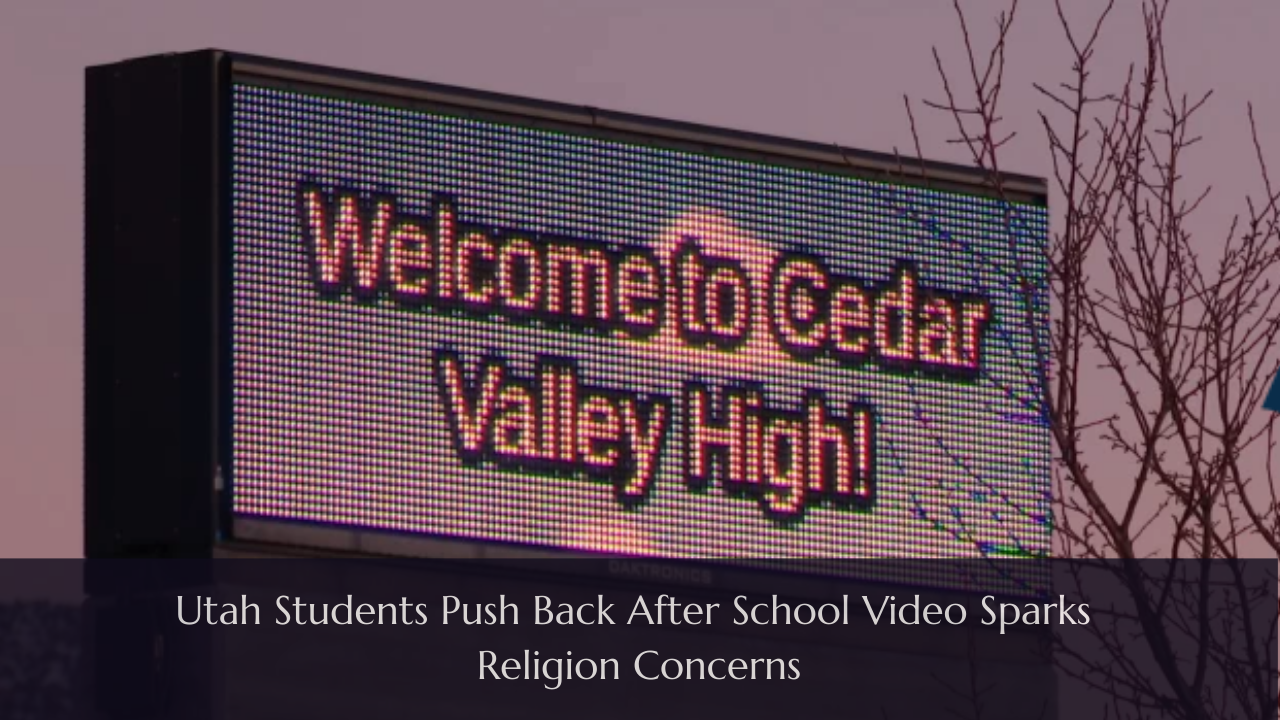
Students and families in Eagle Mountain, Utah, are raising concerns after Cedar Valley High School required students to watch a video that critics describe as overtly religious. The controversy has now drawn in a national church and state watchdog group, which argues the school’s actions may violate constitutional limits on religious promotion in public schools.
What Students Say Happened
According to accounts shared with local media, the video was shown to students at Cedar Valley High School on November 17, 2025, and later posted on official school social media pages. It has since been removed, but the situation continued to grow after students and families began questioning why a public school administrator’s message included religious themes and personal spiritual framing.
The central complaint is not about a private person sharing faith in a personal setting. The complaint is about the message being delivered through a school platform and, reportedly, being presented as a required viewing for students during school time.
What the Video Allegedly Included
The video, titled “The Refiner’s Fire,” featured Cedar Valley High School assistant principal Scott Mansfield speaking directly to students. The message focused on work ethic and discipline, but it also included language referring to heaven, sin, and moral worth tied to diligence, according to reporting and the formal complaint letter.
One part that drew sharp criticism connected emotional struggles with effort, implying that feelings like sadness or depression could be the result of not working hard enough. Some students and families said that framing felt dismissive and harmful, especially for teens dealing with mental health challenges.
Why a Legal Group Got Involved
The Freedom From Religion Foundation (FFRF), a national nonprofit focused on church and state separation, sent a letter to the school district after a student’s family member raised concerns. The letter argues that it is unconstitutional for a public school to produce and promote a video that appears to preach a staff member’s personal religious beliefs, and then require students to watch it.
FFRF’s position is based on a long-running principle in U.S. public education: schools must remain neutral on religion. Students can hold and express religious beliefs, but a public school cannot pressure students toward religious belief or present religious teaching as part of official messaging. Federal guidance from the U.S. Department of Education similarly describes limits on school-sponsored religious activity while protecting students’ individual rights.
Concerns Go Beyond Religion
While the debate began with religion, many complaints also focused on student wellbeing.
Families who objected said the message about sadness and hard work could land badly in a high school environment, where students may already feel pressure, burnout, and anxiety. In their view, a school video should not suggest that emotional pain is simply a discipline problem.
This part of the controversy matters because it shifts the story from a narrow legal argument into a broader question: what kind of messaging should schools use when speaking to students as an entire community?
District Response: Video Removed, Regret Expressed
In a statement shared with local media, district officials said the video was taken down after administrators met with concerned students. The district also said it was not the intention of the administrator in the video to push religious beliefs or make students feel bad about themselves.
The statement included language about being a learning organization, improving over time, and offering grace to people trying to do better. It also said the district regretted any hurt feelings that resulted from the video.
FFRF has said it wants to learn more about how the district investigated the issue and what steps will be taken to prevent similar situations in the future.
Why This Story Is Getting Attention
This situation is resonating for three reasons:
First, it involves the core boundary between personal belief and public authority. When a message comes from an administrator and is shown in school, students may feel they must accept it, even if it conflicts with their family’s beliefs.
Second, it reflects how fast school content spreads now. A short video meant to encourage students can become a public controversy in a matter of hours once it is posted online.
Third, it highlights a growing sensitivity around student mental health messaging. Families want schools to promote resilience, but they also want empathy and care, especially when talking about sadness and depression.
What Happens Next
At this stage, there is no public indication of discipline or policy changes, but the district’s response suggests the issue is being taken seriously. If follow-up steps are announced, they will likely focus on clearer review processes for school-produced videos and guidance for staff on keeping official messaging neutral on religion.
Families looking for official updates can follow statements from the Alpine School District and related public communications. For more about church and state complaints and advocacy work, readers can reference the Freedom From Religion Foundation.