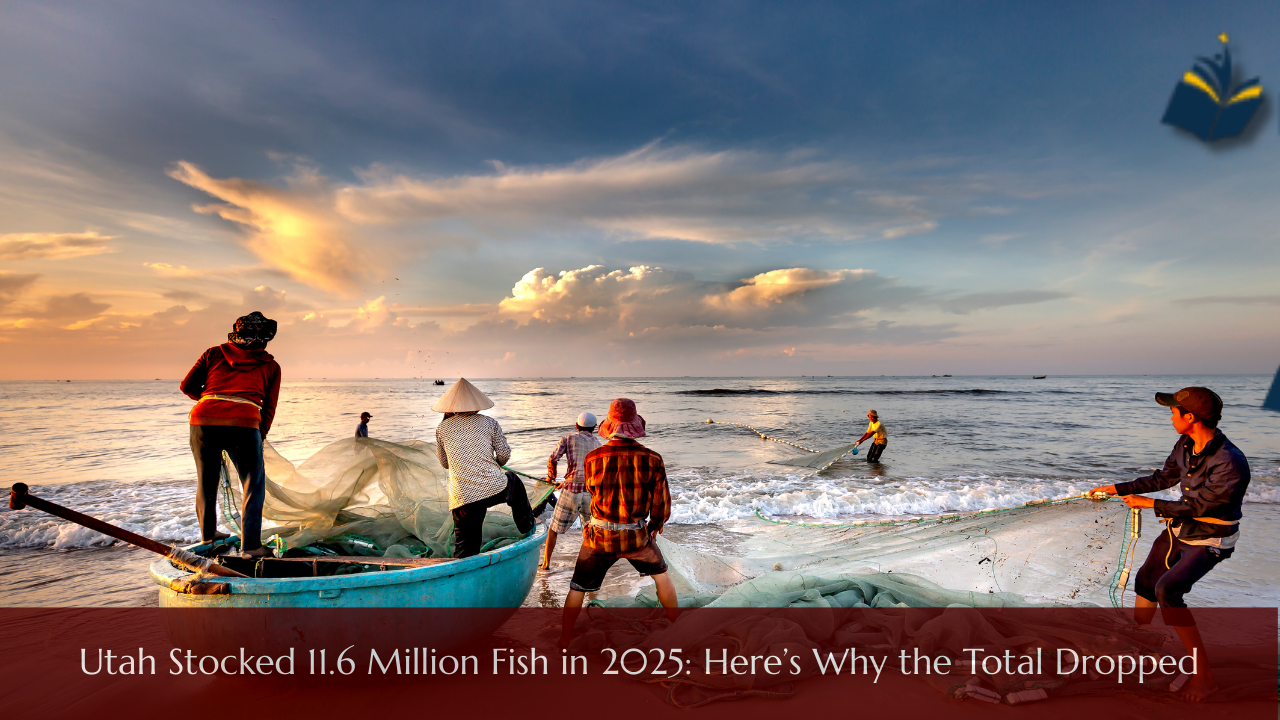
Utah continued its long-running fish stocking efforts in 2025, releasing more than 11.6 million fish into lakes, reservoirs, ponds, and rivers across the state. While the total was slightly lower than last year, wildlife officials say the numbers still reflect strong water conditions compared to most recent years.
According to state data, the fish stocked this year weighed a combined 1.1 million pounds, supporting both aquatic ecosystems and recreational fishing statewide.
Why Fish Stocking Declined Compared to 2024
The 2025 total represents a nearly 10% decrease from the number of fish stocked in 2024. However, officials emphasize that the decline does not signal reduced investment or poor conditions.
Utah’s reservoir system peaked at 87% capacity earlier this year. While that figure was just below 2024’s historic high of over 90%, it remained far better than conditions seen in 2023 and several years prior. Higher water levels allow the state to stock more fish, but changing conditions later in the year influenced final totals.
Water Levels Shape Stocking Decisions
Fish stocking in Utah is closely tied to water availability. Wildlife managers adjust both the number and size of fish based on reservoir levels and drought conditions.
During drier years, the state often stocks fewer but larger fish to improve survival rates. When water conditions are more stable, higher volumes of smaller fish can be released. This balancing act explains why 2025 stocking totals were lower than last year but still exceeded totals from most years since 2019.
Richard Hepworth, fish culture coordinator for the Utah Division of Wildlife Resources, said the agency continually evaluates how best to respond to drought impacts, rising water demand, and Utah’s growing population.
More details on fish management practices are available from the Utah Division of Wildlife Resources.
Hatcheries Remain the Backbone of the Program
More than 90% of the fish stocked in 2025 were raised at state-owned hatcheries. The remainder came from out-of-state hatcheries, continuing a fish culture tradition in Utah that dates back to the 1870s.
These hatcheries play a critical role in maintaining healthy fish populations and supporting angling opportunities across the state.
Drought Pressures Emerged Later in the Year
Although conditions were favorable early on, drought effects became more visible by fall. Utah’s reservoir system dropped to 60% capacity by October, following a hot and dry summer.
State water officials report that several large reservoirs are now at 20% capacity or less, highlighting ongoing challenges. Current reservoir and snowpack data are tracked by the Utah Division of Water Resources.
In response to low water levels, wildlife officials temporarily increased daily fishing limits at select locations to manage fish populations more effectively.
Snowpack Will Determine 2026 Outlook
Nearly 95% of Utah’s water supply depends on mountain snowpack and spring runoff. This winter’s snowpack is off to a slow start, and officials say it will be a key factor in determining how many fish can be stocked in 2026.
If snow accumulation improves, stocking numbers could rebound. If dry conditions persist, managers may again prioritize fish size over volume.
Final Takeaway
Utah’s release of 11.6 million fish in 2025 reflects careful planning rather than a setback. While totals dipped slightly from last year’s peak, they remain strong by historical standards. As water conditions evolve, wildlife officials say flexibility will remain essential to protecting fisheries and supporting anglers across the state.