
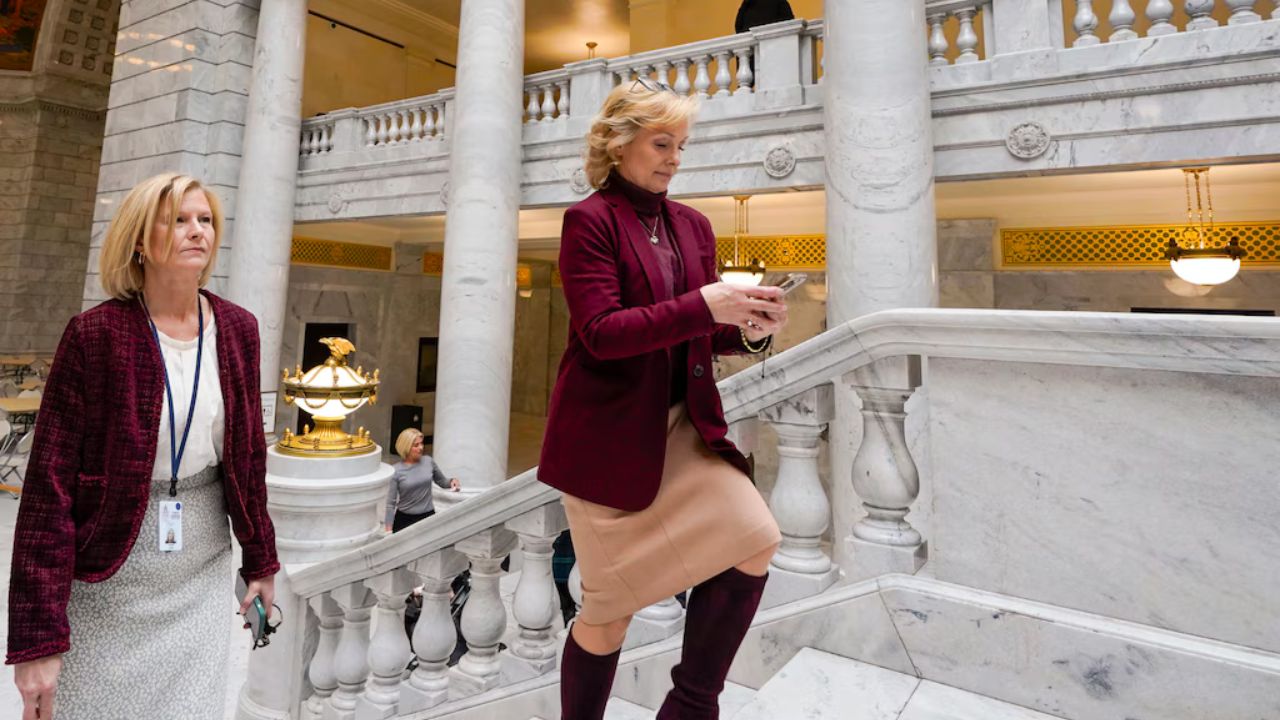
The Utah State Auditor office move has sparked a significant debate at the State Capitol, with questions emerging about transparency, governance, and audit independence. The controversy centers on relocating the elected auditor’s office away from the Capitol’s second-floor rotunda, a move critics say could weaken the visibility and autonomy of Utah’s fiscal watchdog.
Why the Office Relocation Matters
The dispute involves State Auditor Tina Cannon, whose office is being shifted from its long-held second-floor location to a new space on the Capitol’s first floor. Cannon has warned that this decision, made by the Capitol Preservation Board, could send the wrong message about the independence of her office—especially while her team is auditing hundreds of millions of dollars in Capitol construction spending.
At the heart of the issue is perception. Cannon argues that when elected officials control where the state auditor works, it risks undermining public confidence in the auditor’s oversight role.
Lawsuit Filed, Then Withdrawn After Revote
After learning that the Capitol Preservation Board planned to move her office, Cannon filed a petition in state court. She argued that the board’s September 15 agenda did not clearly disclose a vote on relocating the auditor’s office, potentially violating Utah’s Open and Public Meetings Act, which requires agendas to provide “reasonable specificity.”
In response, the board held a second meeting on Monday. Acting on legal advice, members voted again “out of an abundance of caution” to address any procedural concerns. This time, the agenda clearly referenced transferring the auditor’s suite. The board unanimously approved the move again.
Following that revote, Cannon announced she would withdraw her lawsuit, saying her primary goal was ensuring the decision was made openly and with full public awareness.
What Utah Law Says About the Auditor’s Space
Currently, the Utah State Auditor’s Office occupies a modest suite on the second-floor rotunda, alongside other executive-branch constitutional officers. However, a 2024 state law changed how that space is governed.
Under the law:
- The suite is assigned to the auditor only until a “substantially similar space” is provided elsewhere in the Capitol.
- Control of the original suite then reverts to the Legislature.
- The law also required a comprehensive Capitol space study before October 1, 2024, involving the governor, auditor, attorney general, treasurer, Senate president, and House speaker.
Cannon maintains that these provisions were meant to ensure she had meaningful input before any relocation. She says earlier draft plans showed her office remaining in its original location, leading her to believe the law’s protective intent was not honored.
Board attorneys and legislative leaders disagreed, stating the statute requires a study—not unanimous approval—and that the Capitol Preservation Board has final authority over office assignments.
Details of the Approved Move
The plan approved on December 15 relocates Cannon’s office to the first floor near the east public entrance, directly across from the state treasurer’s office. While supporters argue this location could still offer public visibility, Cannon and her staff say they have not yet received full floor plans or details about how the new space compares to their current suite.
Cannon has emphasized that the issue is not about square footage or furnishings, but about symbolism and process.
Independence Concerns Tied to a $327 Million Audit
Beyond office logistics, the timing of the move is especially sensitive. Cannon’s office is actively auditing Capitol construction projects, including a major expansion valued at approximately $327 million and adding around 180,000 square feet of new space.
Because the Capitol Preservation Board oversees both office assignments and the construction projects under audit, Cannon worries the relocation could cast doubt on the credibility of her findings.
To avoid any appearance of conflict, she is considering turning the audit over to an outside firm, even though doing so would discard existing work and increase costs. She says the decision comes down to preserving public trust in the audit’s independence.
A Legal Dilemma Over Representation
Cannon also faces a legal challenge in determining how to respond to the move. By law, the Utah Attorney General’s Office serves as her legal counsel. However, that same office also represents the Capitol Preservation Board, and Attorney General Derek Brown sits on the board that approved the relocation.
According to Cannon, she has been told she cannot hire private legal counsel to challenge the move. This overlapping representation leaves her uncertain how to protect both her personal rights and the institutional independence of the auditor’s office.
Public Support and Legislative Pushback
The board meeting drew an unusually large crowd, with about 50 attendees including staff, activists, and lawmakers. Several legislators spoke in support of Cannon, praising the auditor’s role in promoting transparency and questioning why part-time lawmakers should occupy more prominent offices than a full-time, statewide watchdog.
Legislative leaders responded that placing the auditor’s office near a main entrance could still highlight its importance to the public.
“Not My Favorite Day in Office”
Cannon acknowledged that her role often puts her at odds with the very officials she audits. She described the meeting as one of the most difficult days since taking office, underscoring the personal and professional strain that comes with defending audit independence.