
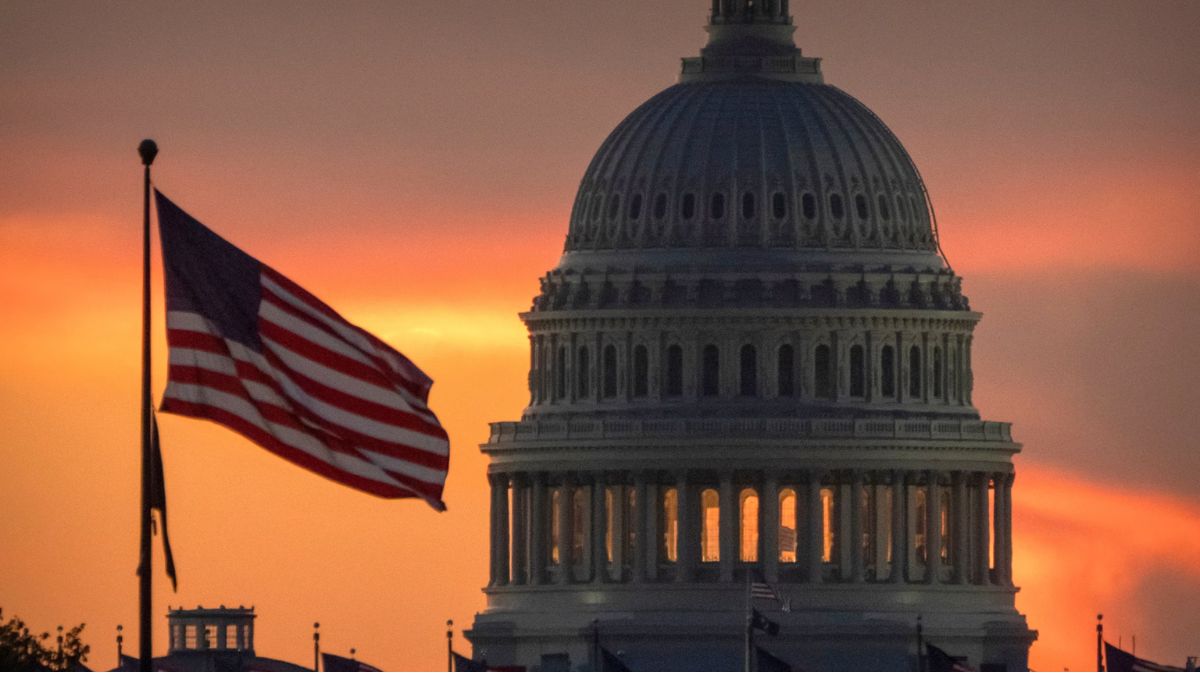
The federal government shutdown began on October 1, after lawmakers in the United States Senate failed to reach agreement on spending priorities.
Republicans rejected the Democrats’ push to protect funding for healthcare and social programmes, causing a funding lapse that has now dragged on for over 40 days.
During this time:
- Around 750,000 federal employees have been furloughed.
- Payment to hundreds of thousands of staff is delayed, as 14 separate funding measures have been blocked.
- The shutdown has become the longest in U.S. history.
Over the weekend, senators from both parties convened to try to restore funding, but negotiations on Saturday showed little sign of progress.
Disruptions to Air Travel
The shutdown is causing significant trouble for the aviation industry. Due to staffing shortages among unpaid air-traffic controllers, more than 1,530 flights were cancelled on Saturday across the U.S., with thousands more delayed. That number rose from about 1,025 cancellations the previous day.
The Federal Aviation Administration (FAA) reported that staffing shortages are affecting 42 control towers and other facilities, causing delays in major cities like Atlanta, Newark, San Francisco, New York and Chicago.
The ripple effects go beyond passengers: many commercial flights carry cargo alongside people, so shipping and deliveries are also hit. And as the busy holiday season approaches, lawmakers could face political fallout if chaos continues.
According to Greg Raiff, CEO of Elevate Aviation Group:
“This shutdown is going to affect everything from business travel to tourism. It’s going to hurt local tax revenues and city budgets – there’s a cascading effect from all this.”
Threats to Food Assistance
Social-aid programmes are also under serious pressure. The Supplemental Nutrition Assistance Program (SNAP) provides roughly US $8 billion a month in grocery assistance to low-income Americans.
On average, each individual receives about US $190 per month, while a household receives around US $356.
President Donald Trump has stated that food-aid funding will be restored only once the shutdown ends. On his platform:
“SNAP BENEFITS, which increased by Billions and Billions of Dollars (MANY FOLD!) during Crooked Joe Biden’s disastrous term … will be given only when the Radical Left Democrats open up government.”
That statement signals how political this essential programme has become, and how delayed action could leave millions without support.
Healthcare Subsidy Fight
At the heart of the budget deadlock is the fight over healthcare subsidy renewal. Democrats blame Republicans for refusing to extend expiring subsidies under the Affordable Care Act (ACA). They are pushing for a one-year extension of these subsidies, aimed at helping roughly 24 million Americans who rely on them.
President Trump weighed in via his platform, urging Republicans to redirect funds currently going to insurance companies and instead make direct payments to individuals so they can purchase their own, “much better” healthcare.
Analysts warn that if Congress fails to act, insurance premiums could double by 2026. With Republicans holding a 53–47 majority in the Senate, they can block the Democrats’ plan — which they promptly did when a narrower offer from Senate Democratic leader Chuck Schumer failed to win support.
Has This Happened Before?
Yes. Since 1976, the U.S. federal budget process has undergone 20 funding gaps, resulting in 10 government shutdowns.
Before the 1980s, funding gaps seldom triggered full shutdowns because agencies continued operating while waiting for Congress to approve funds.
That changed when Attorney General Benjamin Civiletti ruled that agencies cannot spend money without congressional authorisation. Since 1982, funding gaps more often lead to full or partial shutdowns, lasting until Congress acts.
What Happens Next?
No breakthrough was announced after the Senate met for a rare Saturday session. The chamber is expected to reconvene at 1:30 pm local time on Sunday. Senate Majority Leader John Thune has emphasised that “there’s still only one path out – it’s a clean funding extension.”
Meanwhile, about 1.3 million service members are at risk of missing paychecks, heightening the pressure on both parties to strike a deal. Earlier this month, payments were made after an $8 billion release from military research and development funds.
Some moderate Democrats, led by Jeanne Shaheen of New Hampshire, are exploring a “stop-gap” plan that would keep vital departments — like veterans’ services and food aid — open until December or early next year, while leaving the rest of the government closed and agreeing to a future vote on healthcare subsidies. It remains unclear whether enough lawmakers will back it.
For now, Democrats face a hard choice: continue holding out for a firm deal on healthcare and prolong the shutdown, or vote to reopen the government and rely on Republicans’ promise of a future vote — with no guarantee of success.
The current U.S. government shutdown is historic in its length and breadth of impact. From furloughed federal employees and millions deprived of food assistance, to massive flight disruptions and an intense standoff over healthcare subsidies, the ripple effects are widespread and escalating.
With both parties entrenched in their positions, the path forward remains uncertain — and the consequences could deepen if the shutdown drags on. As lawmakers regroup, citizens and markets alike watch closely, hoping for a resolution before more damage is done.