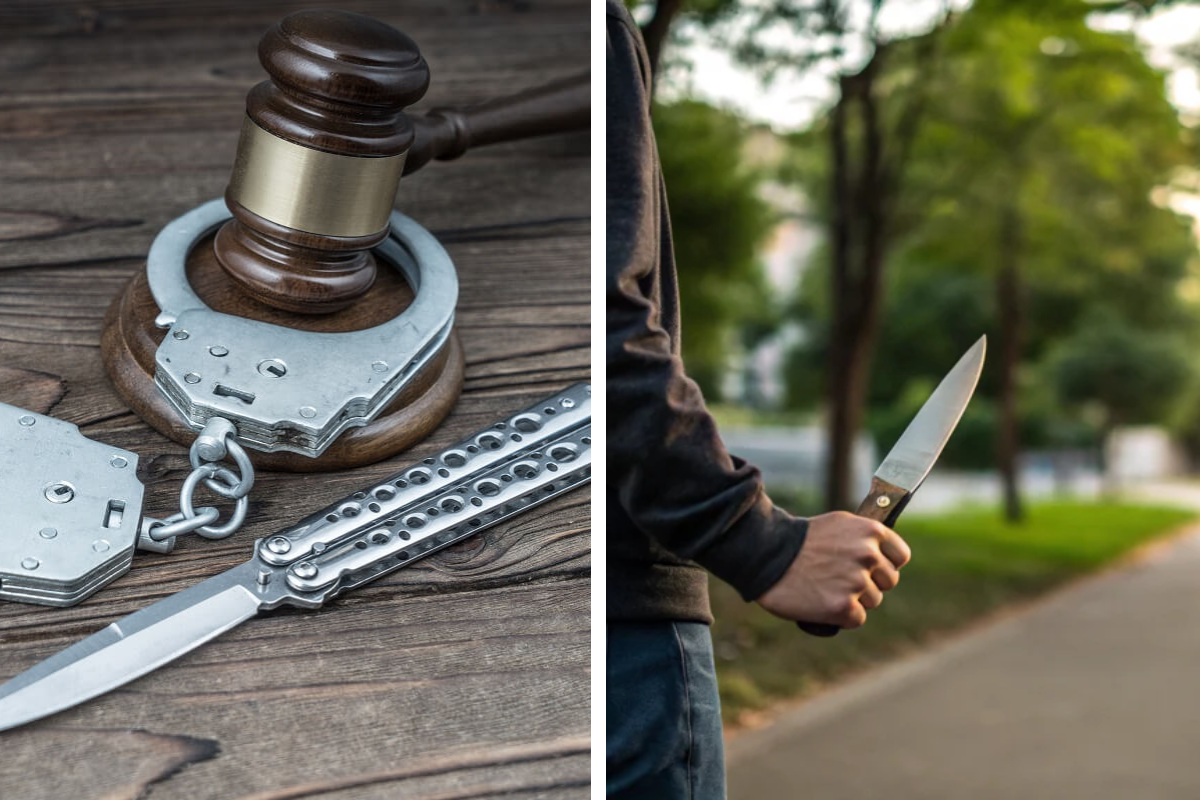
Nevada maintains some of the most permissive knife laws in the U.S., allowing ownership and open carry of virtually all knife types without statewide restrictions on blade length.
However, concealed carry often requires permits, and certain locations like schools are off-limits. This guide outlines key rules based on Nevada Revised Statutes (NRS) and local ordinances as of 2026.
Ownership and Legal Knives
Nevada law permits ownership of all knives, including switchblades, balisongs (butterfly knives), dirks, daggers, machetes, bowie knives, and automatic knives.
There are no prohibited types or blade length limits for possession at home or private property. Federal laws apply for interstate transport, but state rules are broad.
A 2015 amendment legalized switchblades for ownership and open carry, reversing prior restrictions. No registration or background checks are needed for buying knives.
Open Carry Rules
Open carry—where the knife is visible through ordinary observation, like in a sheath—is legal statewide for any knife. No permit is required, and there’s no blade length cap under state law. Local rules vary: Clark County bans open carry of blades over 3 inches on public sidewalks.
Always verify county codes, as Nevada lacks statewide preemption for knives. Brandishing dirks, daggers, swords, or switchblades threateningly in front of two or more people is a misdemeanor (up to 6 months jail, $1,000 fine).
Concealed Carry Requirements
Concealed carry (hidden from view, e.g., in a pocket) needs a sheriff-issued permit for machetes or “dangerous weapons” like dirks and daggers per NRS 202.350.
Clark County mandates a CCW permit for any concealed blade 3 inches or longer. Apply via your local sheriff with knife details; out-of-county permits are valid statewide.
Violations are gross misdemeanors (up to 364 days jail, $2,000 fine) or felonies for repeats. Peace officers and those summoned for duty are exempt.
Prohibited Locations
NRS 202.265 bans dirks, daggers, and switchblades on school property, childcare facilities, public universities, and student transport vehicles—gross misdemeanor penalties apply. Other knives may be allowed with permission from school officials. Check local bans in parks or protests.
Government buildings and casinos follow firearm rules but extend to knives via local codes.
Local Variations and Permits
No statewide preemption means cities like Las Vegas (Clark County) enforce stricter rules: CCW for concealed blades ≥3 inches. Reno/Washoe County may differ—contact your sheriff. CCW applications require residency proof, knife photos, and justification; fees vary.
Out-of-state visitors follow Nevada rules; federal switchblade transport limits apply.
Penalties for Violations
Unauthorized concealed carry: gross misdemeanor (first offense), category D felony (repeat). School possession: up to 364 days jail, $2,000 fine.
Assault with a knife: category B felony (1-6 years prison). Confiscation possible under NRS 202.340.
Best Practices and Advice
Carry openly when possible to avoid permit issues. Research local ordinances via county websites or sheriff offices before traveling. If charged, consult a criminal defense attorney familiar with NRS 202.
Stay informed—laws can evolve, but core rights remain strong for responsible owners.
SOURCE :
- https://www.shouselaw.com/nv/blog/can-i-open-carry-a-knife-in-nevada/
- https://www.couteaux-morta.com/en/nevada-knife-laws/