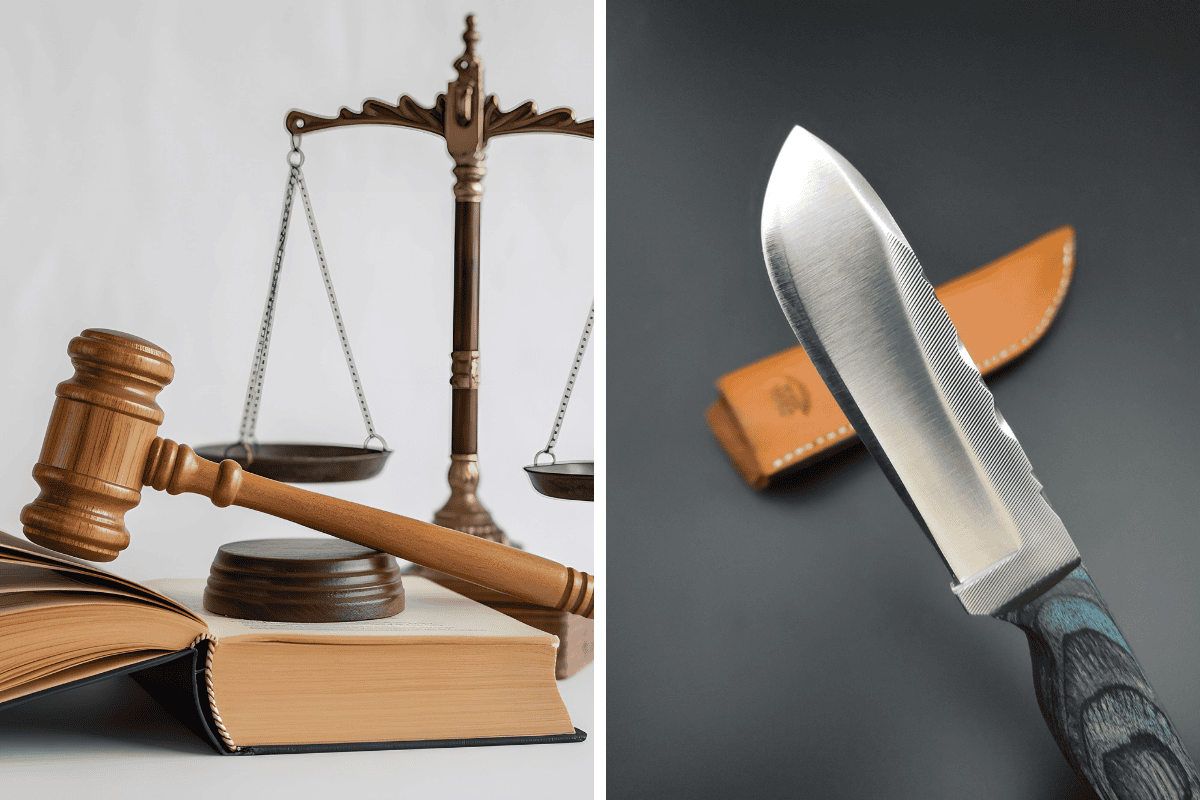
Alabama maintains some of the most permissive knife laws in the United States, allowing broad ownership and open carry of virtually all types of knives. Recent changes under constitutional carry reforms have further relaxed restrictions on concealed carry, though local variations and intent matter significantly.
This guide breaks down key statutes, carry rules, and practical considerations for responsible knife ownership in the Yellowhammer State.
Overview of Alabama Knife Statutes
Alabama law imposes no statewide bans on specific knife types, making it a haven for collectors and everyday carriers. Section 13A-1-2 defines a “knife” broadly as any sharp-edged or pointed instrument with a blade fastened to a handle, encompassing folders, fixed blades, and exotics like balisongs or karambits. Ownership rights extend to Bowie knives, switchblades, and daggers without restriction, unlike more prohibitive states.
Constitutional carry legislation effective January 1, 2023, repealed prior limits on concealed Bowie knives and similar large blades under Section 13A-11-50. No blade length limits apply statewide, and preemption does not exist, leaving room for municipal rules.
Open Carry Rules for Knives
Open carry of any knife remains fully legal across Alabama, provided no criminal intent exists. Fixed-blade knives, pocket folders, and multi-tools can be worn visibly on belts, in sheaths, or clipped externally without issue. Law enforcement views open carry as non-threatening when reasonable, aligning with the state’s gun-friendly culture.
Display a knife openly in public spaces like parks or streets poses minimal risk, but avoid brandishing it aggressively, which could trigger disorderly conduct charges under Section 13A-11-8. Schools, courthouses, and government buildings prohibit all weapons per Section 13A-11-72.
Concealed Carry Permissions and Limits
Post-2023 reforms, concealed carry of knives—including Bowies and large folders—is permitted for law-abiding adults without permits. Section 13A-11-50’s old concealed Bowie ban is effectively defunct, though not fully stricken until recent legislative pushes like Senate Bill 5 (2021 precursor). Switchblades face no private carry bans but were once commercially restricted under Section 13A-11-63.
Felons must exercise caution, as general weapon prohibitions apply under habitual offender statutes, though knives lack explicit federal overlays like firearms. Military and law enforcement get broad exemptions for duty and off-duty use.
Prohibited Locations and Exceptions
Certain “sterile” areas ban knives outright: K-12 schools, universities, polling places, airports, and jails under Sections 13A-11-52 to 13A-11-72. Businesses can post “no weapons” signs enforceable as trespass. Alcohol-serving establishments allow carry unless revoked by local option.
Vehicles permit knives stored accessibly, treated like open carry if visible or in glove boxes. Self-defense justifies carry statewide, but deadly force rules under Section 13A-3-23 require proportional threats.
Penalties for Violations
Violations of outdated concealed carry sections carry fines from $50 to $500 and up to six months jail, now rarely enforced amid desuetude. Intent-to-harm carry elevates to misdemeanor or felony assault, with 1-10 years possible. Local ordinances, like Montgomery’s 3-inch blade limit, add citations up to $500.
Courts suppress evidence from improper seizures, protecting rights under the Fourth Amendment. Antique knives over 50 years often evade modern rules.
Practical Advice for Alabama Knife Owners
Select quality knives suited to purpose—EDC folders for daily use, fixed blades for outdoors—and maintain them sharp and secure. Check city codes via municipal websites or clerks, especially in Birmingham or Mobile. Join groups like the American Knife and Tool Institute for updates.
SOURCES:
- https://www.davidserenolaw.com/guide-to-knife-laws-in-alabama/
- https://nobliecustomknives.com/us-knife-laws/alabama-knife-laws/