
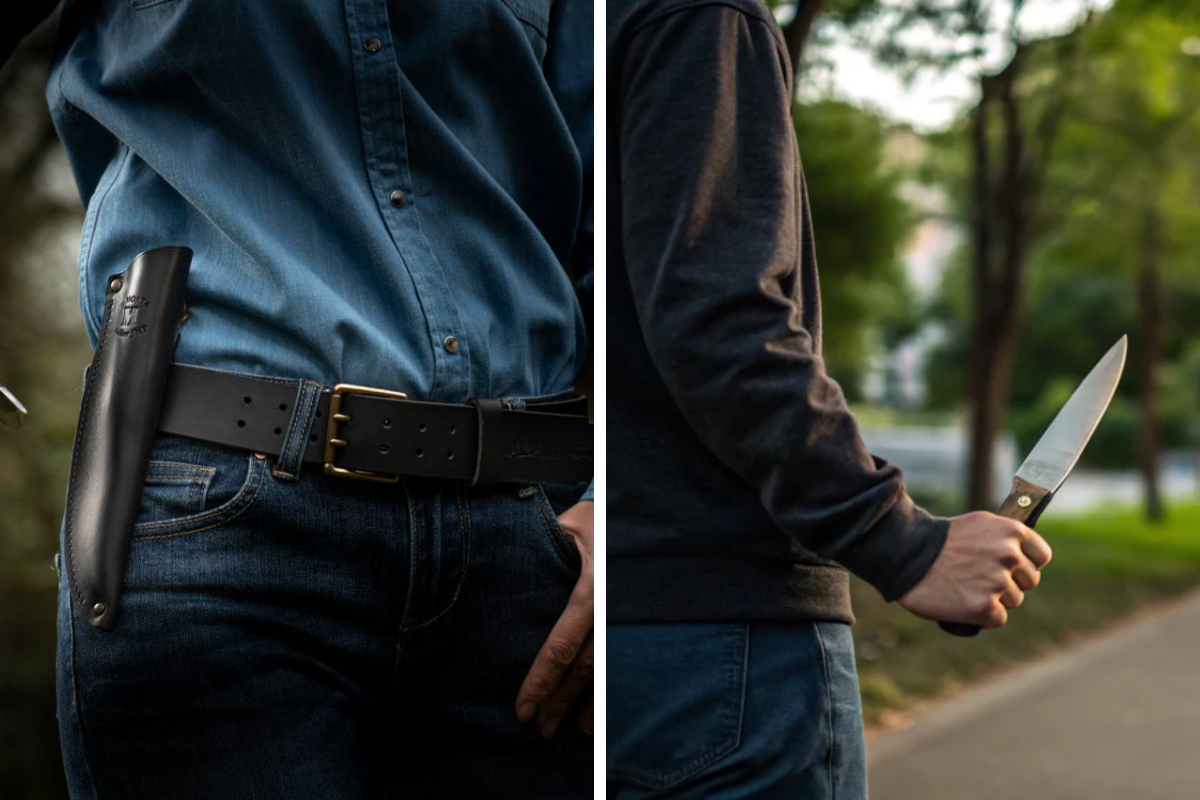
Nevada maintains relatively permissive knife laws compared to many states, allowing ownership and open carry of most pocket knives without restrictions on blade length.
However, concealed carry rules, local ordinances, and prohibited locations add nuances that pocket knife owners must navigate carefully. This article explores these regulations, drawing from Nevada Revised Statutes (NRS) and local codes as of 2026.
Statewide Knife Laws
Nevada state law under NRS 202.350 permits the possession and open carry of all knives, including pocket knives, switchblades, balisongs (butterfly knives), and fixed-blade types like bowies, with no statewide blade length limits.
A landmark change came in 2015 via Senate Bill 176, legalizing switchblades (automatic knives with blades over 2 inches) for open carry, overturning prior restrictions.
Pocket knives—typically folding knives with blades under 4 inches—fall squarely under these protections for everyday carry in public spaces. Open carry means the knife is visible, such as in a sheath on a belt; concealed carry (e.g., in a pocket) requires caution.
Machetes are the main exception, needing a concealed carry weapon (CCW) permit statewide if hidden.
Concealed Carry Regulations
Statewide, concealed carry of most knives is allowed without a permit, except for “dangerous or deadly” weapons like dirks, daggers, swords, or machetes, which require sheriff-issued permission under NRS 202.350.
For pocket knives, no general state permit is mandated unless classified as dangerous—a fact-specific determination often left to courts or juries.
Local rules tighten this: In Clark County (home to Las Vegas), concealed carry of any knife with a blade 3 inches or longer demands written permission from the Las Vegas Metropolitan Police Department sheriff.
Applications involve details like knife photos; a CCW from another Nevada county may suffice statewide, but Clark’s rule prevails locally. Violators face misdemeanor charges: up to 6 months jail and $1,000 fine.
Prohibited Knives and Locations
No knives are outright banned statewide, including formerly restricted types post-2015 reforms. Trefoils (throwing stars) are restricted only with intent to harm or on school grounds.
However, dirks, daggers, and switchblades cannot be carried (open or concealed) at schools, childcare facilities, public universities, or their vehicles—gross misdemeanor penalties apply (up to 364 days jail, $2,000 fine).
Airports, government buildings, and certain city parks or events may impose further bans via local ordinances; Nevada lacks statewide preemption, so check municipal codes.
Brandishing any “deadly” knife threateningly before two or more people is a misdemeanor (up to 6 months jail, $1,000 fine), distinct from assault charges.
Penalties and Defenses
Violations like concealed carry without permit often start as misdemeanors or gross misdemeanors but can escalate to felonies on repeat offenses (1-5 years prison, $10,000 fine). Common defenses include proving the knife was not concealed, blade under 3 inches (in Clark), or used in self-defense.
Records for misdemeanors can seal after 1-2 years; felonies take longer. Immigrants should note potential deportation risks, though minor knife charges rarely trigger them.
Practical Advice for Compliance
For pocket knife users in Nevada, opt for open carry to sidestep issues—visible sheath carry is safest statewide.
In Las Vegas, measure blades precisely and secure Clark County permits for concealed folders over 3 inches via LVMPD. Hikers and outdoor enthusiasts should verify local rules before rural trips.
Consult sheriffs or attorneys for personalized advice, as intent and context matter. Staying informed prevents mishaps in Nevada’s blade-friendly but location-specific legal landscape.
SOURCES :
- https://www.battlbox.com/blogs/carry-laws/can-you-open-carry-a-knife-in-nevada-an-in-depth-guide-to-knife-laws
- https://www.shouselaw.com/nv/blog/can-i-open-carry-a-knife-in-nevada/