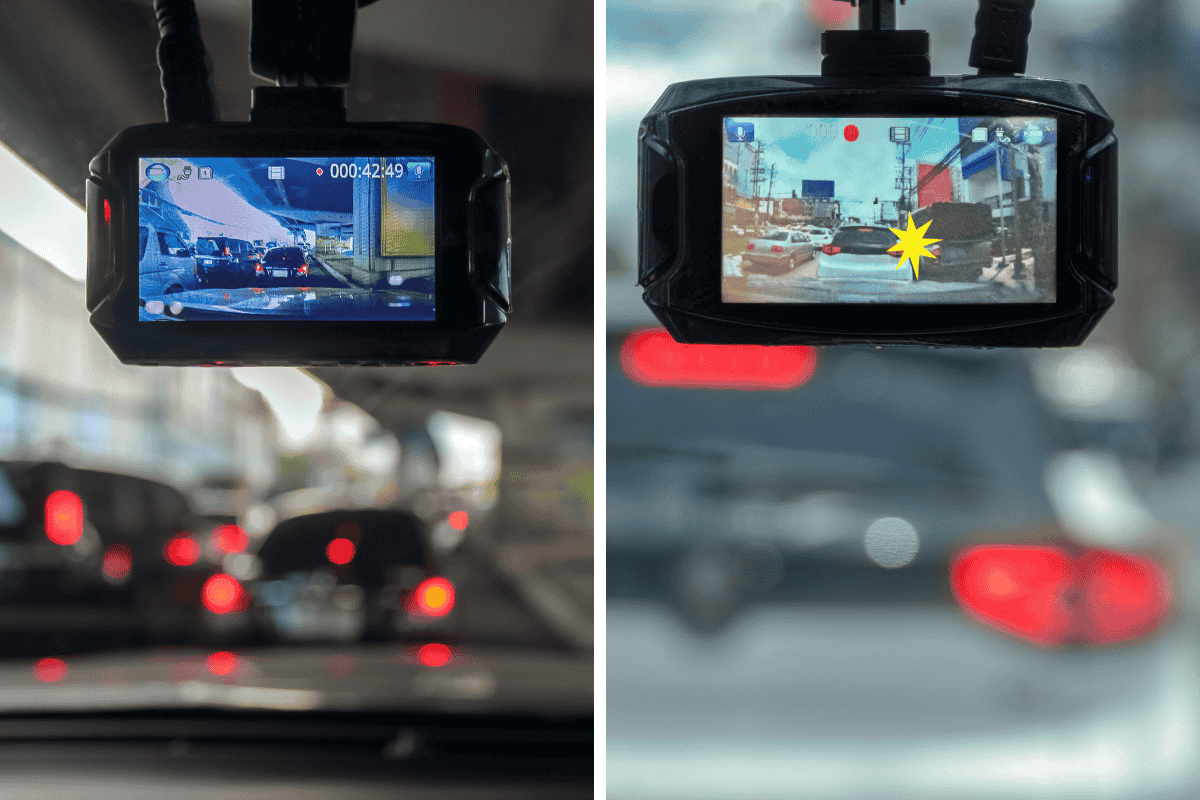
Dash cams are fully legal in Connecticut, provided they do not obstruct the driver’s view of the road, aligning with the state’s strict rules against opaque materials on windshields. All-party consent applies to audio recordings, meaning everyone in the vehicle must agree before capturing sound. These regulations balance safety, privacy, and evidentiary value in insurance claims or legal disputes.
Mounting and Placement Rules
Connecticut General Statutes § 14-99g prohibits any non-transparent objects on windshields, side wings, or windows that impair visibility, extending to dash cams. Devices must mount low on the dashboard or behind the rearview mirror, avoiding the driver’s direct line of sight—typically under 5 square inches if windshield-adhered.
Side window mounting permits if reflectivity stays below 35%, but dashboard placement proves safest to evade tickets. Suction cups or adhesive mounts work, but secure them to prevent detachment during sudden stops or airbag deployment. Police routinely cite obstructions during routine stops.
Audio Recording Consent Laws
Connecticut qualifies as an all-party consent state under wiretapping statutes (Conn. Gen. Stat. § 52-570d), requiring notification or agreement from all passengers for audio capture. Dash cams recording conversations without this risk civil penalties up to $10,000 or criminal misdemeanor charges.
Mute audio for solo drives or use signage (“This vehicle records audio/video”) to imply consent. Video-only cams sidestep issues entirely, preserving visual evidence for courts.
Privacy and Public Recording Rights
Recordings from public roads enjoy First Amendment protections, capturing external events without expectation of privacy. Inside-vehicle footage implicates passengers’ rights if audio-enabled—delete non-evidentiary clips promptly. Sharing online requires redaction of faces or plates absent public interest.
Police body cams and fleet dash cams follow similar rules, with 2026 laws mandating access fees for public records.
Court Admissibility and Insurance Benefits
Connecticut courts admit dash cam footage as evidence if chain-of-custody proven and legally obtained, bolstering defenses in hit-and-runs or fault disputes. Insurers like GEICO or Progressive offer discounts (5–15%) for verified installations, potentially saving $100+ annually.
Timestamped, GPS-tagged files strengthen claims; tamper-proof SD cards aid authenticity.
Commercial and Fleet Vehicle Rules
Trucking firms face FMCSA guidelines alongside state law—no view obstruction, secure mounting. Driver-facing cams require union-negotiated consent in public fleets. Hartford mandates training on privacy for municipal vehicles.
Violations yield DOT fines up to $2,500 per infraction.
Penalties for Non-Compliance
Obstruction citations carry $100–$500 fines, possible 30-day suspensions for repeats. Audio violations invite lawsuits; intentional eavesdropping escalates to felonies. Equipment failure from poor mounting risks reckless driving charges post-accident.
Best Practices for Installation
Choose compact models (under 4 inches tall) like Garmin or Thinkware. Test visibility pre-drive; angle downward 15–30 degrees. Update firmware yearly; store backups off-device. Professional installs ($50–$150) ensure hardwiring without warranty voids.
Recent Updates and Future Trends
No 2026-specific changes alter core rules, but body cam expansions signal stricter evidentiary standards. AI-enhanced cams for fatigue detection emerge, pending privacy reviews.
SOURCES:
- https://www.ddpai.com/blog/dash-cam-laws/
- https://thevlfirm.com/should-you-install-a-dash-cam-in-connecticut/