
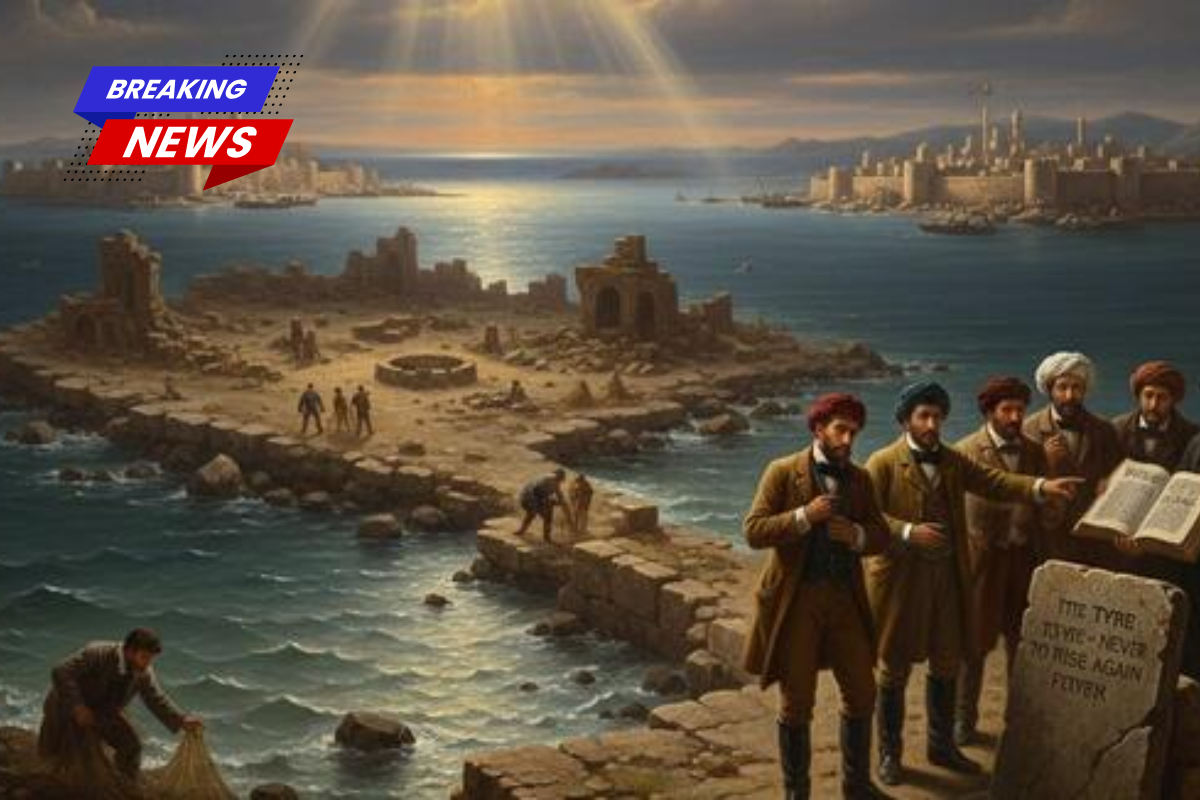
Ezekiel once made a prophecy that sounded impossible. He said the powerful city of Tyre would be destroyed, its remains scraped into the sea, and it would never rise to power again. At that time, Tyre was rich, well-defended, and seemed unstoppable.
Ezekiel’s Prophecy: Too Extreme to Believe?
Many people didn’t take Ezekiel seriously. How could a city as strong and influential as Tyre ever fall so completely? It seemed like just another dramatic claim.
But then, history began to unfold in ways no one expected.
What Really Happened to Tyre
First, King Nebuchadnezzar of Babylon attacked and damaged the mainland part of Tyre. But the stronghold of the city remained on a nearby island, still untouchable.
Then came Alexander the Great. Determined to conquer the island city, he did something bold. He used the ruins of the old mainland Tyre—stone by stone—to build a massive causeway through the sea to reach the island. This causeway allowed his army to reach and destroy the island fortress.
In doing this, the city was literally thrown into the sea, just as Ezekiel had said centuries earlier.
Tyre Today: A Shadow of the Past
Today, Tyre is no longer a powerful city. It exists only as a quiet fishing town. The mighty city that once ruled sea trade is gone. Its wealth, influence, and strength have never returned.
Seeing Prophecy and History Align
When I compared satellite images of Tyre with Ezekiel’s prophecy through a tool like Bible Vod, it gave me chills. The map showed the causeway still there, a manmade strip of land connecting the island to the mainland. It was physical proof that something ancient had truly happened—exactly as written.
It was like watching geography obey prophecy.
Anchoring Faith in Reality
Seeing these connections made faith feel less like something fragile and more like something solid. Empires rise and fall. Cities vanish. But the words written in Scripture remain, standing strong through time.