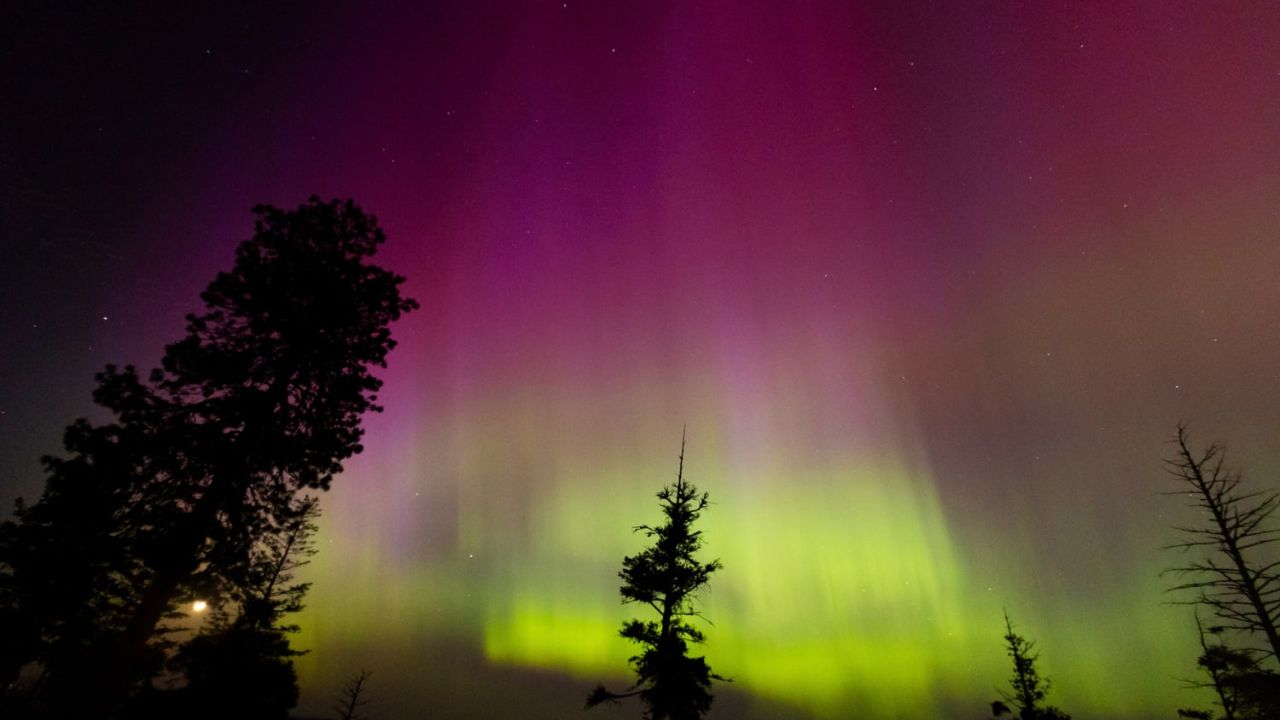
Skywatchers across Idaho may be in for a rare treat Monday night as the northern lights could become visible across parts of the state. Forecasts indicate that heightened solar activity may allow the aurora borealis to be seen not only in Idaho but also in several neighboring states, depending on conditions.
Why the Northern Lights Could Appear
Increased Solar Activity Ahead
The aurora borealis becomes visible when charged particles from the sun interact with Earth’s magnetic field. Recent increases in solar activity have raised the likelihood of auroral displays dipping farther south than usual.
Favorable Forecast for Monday Night
Space weather models suggest conditions could align Monday night, making viewing possible across Idaho and other northern-tier states if skies remain clear.
Where in Idaho Visibility Is Most Likely
Northern and Rural Areas Favored
Residents in northern Idaho and darker rural locations may have the best chance of seeing the lights, as reduced light pollution improves visibility.
Clear Skies Improve Chances
Cloud cover will play a major role. Areas with clear or partly clear skies will be best positioned to catch the aurora if it develops.
Best Time and Viewing Tips
Late Evening to Early Morning
The northern lights are typically most visible between late evening and the early morning hours. Patience may be required, as activity can fluctuate throughout the night.
How to Improve Your View
Experts recommend heading away from city lights, facing north, and allowing your eyes time to adjust to the darkness. Even faint auroras can appear stronger in photos than to the naked eye.
Other States Could See the Aurora Too
While Idaho is included in the viewing zone, several other states across the northern U.S. may also see auroral activity, depending on the strength and duration of the solar event.
What Could Change the Forecast
Aurora visibility depends on real-time space weather conditions. Shifts in solar wind intensity or cloud cover could strengthen or limit the display.