
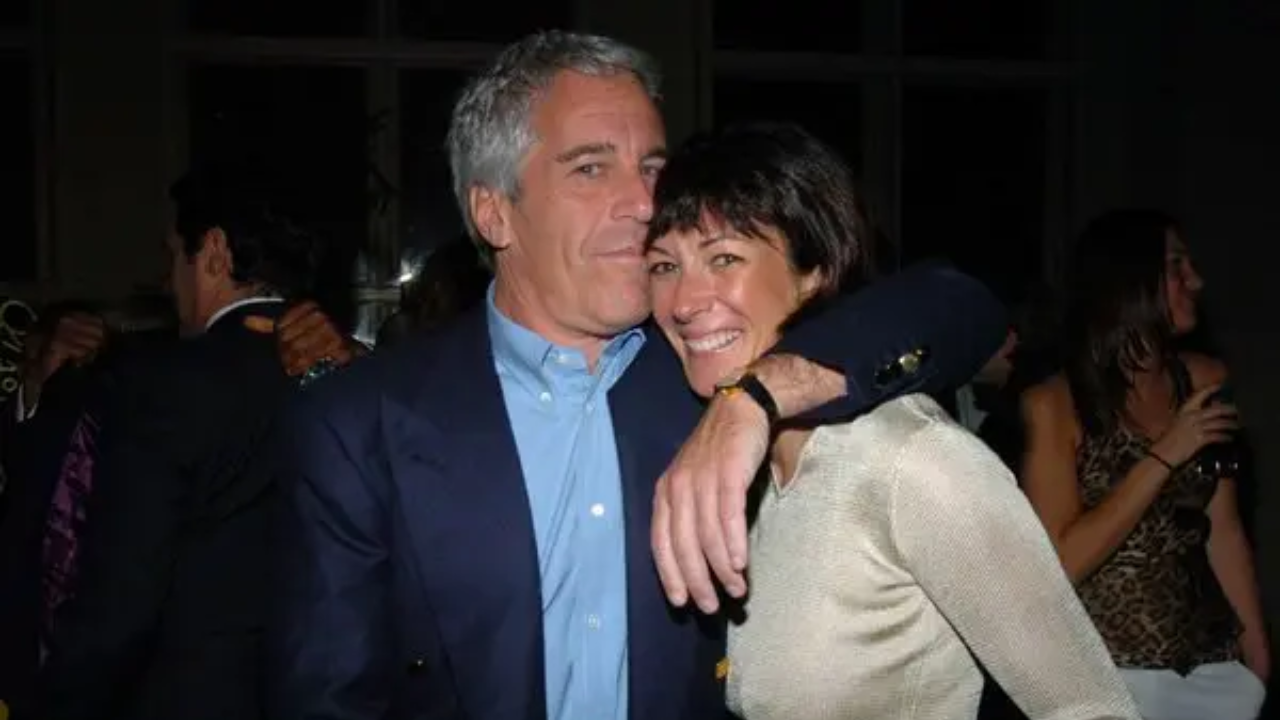
Ghislaine Maxwell intends to file a habeas corpus petition seeking freedom from her 20-year sentence, according to court documents submitted this week. The British socialite, currently serving time for sex trafficking convictions, plans to represent herself in this latest legal challenge.
Court Filing Signals New Legal Strategy
Attorney David Oscar Markus notified Judge Paul Engelmayer on Wednesday that Maxwell would soon submit the petition and handle the case pro se without legal representation. This development comes as federal authorities push to unseal grand jury materials from her criminal case.
The filing emerged in response to Justice Department efforts to make various case records public. Maxwell’s team argues that releasing grand jury materials containing unproven allegations would severely prejudice any potential retrial if her habeas petition succeeds.
The court documents did not specify the legal grounds Maxwell will cite when formally requesting release. Habeas corpus petitions allow prisoners to challenge the legality of their detention, typically arguing constitutional violations, improper procedures, or newly discovered evidence.
Understanding Habeas Corpus Petitions
Habeas corpus represents one of the fundamental protections in American law, dating back centuries to English common law. The Latin phrase translates to “you shall have the body,” referring to a prisoner’s right to appear before a judge to challenge unlawful imprisonment.
However, these petitions rarely succeed, with roughly 12,000 filed annually but just over 10 percent succeeding in capital cases and fewer than 1 percent in other cases, according to the Brennan Center for Justice.
Federal prisoners typically file habeas petitions after exhausting direct appeals through normal appellate channels. Grounds for relief include claims of ineffective legal counsel, prosecutorial misconduct, jury irregularities, constitutional violations during trial, or evidence unavailable during original proceedings.
Maxwell’s attorney stated the petition presents new evidence unavailable during her 2021 trial that would have materially impacted the outcome. The filing also claims significant government and juror misconduct occurred before, during, and after trial, making the verdict unsafe.
Supreme Court Previously Denied Appeal
The Supreme Court recently rejected Maxwell’s appeal of her conviction and sentence. That earlier appeal argued she was unlawfully prosecuted under a theory that federal prosecutors in Florida had granted immunity in a prior agreement with Jeffrey Epstein.
The high court’s October 2024 decision not to hear the case eliminated Maxwell’s options through standard appellate routes. The habeas petition represents a separate legal avenue with different procedural requirements and standards.
Courts examine habeas petitions under stricter criteria than direct appeals. Petitioners must often demonstrate actual innocence, constitutional violations, or other extraordinary circumstances warranting relief.
Background on the Sex Trafficking Conviction
A federal jury convicted Maxwell in December 2021 on five sex trafficking-related counts carrying up to 65 years imprisonment. The charges included sex trafficking of a minor, transporting a minor with intent to engage in criminal sexual activity, and three conspiracy counts.
Federal prosecutors proved that from at least 1994 through 2004, Maxwell assisted Jeffrey Epstein in recruiting, grooming, and abusing victims as young as 14 years old. The U.S. Department of Justice presented evidence showing Maxwell helped Epstein abuse multiple minors over a decade.
Judge Alison Nathan sentenced Maxwell to 240 months in federal prison in June 2022. At sentencing, prosecutors described how Maxwell befriended victims, earned their trust, normalized sexual abuse, and participated in the crimes directly.
Testimony revealed Maxwell’s tactics included asking girls about their lives and families, taking them shopping or to movies, and being present during Epstein’s interactions with minors. This behavior put victims at ease while making them vulnerable to exploitation.
Controversial Prison Transfer Raises Questions
Maxwell was initially held at a low-security facility in Tallahassee, Florida, but transferred to a less restrictive minimum-security prison in Bryan, Texas, following a two-day interview with Deputy Attorney General Todd Blanche.
The transfer sparked controversy about potential preferential treatment. Whistleblower allegations claimed Maxwell received concierge-style treatment including private meetings with visitors, expanded computer access, and customized meals, according to a letter from Representative Jamie Raskin.
Maxwell’s attorney reported that prison employees who improperly accessed the email system inmates use for external communication have been terminated. The attorney also stated that emails released by Raskin disclosed privileged attorney-client discussions.
Federal prisons classify inmates based on security needs, criminal history, and behavior. Minimum-security facilities, often called prison camps, house inmates considered low security risks and typically lack perimeter fencing.
Pardon Speculation and Political Controversy
Markus has previously denied that Maxwell is seeking a pardon, while President Trump has stated he would have to take a look at whether he would grant her one.
The connection between Trump and Epstein has drawn significant public attention. Historical photographs and reports document their social interactions in Palm Beach and New York during the 1990s and early 2000s, though Trump has stated they had a falling out.
Representative Raskin’s letter outlined whistleblower claims that Maxwell was preparing to seek commutation. A commutation would reduce her sentence rather than erasing the conviction entirely like a pardon.
The political dimensions of the case intensified after the Trump administration faced criticism for initially refusing to release Epstein and Maxwell records, then reversed course last month by signing a bill requiring release within 30 days.
Justice Department Seeks to Unseal Records
Federal prosecutors requested judges overseeing both Epstein and Maxwell cases to release grand jury transcripts and modify protective orders. The modifications would allow publication of financial records, travel documents, search warrants, and notes from victim interviews.
Grand jury proceedings typically remain secret to protect witnesses, prevent flight by subjects, and preserve the integrity of investigations. However, courts can authorize disclosure when substantial public interest outweighs secrecy concerns.
The Federal Bureau of Investigation conducted extensive investigations into Epstein’s trafficking network. Unsealing materials could reveal additional details about victims, accomplices, and the scope of criminal activities spanning multiple states and countries.
Lawyers for Epstein’s estate indicated they do not oppose unsealing provided the government adequately redacts victim and personally identifying information. Maxwell’s concern centers on how releasing unproven allegations might affect her habeas petition chances.
The Victims’ Perspective
Following Maxwell’s conviction, victim Annie Farmer stated that today’s verdict makes clear that abusing and trafficking minors are serious crimes. Multiple women testified during the trial about abuse they suffered as teenagers.
U.S. Attorney Damian Williams praised the bravery of girls, now grown women, who stepped forward to testify, noting their courage made the case and verdict possible. Prosecutors emphasized that Maxwell’s actions caused permanent emotional and psychological damage.
Survivor advocates have stressed that Maxwell was not the only person involved in these crimes. They identify other individuals who allegedly participated in or facilitated the abuse, though no additional criminal charges have been filed beyond Maxwell’s prosecution.
The contrast between Maxwell’s legal efforts and the lifelong trauma experienced by victims remains stark. While Maxwell pursues various avenues to overturn or reduce her sentence, survivors continue dealing with lasting effects of abuse that occurred decades ago.
What Happens Next in the Legal Process
Maxwell must formally file her habeas corpus petition with the federal district court that handled her original case. The petition will outline specific legal arguments for why her conviction or sentence should be overturned.
Federal prosecutors will have the opportunity to respond to each claim. This typically involves extensive briefing on both sides, with Maxwell’s team presenting arguments and evidence while prosecutors defend the conviction’s validity.
Judge Engelmayer, who presided over the original trial, will review the petition and supporting materials. The judge can hold hearings if factual disputes require testimony or evidence presentation, though many habeas cases are decided on written submissions alone.
If the district court denies relief, Maxwell could appeal that decision to the Second Circuit Court of Appeals. Ultimate review by the Supreme Court remains possible but unlikely given their recent rejection of her direct appeal.
The timeline for habeas proceedings varies significantly. Simple petitions raising purely legal questions might resolve within months, while complex cases involving evidentiary hearings can take years to conclude.
Broader Implications for the Epstein Case
Maxwell’s case represents the only successful prosecution resulting from the extensive Epstein trafficking investigation. Epstein himself died by suicide in August 2019 while awaiting trial in a Manhattan jail, preventing him from facing justice.
The investigation revealed a network of enablers, associates, and alleged participants spanning elite social circles in New York, Florida, New Mexico, and internationally. Despite extensive documentation of Epstein’s connections, no other individuals have faced federal criminal charges.
This reality frustrates survivors who identify multiple people they allege participated in or facilitated abuse. The focus on Maxwell as the sole defendant, while Epstein escaped accountability through death, leaves many questions about others involved unanswered.
Unsealing records could potentially identify additional subjects for investigation or civil litigation. However, the passage of time, jurisdictional complexities, and evidentiary challenges make future prosecutions uncertain at best.
Public Interest and Accountability
The intense public interest in the Epstein-Maxwell case reflects broader concerns about accountability for powerful individuals. The circumstances surrounding Epstein’s suicide, the prior non-prosecution agreement in Florida, and Maxwell’s connections to influential people all contributed to skepticism about equal justice.
Transparency advocates argue that releasing case records serves important public interests in understanding how trafficking networks operate and whether systems failed to protect victims. Maxwell’s concerns about prejudice to potential retrials clash with demands for accountability.
The congressional mandate for records release within 30 days represents unprecedented public pressure for disclosure. Whether this timeline proves realistic given the volume of materials and necessary redactions remains uncertain.
Maxwell’s habeas petition adds another layer of complexity to an already contentious situation. Her arguments about unfair prosecution and new evidence will receive careful judicial scrutiny given the seriousness of her crimes and the strength of evidence presented at trial.
Looking Forward
As Maxwell prepares her formal petition, the legal community watches to see what arguments and evidence she presents. Her decision to proceed pro se without an attorney is unusual for such a complex case, though she has legal advisors she can consult.
The challenge Maxwell faces is substantial. The jury heard extensive testimony from multiple victims, saw documentary evidence of her relationship with Epstein, and received detailed proof of the trafficking operation. Overcoming this record requires demonstrating serious procedural or constitutional violations.
Meanwhile, survivors continue advocating for full disclosure of records and accountability for anyone else involved in the trafficking network. Their voices remind the public that behind the legal maneuvering are real people whose lives were permanently affected by these crimes.
The coming months will reveal whether Maxwell’s latest legal strategy gains any traction in court. Regardless of the outcome, her case remains a focal point for discussions about sex trafficking, accountability, and justice delayed for victims of powerful predators.