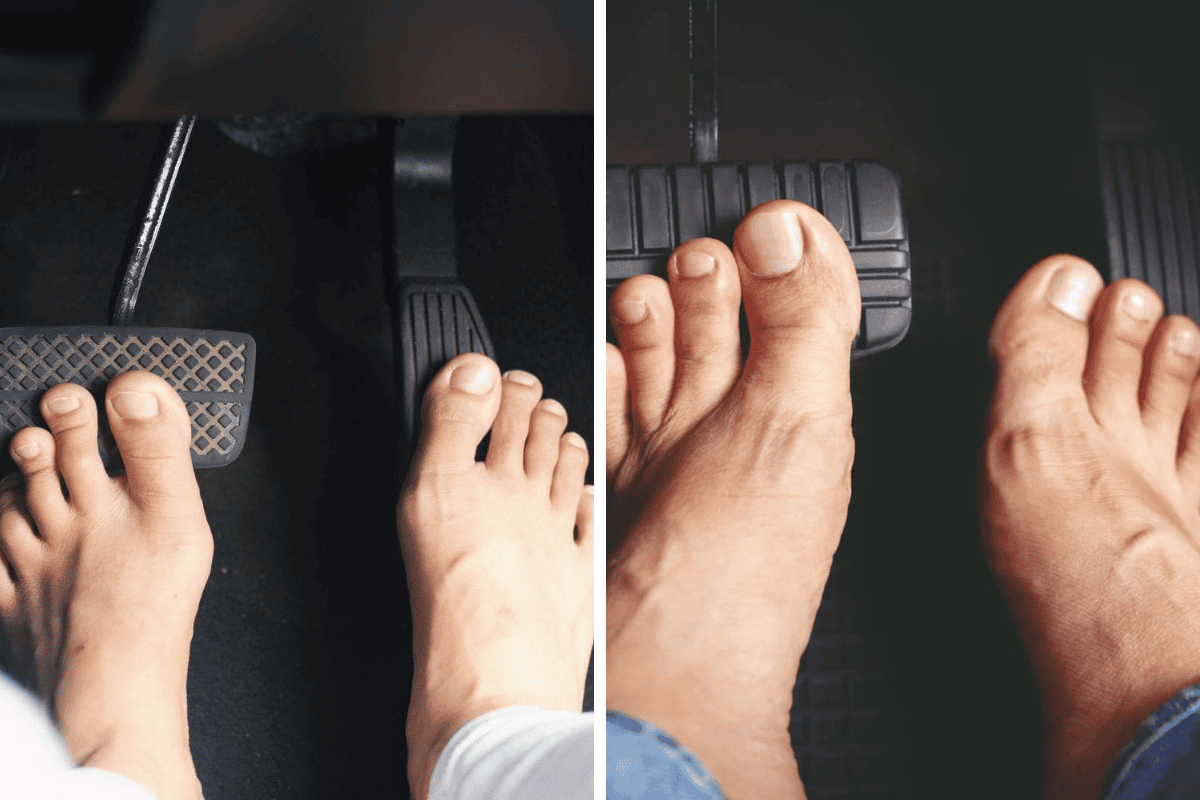
No, it is not illegal to drive barefoot in Oregon, as no state statute explicitly requires footwear while operating a vehicle. Oregon Revised Statutes Chapter 811 on rules of the road emphasize safe vehicle control but impose no shoe mandates, aligning with all 50 states lacking such prohibitions. However, barefoot driving risks citations for reckless or distracted operation if it impairs pedal control or reaction times.
Legal Framework in Oregon
Oregon law focuses on reasonable care under ORS 811.135 (reckless driving) and ORS 811.125 (careless driving), where barefoot operation could contribute if causing unsafe maneuvers like delayed braking. No footwear-specific bans exist in the Oregon Driver Manual or DMV guidelines, confirming legality absent impairment. Local ordinances rarely add rules, as state preemption governs highways.
Penalties for related violations start at $50-$250 fines for careless driving, escalating to misdemeanors with jail for recklessness.
Safety Concerns and Risks
Bare feet reduce grip on pedals, prolong stopping distances by 10-20% in tests, and heighten injury risk in crashes without foot protection. Shoes slipping under brakes or distractions from adjusting footwear mirror flip-flop hazards, drawing officer scrutiny during stops. Post-accident, insurers or courts may deem barefoot driving contributory negligence, hiking premiums or reducing claims by 20-50%.
Certain shoes prove riskier: high heels, sandals, or loose slippers invite tickets more than bare feet in expert views.
When Barefoot Might Be Safer
Tight or bulky shoes occasionally hinder precision, making barefoot preferable for short, low-speed drives on familiar roads. Racing pros sometimes go shoeless for feel; everyday drivers match this only if maintaining full control. Oregon’s rainy climate favors treaded soles over slick bare skin, but dry conditions minimize slips.
Enforcement and Insurance Impacts
Troopers cite based on observed errors, not footwear alone—dash cams prove habits. No DMV points attach solely to bare feet, but at-fault crashes trigger reviews. Insurers like Progressive deny payouts if negligence proven, urging closed-toe rubber-soled shoes.
Best practice: slip-on flats for accessibility; keep spares handy.
Recommended Footwear Practices
Choose thin-soled, closed-toe shoes with grip; avoid anything prone to pedal jams. Test barefoot control pre-highway; pull over for adjustments. Winter boots suit Oregon’s weather, balancing warmth and response.
SOURCES:
- https://tillmannlaw.com/blog/is-it-legal-to-drive-barefoot-in-oregon/
- https://teamjustice.com/is-it-illegal-to-drive-barefoot/