
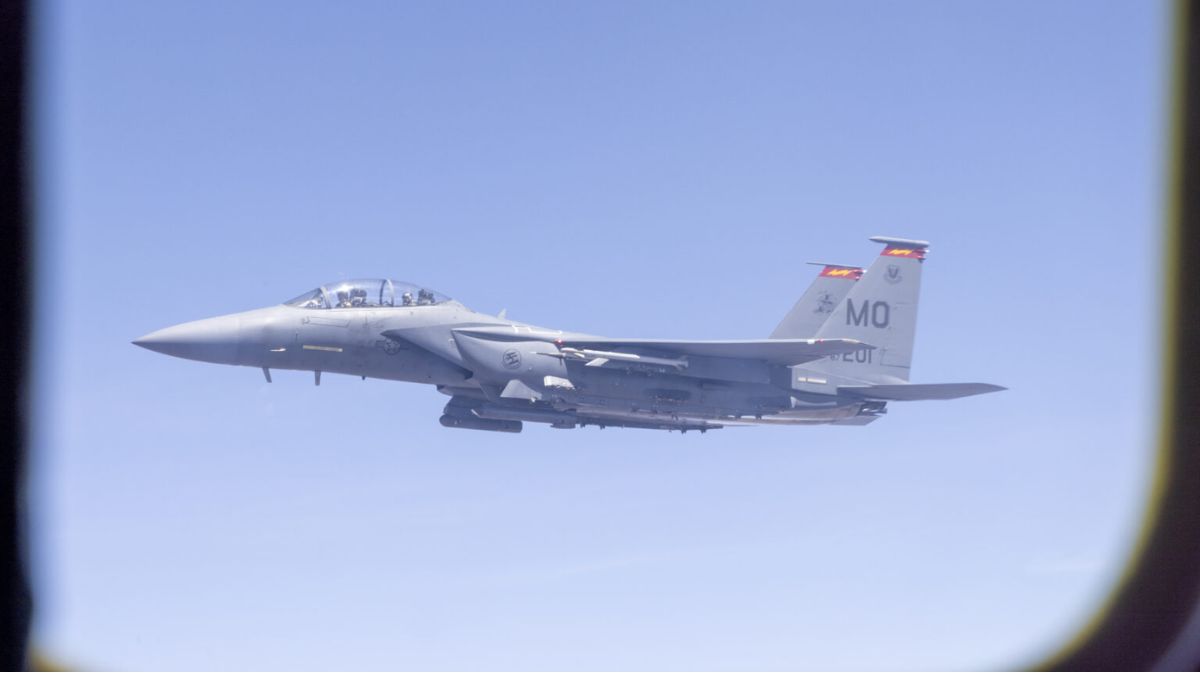
The decision to establish a Qatari Emiri Air Force (QEAF) training program at Mountain Home Air Force Base in Idaho has sparked conversations across the state.
After the partnership was announced, lawmakers and residents began asking for more information about how the agreement works, what it involves, and what it means for Idaho.
To address these concerns, Col. David Gunter, commander of the 366th Fighter Wing, appeared before the Idaho Legislature’s Committee on Federalism with fresh updates and clarifications.
Background of the Qatar Training Facility Agreement
Federal Announcement and Project Timeline
The partnership first gained national attention on October 10, when Defense Secretary Pete Hegseth confirmed that Mountain Home AFB would become a key location for Qatari pilot training.
This initiative will place Qatari F-15 aircraft and pilots in Idaho to train alongside U.S. Air Force personnel, strengthening military cooperation between both nations.
Initial Personnel and Deployment
During the committee briefing, Col. Gunter explained that the current plan is for an initial deployment of about 50 QEAF personnel when the program launches—estimated around 2030.
He emphasized that these figures are not final, as both the number of personnel and the final timeline remain under development. The commander reiterated that all decisions will be refined over the next several years.
Infrastructure and Construction Plans
New and Upgraded Facilities
The commander detailed that the project includes new construction, renovations to existing buildings, infrastructure improvements, and the use of special-use airspace for training operations.
All training structures built for the Qatari program will be owned and controlled by the U.S. government under Mountain Home AFB.
Funding and Local Economic Impact
The infrastructure required for training operations will be funded through foreign military sales, while construction is expected to be carried out by local U.S. contractors, bringing economic benefits to the region.
The base will host an entire support ecosystem for Qatari F-15Q jets, pilots, and support staff once the program reaches full scale.
Long-Term Planning and Local Coordination
Program Development Since 2018
According to Col. Gunter, the Qatar training partnership has been under development since 2018, showing that the project is the result of years of planning and coordination between both nations.
Collaboration With Local Leaders
Mountain Home Mayor Rich Sykes confirmed his involvement, noting that in May 2023, he and military liaison Marty Anderson traveled to Qatar to better understand the QEAF’s needs. Their participation highlights the long-term cooperation between city officials and military planners.
Environmental and Operational Expectations
An Environmental Impact Assessment released in 2022 projects the training program to last about 10 years once it begins. The plan outlines that up to 300 personnel—including about 12 Qatari F-15Q fighter jets—could be based at Mountain Home AFB during full operation.
Concerns From Idaho Residents
Lawmaker Feedback and Public Reaction
Two committee members said their constituents are uneasy about the partnership, expressing concerns about foreign military personnel operating in the state.
Security and Vetting
To address these concerns, Col. Gunter assured lawmakers that the United States uses a strict and comprehensive vetting process for every individual entering the country, including foreign military trainees. He emphasized that security, readiness, and safety remain top priorities throughout the program.
The upcoming Qatar–U.S. Air Training Program at Mountain Home Air Force Base represents a long-planned expansion of military cooperation, economic development, and international training.
Although some details are still evolving, the Air Force continues to stress safety, security, and transparency as the program moves toward its estimated launch in 2030.
With new facilities, foreign military sales funding, and expanded air operations, the initiative is set to significantly shape the base and the surrounding community for the next decade.