
I have always loved finding a good bargain. There is something special about picking up something cheap and realising it is worth much more. Recently, I had one such experience that completely changed the way I look at old and dusty items.
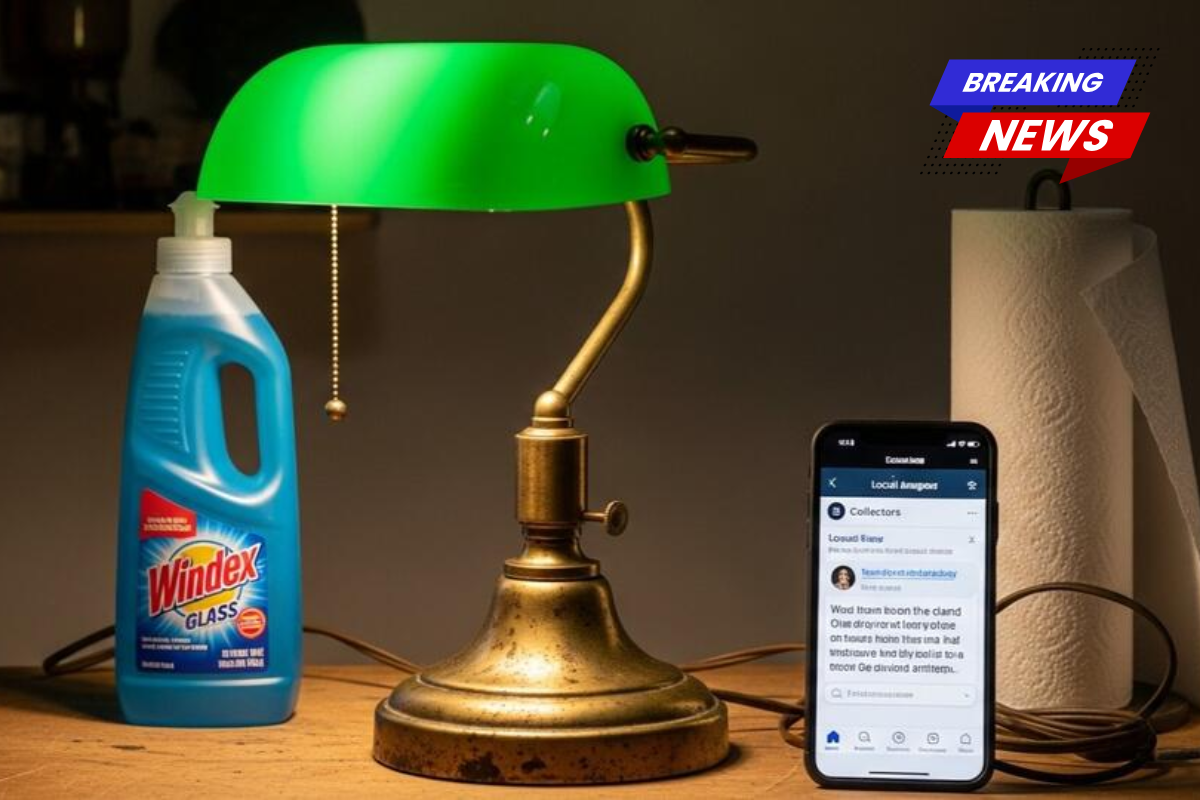
It all started with a moving sale at the house on the corner of my street. The place looked messy, with random things spread across the lawn. While walking around, I noticed a green glass lamp lying in the grass. It looked old, heavy, and covered in dirt. The brass base was dull and dark from years of use. Still, something about it caught my attention.
The owner looked tired and just wanted to clear everything quickly. “Five bucks,” he said casually. I didn’t think twice. For that price, even if it didn’t work, it felt like a good deal. I carried it home feeling proud of my small win.
I had no idea that this simple purchase would turn into a ₹35,000 lesson about antiques and patience.
The Unexpected Discovery
Once I reached home, I kept the lamp on my table and looked at it closely. It was definitely old, but it was also very dirty. I planned to clean it with glass cleaner and polish the brass to make it shine again.
Before cleaning it, I decided to post a picture in the LocalAll “Collectors” group just for fun. I thought maybe someone would say it was a nice vintage piece. I never expected what happened next.
Within minutes, I received a message from a local antique dealer I had never spoken to before. Her message was short but urgent: “Please tell me you didn’t clean that yet.”
That one line made me pause.
Why Cleaning Can Reduce Antique Value
The dealer explained that the dark layer on the brass was called “patina.” It forms naturally over many years. For antique lovers, this patina proves that the item is original and old. If I had scrubbed it with glass cleaner or polish, I would have removed that natural ageing.
Here’s why cleaning antiques can reduce their value:
- Patina shows authenticity and age
- Original finish is more valuable than a shiny new look
- Harsh chemicals can damage glass and metal
- Collectors prefer items in original condition
In short, trying to make it look new would have actually made it worth less.
Identifying the Lamp: A Rare Emeralite
The dealer came over within an hour to see the lamp in person. She examined the green glass shade, the brass base, and the small design details. After a careful look, she told me it appeared to be an original Emeralite lamp from the 1920s.
To make things clearer, here’s a quick overview of what made it special:
Feature | Why It Matters
Green glass shade | Classic design used in early 20th century banker lamps
Heavy brass base | Sign of quality and durability
Natural patina | Proves age and originality
Original fittings | Increases collector value
She explained that these lamps were popular in libraries and banks many years ago. Original pieces from the 1920s are rare and highly valued by collectors.
From $5 to $450: A Shocking Value Jump
When she finally told me the estimated value, I was stunned. The lamp I bought for just $5 was worth around $450.
If I had cleaned it, the value might have dropped significantly. A simple action could have cost me hundreds of dollars.
In the end, I decided to sell it to her. It felt like the right choice since she truly understood its value and history.
Sharing the Profit: The Right Thing to Do
Even though I legally bought the lamp for $5, I couldn’t ignore one thought. The original owners had no idea what they were selling. If I had not posted that photo online, I would have cleaned it and ruined its worth anyway.
So, I decided to split the profit with them. It felt fair and honest. After all, the discovery happened because of a mix of luck, curiosity, and community advice.
This small act made the experience even more satisfying.
Lessons Learned from a Simple Moving Sale
This experience taught me a few important lessons:
- Never rush to clean old items before checking their value
- Online collector groups can be surprisingly helpful
- Patience can turn a small purchase into a big opportunity
- Sometimes honesty feels better than profit
Now, whenever I see old furniture, lamps, or decorative pieces at garage sales, I look at them differently. Dirt and dullness do not always mean junk. Sometimes, they mean history.
Finding a hidden treasure at a moving sale was exciting, but the real lesson was about awareness and responsibility. In today’s world, where we often throw away old things quickly, it is important to pause and check their story.
You never know what you might be holding in your hands. A dusty lamp sitting in the grass turned out to be a valuable antique, and it could have easily been ruined by a simple spray of cleaner.
That day, I did not just earn money — I learned to respect age, craftsmanship, and the hidden value of things we usually ignore.