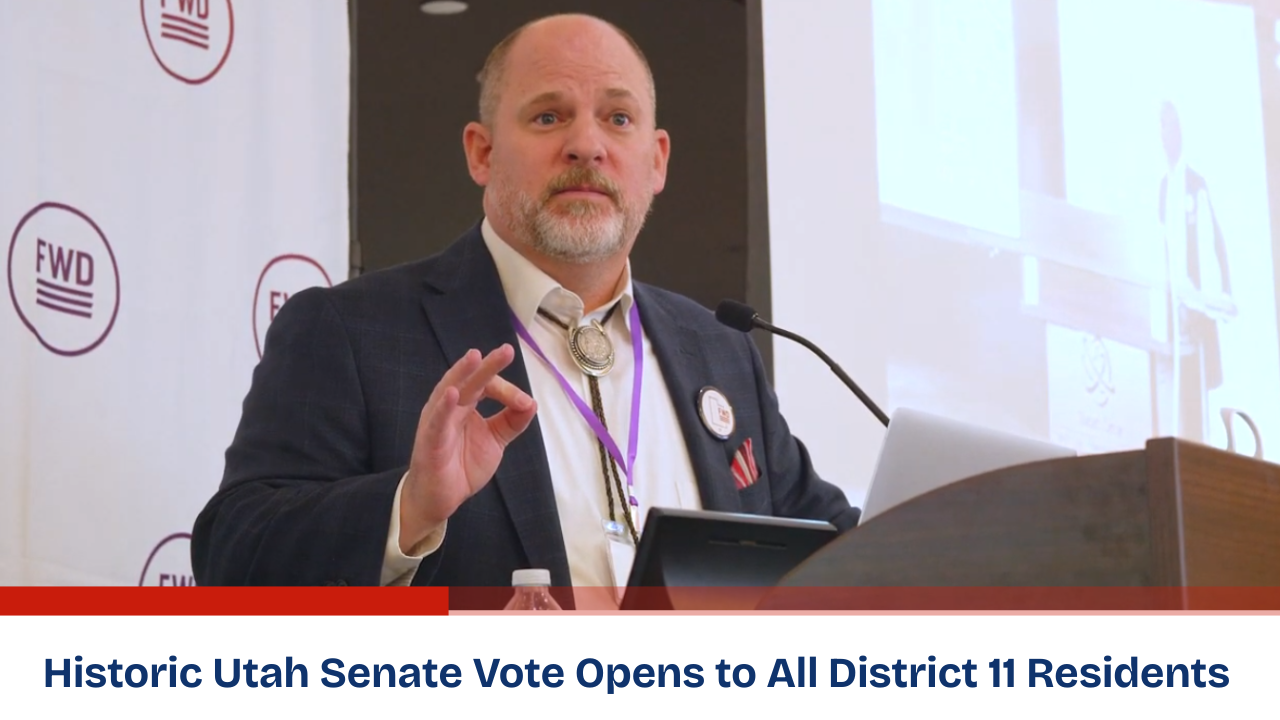
Utah residents in Senate District 11 are participating in an unprecedented election process this week, as they select a replacement for outgoing state legislator Daniel Thatcher through a voting system never before used at the state level.
Breaking From Traditional Politics
The selection process represents a dramatic departure from standard procedures in Utah politics. Rather than limiting the choice to a small group of party delegates, the Forward Party has opened voting to all 60,000 registered voters in the district, regardless of political affiliation.
Thatcher announced in October his intention to resign before the 2026 legislative session, creating the vacancy his party now seeks to fill. The West Valley City lawmaker switched from Republican to Forward Party affiliation in March 2025, making him Utah’s only third-party state legislator at the time.
Understanding Approval Voting
The election employs approval voting, a method allowing participants to support multiple candidates rather than selecting just one. The candidate receiving the most total approvals wins, with proponents arguing this system better reflects voter preferences than traditional single-choice ballots.
Several cities have used approval voting, but this marks the first time the method will be used to elect someone to a state-level position, according to party officials.
Five Candidates Compete
Voters are choosing among five contenders who submitted applications and met party requirements:
Tynley Bean of Erda, Maleah Bliss of Kearns, Emily Buss of Eagle Mountain, Jeff Marshall of Magna, and Jeff Saunders of Tooele have each presented their qualifications through video statements and written materials available at the campaign website.
A candidate forum took place December 4, giving residents the opportunity to hear directly from those seeking the position before casting their ballots.
How the Voting Works
Online voting began December 5, with registered voters receiving personal access codes by mail. The secure platform, administered by Secure Internet Voting, verifies participant eligibility by comparing information against official voter registration records.
Those preferring traditional methods can vote in person at designated locations throughout the week. The schedule includes half-day sessions in Tooele on December 9 and Eagle Mountain on December 10, with four locations available district-wide on the final voting day.
The voting portal remains accessible through 9 p.m. on December 11, when the election concludes. Complete location details and participation instructions are posted at 11chooses.com.
Geographic Scope of District 11
District 11 encompasses portions of several cities on the west side of Salt Lake Valley, a section of Utah County, and much of Tooele County. The diverse geographic area includes both suburban and rural communities, representing varied perspectives across the region.
Challenging the Delegate System
Party officials position this open process as a reform alternative to Utah’s standard replacement procedures. Forward Party Chair Michelle Quist noted that roughly one in four current Utah legislators initially assumed office through delegate-only special replacement processes where less than one percent of district voters participate.
Those appointed through such processes enjoy a 97% incumbency reelection rate, according to party data, raising questions about whether limited initial selection processes affect long-term representation.
The Forward Party framed its approach as returning power to constituents rather than party insiders. Participants can vote regardless of whether they belong to the Forward Party, Republican Party, Democratic Party, or remain unaffiliated.
Next Steps
The winning candidate will be announced December 12 and then sent to Governor Spencer Cox for approval. State law requires the governor to accept or reject the party’s nominee, with the replacement serving until the current term expires in January 2027.
The selected legislator must commit to seeking reelection in 2026 under the Forward Party banner, ensuring continuity of party representation through the next election cycle.
Thatcher’s Legislative Legacy
Thatcher first won election at age 32 in a district observers doubted would support a conservative candidate. His approach emphasized listening to constituents across party lines, earning him reelection despite occasionally clashing with Republican leadership on policy matters.
Health struggles and frustration with partisan politics influenced his decision to leave the legislature, though he emphasized confidence that the Forward Party’s selection process would identify a capable successor committed to constituent service over party loyalty.
Implications for Utah Politics
This experimental voting process tests whether expanding participation in midterm legislative replacements affects the quality and independence of selected representatives. The outcome may influence how other minor parties or reform-minded organizations approach similar situations in the future.
Whether this model spreads beyond District 11 depends partly on voter turnout, candidate quality, and the selected legislator’s subsequent performance. Observers from across Utah’s political spectrum are watching to assess whether the open process delivers on its promise of better representation.
For more information about the election process, candidate profiles, and district boundaries, visit the official campaign website at 11chooses.com. Details about the Forward Party of Utah and its platform are available on the organization’s site. Information about Utah’s legislative processes can be found through the Utah State Legislature official portal.