
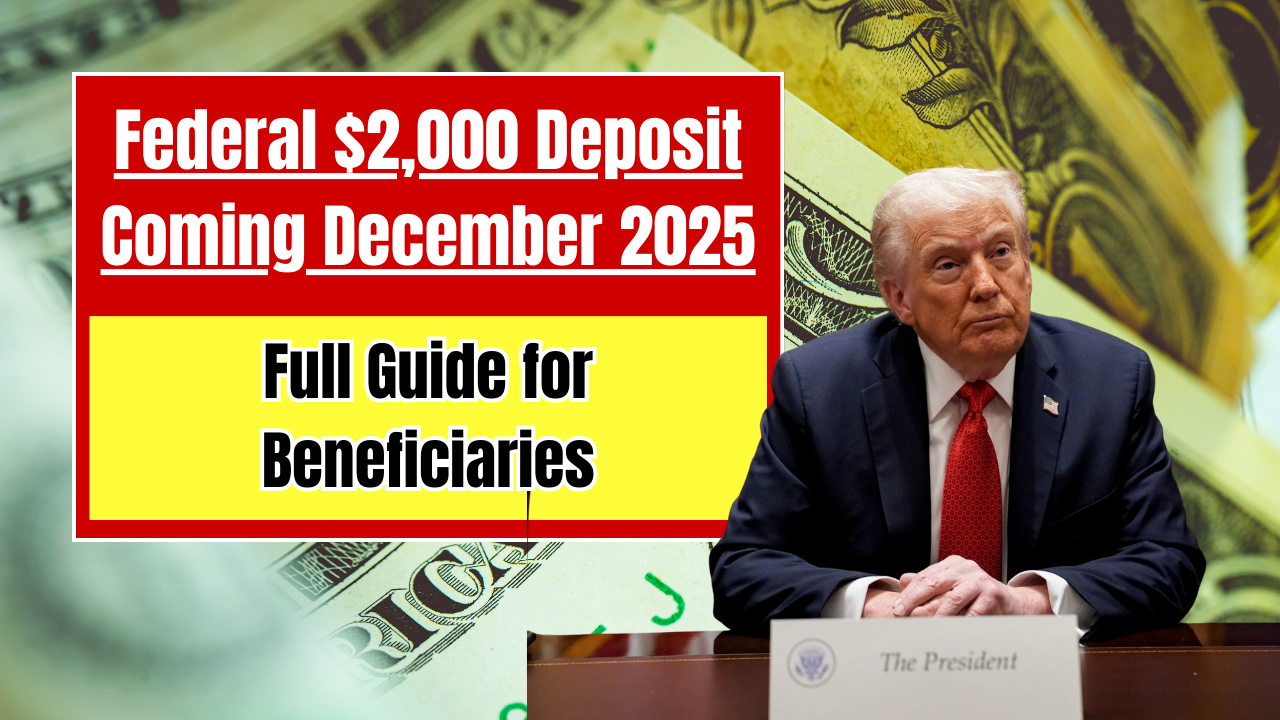
As December approaches, many families are bracing for holiday expenses and year-end bills. Imagine opening your banking app and seeing a $2,000 federal deposit from the IRS. That scenario may soon become reality under a new proposal circulating in Washington — a payment often referred to as a “tariff dividend” or a potential fourth stimulus check.
With inflation still straining household budgets, this one-time payment could offer meaningful relief. Here is a detailed look at what the proposal includes, who may qualify, how payments would be delivered and what steps you should take to avoid missing out.
What is the Federal $2,000 Deposit?
The proposed payment, described as the tariff dividend, would be a one-time federal deposit aimed at offsetting rising prices caused by import tariffs. Unlike the stimulus checks issued during the pandemic, this payment would not come from emergency relief funds. Instead, it would be funded by revenue generated from tariffs placed on imported goods.
If approved, eligible individuals could see the $2,000 deposit arrive in their IRS-verified bank accounts sometime in mid- or late December 2025.
This proposal has not yet been finalized.
History: From COVID Stimulus Checks to Tariff Rebates
The United States distributed three major stimulus checks between 2020 and 2021, totaling up to $3,200 per adult, as part of pandemic financial relief.
In 2025, the administration is exploring a new model: a tariff rebate of $2,000. This concept builds on earlier ideas like the American Worker Rebate Act, which suggested payments between $600 and $2,400.
Tariff collections now amount to billions of dollars, making this proposal financially plausible.
Comparison to the 2025 Stimulus Proposal
| Past Stimulus Rounds | Amount per Adult | Eligibility Threshold | Funding Source |
|---|---|---|---|
| Round 1 (2020) | $1,200 | $75K single / $150K joint | CARES Act |
| Round 2 (2020) | $600 | $75K single / $150K joint | Consolidated Act |
| Round 3 (2021) | $1,400 | $75K single / $150K joint | American Rescue Plan |
| Proposed 2025 | $2,000 | Approx. $100K single | Tariff Revenues |
This comparison shows that the 2025 proposal would be the largest single federal payment yet, funded from a completely different revenue source.
Why this 2025 payment matters
Inflation has significantly reshaped household budgets. Grocery prices alone have increased by nearly 25% since 2020, squeezing families from all income brackets. For many Americans, a $2,000 direct deposit would offer immediate stability and allow them to catch up on essential bills.
The federal government has collected approximately $195 billion in tariff revenue, which strengthens the feasibility of distributing this payment. For families planning for savings, debt reduction or major purchases, this deposit could provide a meaningful financial reset.
Eligibility and Payment Process
Who may qualify?
Eligibility would likely depend on:
Citizenship or residency status
You must be a U.S. citizen or legal resident.
Income limits (2024 AGI)
Single filers: under $100,000
Joint filers: under $200,000
Tax return compliance
Your federal tax return must have been filed on time.
Banking information
Your IRS online profile must include accurate direct deposit details.
How will you receive the payment?
Here’s how eligible individuals would be paid:
Log in to IRS.gov and confirm your direct deposit information.
Watch for official IRS updates expected in November.
If no bank account is on file, a paper check may be mailed instead.
Payments would be issued automatically, so no separate application is required.
Comparison of Delivery Methods
| Delivery Method | Timeline | Pros | Cons |
|---|---|---|---|
| Direct Deposit | 1–3 days | Fastest, secure | Must have correct bank info |
| Paper Check | 2–4 weeks | No bank required | Longer wait, risk of mail delays |
Setting up direct deposit is strongly recommended to prevent delays.
Key Stimulus Impact Statistics
Historical data from prior stimulus programs shows:
The third stimulus round injected $411 billion into the U.S. economy.
Child poverty dropped by roughly 30% during the months payments were issued.
About 84% of payments reached Americans within one week of processing.
If approved, the 2025 proposal could reach 150 million Americans, at an estimated cost of $300 billion.
How to Use the $2,000 Wisely
Financial experts suggest:
Save at least half for emergencies or long-term planning.
Consider this as tax-free income, but document it for your personal records.
Review major expenses before making purchases.
Monitor all IRS announcements, since proposals are subject to change.
Conclusion
If officially approved, the $2,000 federal deposit set for December 2025 could offer essential relief at a time when many families need it most. Keeping your IRS information current and understanding eligibility requirements will ensure you’re prepared. This payment has the potential to steady budgets, reduce debt pressure and bring financial breathing room to millions.
FAQs
Q. When will the payments be delivered?
Most payments should arrive within the communicated timeframe, depending on whether you receive direct deposit or a mailed check.
Q. Who is eligible to receive the payment?
Eligibility generally includes income limits, tax filing status and residency requirements.
Q. Do I need to apply?
No. Payments will be issued automatically to eligible individuals.
Q. What if my bank details have changed?
Update your information through your IRS online account to avoid delays.
Q. Can I track my payment status?
Yes. Most federal agencies, including the IRS, offer online tools for checking payment progress.