Nevada police generally cannot search the contents of your phone during a routine traffic stop without a warrant, consent, or specific legal exceptions under the Fourth Amendment. This protection stems from U.S. Supreme Court rulings applied in Nevada law.
Fourth Amendment Basics
The Fourth Amendment protects against unreasonable searches and seizures, requiring warrants based on probable cause. In Nevada, this applies fully during traffic stops, where police need justification beyond the initial violation to search personal items like phones.
Nevada courts, including the Supreme Court, enforce these limits strictly.
Riley v. California Impact
The 2014 U.S. Supreme Court case Riley v. California ruled unanimously that police need a warrant to search digital phone contents, even incident to arrest, due to the vast private data stored on devices.
This overturned prior practices allowing quick phone flips post-arrest. Nevada follows this, as affirmed in cases like Smith v. State (2024), where warrantless phone data searches violated rights.
Traffic Stop Specifics
Routine traffic stops allow police to check license, registration, and insurance, and order occupants out for safety. They cannot automatically search your phone; no probable cause exists just from a taillight or speeding violation.
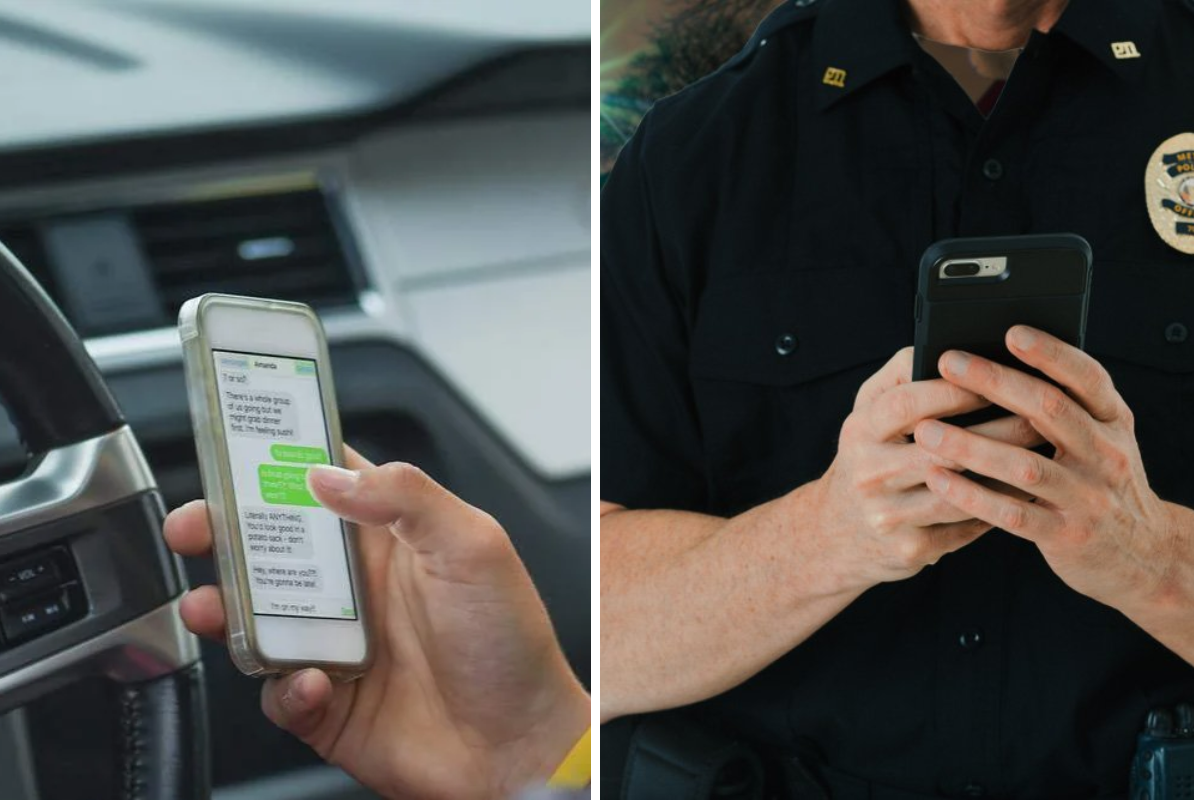
Nevada’s handheld phone ban (NRS 484B.165) prohibits texting or manual use while driving but does not permit warrantless phone checks to “prove” it.
Exceptions Allowing Searches
Police can search your phone if you consent—politely say “I do not consent” to invoke rights. A valid warrant based on probable cause permits full access, though attorneys can challenge overbroad ones.
Exigent circumstances, like imminent evidence destruction or officer danger, allow warrantless searches, but Nevada courts scrutinize these closely (e.g., Smith v. State). Inventory searches post-arrest or plain view evidence (phone screen visible) may apply narrowly.
What Happens in Practice
During a stop, officers might ask to see your phone for DUI checks or distractions, but refuse without cause. If arrested (e.g., DUI), they can seize the phone but must secure a warrant for contents—storing it safely in the meantime.
Nevada’s NRS 171.123 requires identifying yourself but not unlocking devices or providing passcodes. Biometrics like fingerprints may differ from passcodes in some courts, but remain risky.
Your Rights and Steps
Remain calm, silent beyond basics, and document officer details. Physically resisting leads to charges, even if rights are violated—challenge later via a motion to suppress. Evidence from illegal searches gets excluded under the exclusionary rule, potentially dismissing cases.
Recent Nevada rulings strengthen digital privacy, distinguishing from federal leniency.
Recent Nevada Developments
In Smith v. State (2024), the Nevada Supreme Court reversed a conviction because officers forensically searched a seized phone without a warrant or exigency.
This reinforces Riley locally: seizure okay under exigency, but data search needs separate justification. Cases like Acosta v. State tighten nexus requirements for phone warrants.
Practical Advice
Lock your phone and avoid handling it during stops to prevent plain view claims. If searched illegally, consult a Nevada attorney immediately for suppression motions.
While hands-free calling is allowed, full bans on handheld use heighten distraction scrutiny without easing phone access. Knowing these rules empowers safe interactions—rights protect everyone, guilty or not.
SOURCE:
- https://www.govtech.com/public-safety/can-police-search-your-phone-during-a-traffic-stop
- https://joeygilbertlaw.com/blog/your-rights-during-police-searches-in-nevada/