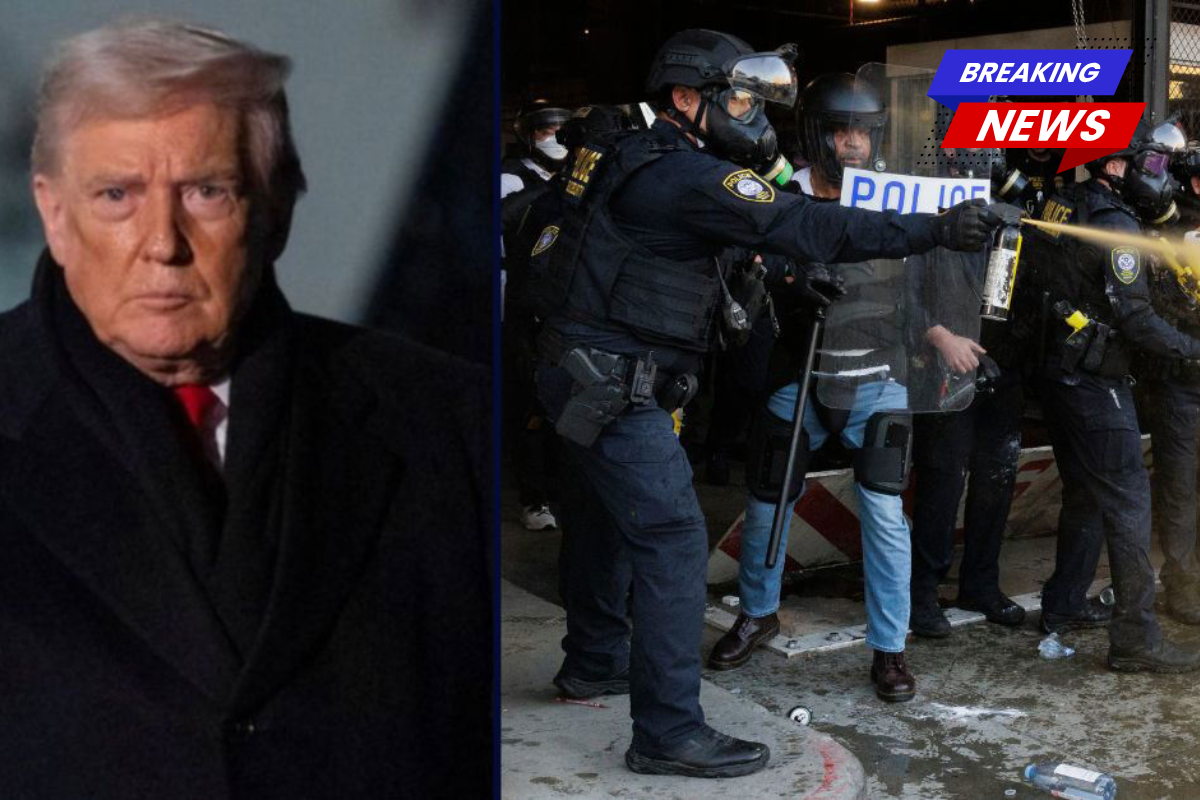
A federal judge has issued a mixed ruling in a legal battle between the Trump administration and the state of California, allowing one key law to move forward while temporarily blocking another. The decision relates to California’s efforts to regulate how law enforcement officers — including federal immigration agents — identify themselves during operations in the state.
The Laws Behind the Legal Fight
California lawmakers passed two laws in 2025 aimed at increasing transparency and accountability in law enforcement:
- The No Secret Police Act: Prohibits law enforcement officers from wearing masks while on duty.
- The No Vigilantes Act: Requires all law enforcement officers — local, state, and federal — to clearly display their name and badge number during public interactions.
These laws were passed in response to rising public concerns over anonymous ICE agents and masked officers carrying out immigration enforcement, especially during the Trump administration’s increased deportation actions and protest crackdowns.
Judge’s Split Decision
In a 30-page order, U.S. District Judge Christina A. Snyder ruled that the name and badge number requirement can go into effect, but blocked the mask ban — for now.
She found that the mask ban, as currently written, unfairly treats federal officers differently than state officers. For example, California Highway Patrol officers weren’t included in the ban, which created an imbalance in how the rule was applied.
Judge Snyder said the state could fix this by applying the mask ban universally to all law enforcement, including state officers, rather than only federal and local ones.
Transparency vs. Discrimination
While the judge acknowledged that California’s laws were driven by public demand for transparency, she also had to weigh how these laws affect federal enforcement powers.
She compared the law to state traffic rules, which federal agents must follow while driving on public roads. Similarly, she said, it’s fair to expect law enforcement officers — even federal ones — to follow basic identification rules when working in California.
Importantly, the Department of Justice (DOJ) did not challenge the name-and-badge law on grounds of discrimination, possibly because it applies equally across all levels of law enforcement.
Judge Snyder wrote:
“These Acts serve the public interest by promoting transparency which is essential for accountability and public trust.”
Trump Administration’s Arguments Fall Flat
The federal government argued that banning masks and requiring identification could interfere with federal operations and make it easier for people to track agents or avoid arrest. They cited examples of people blowing whistles during immigration raids or posting agent sightings online.
But the judge firmly rejected this idea:
“Recording officers or alerting others about law enforcement presence is generally protected by the First Amendment.”
She also pointed out that ICE and other agencies don’t even require their officers to wear masks, and decisions about face coverings are currently left to individual agents. So, if masks were truly critical to safety or national security, federal policy would make them mandatory — which it doesn’t.
What Happens Next?
The judge has put her ruling on temporary hold until February 19, giving the DOJ time to appeal the decision. In the meantime, California lawmakers have already said they plan to revise the mask ban to ensure it applies equally to all law enforcement agencies — potentially making it harder for future legal challenges.