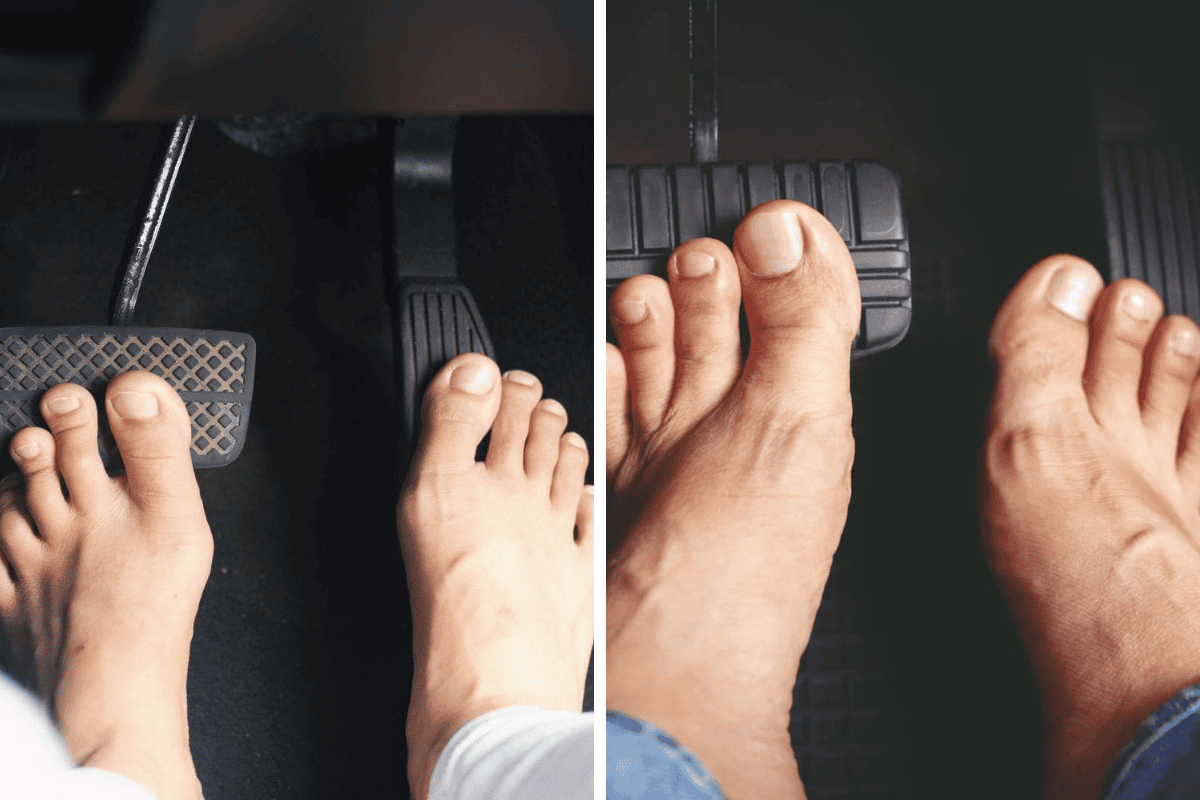
No, it is not illegal to drive barefoot in Hawaii.
State Law Overview
Hawaii’s traffic code (HRS Chapter 291) imposes no footwear requirement for operating passenger vehicles, aligning with all 50 states’ lack of specific barefoot bans.
Citations can only arise under general “careless driving” (HRS § 291-2) if bare feet demonstrably impair control, like slipping off pedals—rarely enforced absent accidents.
Common Myths
Urban legends persist from outdated DMV advice or parental warnings, but Hawaii’s driver’s manual omits any shoe mandate. Flip-flops (“slippahs”) are also legal, though riskier if they catch under pedals.
Safety Considerations
Bare feet reduce pedal grip when sweaty, heighten injury risk from glass in crashes, and limit feel for clutch work in manuals.
Experts recommend closed-toe shoes for traction, but legality hinges on safe operation, not attire.
Enforcement Realities
Officers cannot stop you solely for bare feet; post-crash fault assessments prioritize negligence over footwear. Commercial drivers face FMCSA scrutiny, but personal vehicles remain unrestrict.
Quick Comparison
| Footwear | Legal in HI? | Safety Notes mywaynecountynow+1 |
|---|---|---|
| Barefoot | Yes | Reduced grip/injury risk |
| Flip-flops | Yes | Prone to slipping off |
| Heels/Boots | Yes | Bulky; may hinder quick moves |
| Closed-toe | Yes | Optimal control recommended |
Best Practices
Test pedal feel before highways; carry shoes for emergencies. Prioritize control—Hawaii’s roads demand it regardless of shoes.
SOURCES:
- https://mywaynecountynow.com/is-it-illegal-to-drive-barefoot-in-hawaii-heres-what-law-says/
- https://www.directauto.com/learning-center/driving-laws-and-safety/is-it-illegal-to-drive-barefoot