
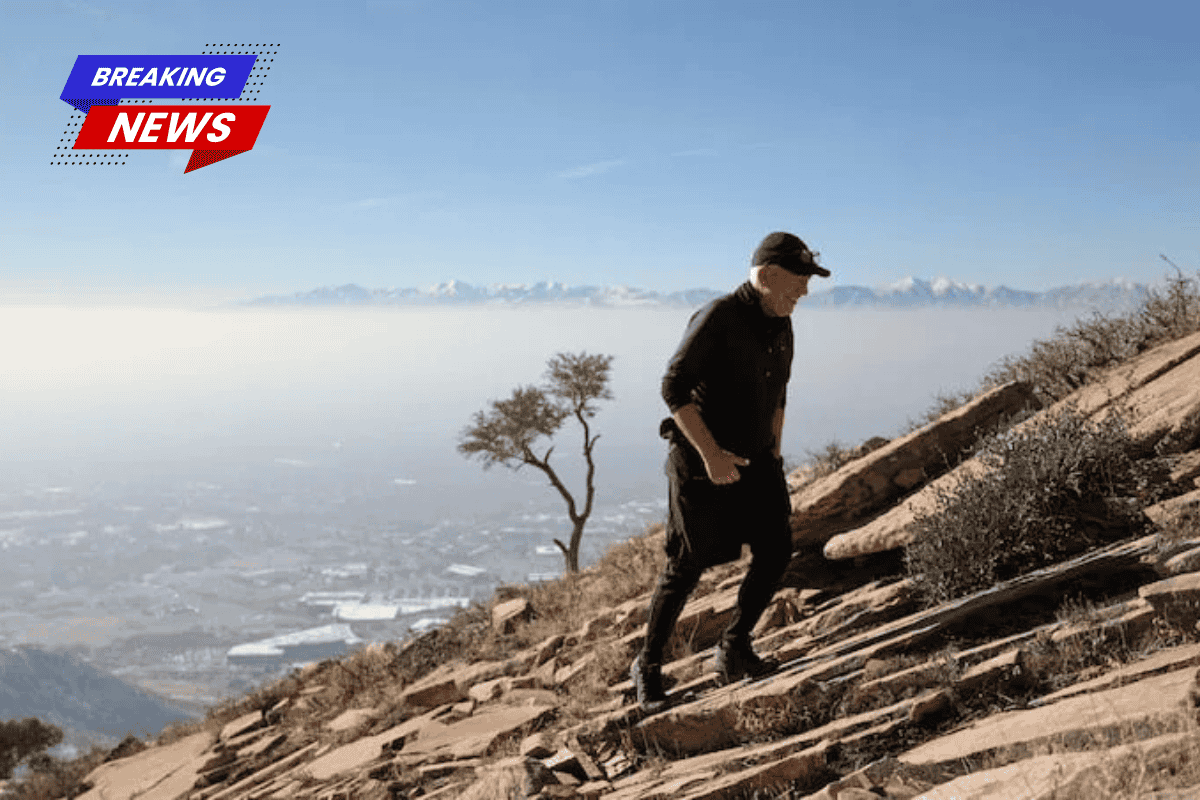
It’s 10 a.m. on a January Monday, and I meet Dru White at the Living Room Trail in the foothills above Salt Lake City. The valley below is shrouded in a hazy fog, but the sky above is clear and blue.
The temperature hovers around 30 degrees, but White, a seasoned hiker, is undeterred. Dressed in black, he sports Salomon trail shoes, Nike gear, and a bright smile. Today, this will be hike No. 1,807 on the Wasatch Front since he started counting his outdoor adventures in 2012.
For White, hiking isn’t just about the numbers; it’s about the experience and the personal connection to nature. Having hiked this very trail over 120 times, he knows the path well. His purpose today is not only to share his journey but to introduce me to what he calls the “dragon” of the mountains—a term that’s both a literal and metaphorical reference to the area’s rugged landscape.
A Journey Into the “Dragon”
The Living Room Trail gets its name from the rocky outcrop near the top, where hikers have created Flintstones-style tables, chairs, and even a “television” with smooth, large rocks. But before reaching the Living Room, we have to traverse a unique mountain formation known as the “dragon” by locals. As we climb, White leads us up steep slopes he calls “the fangs,” referencing the sharp, jagged rocks that line the trail.
White, a former health and fitness company owner now approaching 74, has made hiking a daily ritual since retiring at 60. For him, it’s a minimalist pursuit—no backpacks, no hiking poles, and only a water bottle on particularly hot days. The simplicity of the experience is key.
“Every ounce you carry is going to make a difference on the experience you have,” White says as we climb. It’s a philosophy he’s embraced for over six decades of hiking and one that has shaped his perspective on health and well-being.
Minimalist Hiking Philosophy
For White, the essence of hiking is about connecting with nature, not overloading yourself with gear. He’s often puzzled by the trend of carrying multiple “essentials” for hiking, arguing that many people get bogged down by fear or excessive preparation.
“Most people will be fine if they know three things: their ability, the trail, and the weather,” he says. By keeping it simple, White has made hiking accessible for all. He’s keen on making it an enjoyable, regular activity for people, especially those who have never hiked before.
White’s dedication to minimalism extends to his health as well. He follows a simple eating regimen: a light breakfast and one meal a day. He takes no medications, doesn’t visit the doctor, and claims to rarely get ill—except for the occasional sniffle. His health and well-being are proof of his commitment to a minimalist lifestyle that prioritizes movement, outdoor activity, and a healthy mindset.
The Dragon Walker’s Legacy
As we reach the top of the trail and pause for a moment to take in the breathtaking view, White shares more about his journey. His adventures in the mountains have been recorded meticulously on Garmin Connect, a fitness app he uses to track every hike. His numbers are impressive:
- Hikes: 1,807
- Trail Miles: 8,223.96 miles
- Elevation Gain: 3,152,237 feet
- Total Hours Spent Hiking: 4,930 hours
- Calories Burned: 1,384,177
These statistics are more than just numbers; they represent a deep connection to the land and a commitment to self-improvement. White’s hiking journal also includes anecdotes and stories from the many people he’s met along the way—fellow hikers, wildlife enthusiasts, and even the occasional mountain lion sighting.
Building Connection Through the Mountains
Hiking for White isn’t just about the physical challenge; it’s about the connections he builds with others. His positive attitude and enthusiasm are contagious. He regularly encourages fellow hikers, telling them, “Look at that pro hiker!” when meeting someone on the trail. His uplifting words often spark conversations, and through these interactions, he’s built a network of hikers from around the world.
“I’ve met people from all over the world just by being positive,” White says. “And it’s rewarding to share these trails with others. Some of these people end up becoming regulars on the trail too.”
Throughout our hike, White points out the various signs of wildlife: rattlesnake dens, coyote hideouts, and deer and elk trails. The knowledge he’s accumulated about the land over the years is vast, and he shares it generously with anyone who asks.
The “Heart of the Dragon”
As we near the summit, we stop at the Living Room itself—a spot where hikers have created their own outdoor lounge with smooth, weathered stones. Here, White shares the history of the place and its name. Years ago, hikers began arranging the rocks into tables and chairs, creating a space that felt like an outdoor living room.
But the area is not without its problems. White laments the damage done by treasure hunters seeking hidden items, following clues from modern-day treasure hunts. Despite this, the Living Room remains a tranquil and beautiful spot in the mountains. We also visit an upper chamber where four stone chairs stand behind a stacked rock wall, and White encourages us to sit and reflect as kings and queens of the mountain. It’s a moment of peace, a chance to feel connected to the land and to ourselves.
The Benefits of Hiking
For White, hiking isn’t about seeking riches or beauty—it’s about health, happiness, and finding a sense of peace. His books, “Hiking for Life” and “The Path of the Dragon Walker,” reflect his philosophy that hiking provides an array of benefits: mental clarity, physical health, and emotional well-being.
“I believe that we have an inherent connection to nature,” White says. “When you go out into the mountains, you unplug, and there’s something inside that just feels right.”
As we descend the mountain, White’s thoughts are simple but profound. Hiking, for him, is a way to reset and reconnect with something deep within. The mountains provide him with a space to clear his mind, reflect on life, and simply be.
“There’s something in us that used to live this way,” he says with a laugh. “And when you go out and unplug, you realize—this feels kind of like me.”
White’s journey through the Wasatch mountains continues, each hike building on the last. For him, hiking is more than just an activity; it’s a way of life, a means of self-discovery, and a way to stay connected to the world around him.