
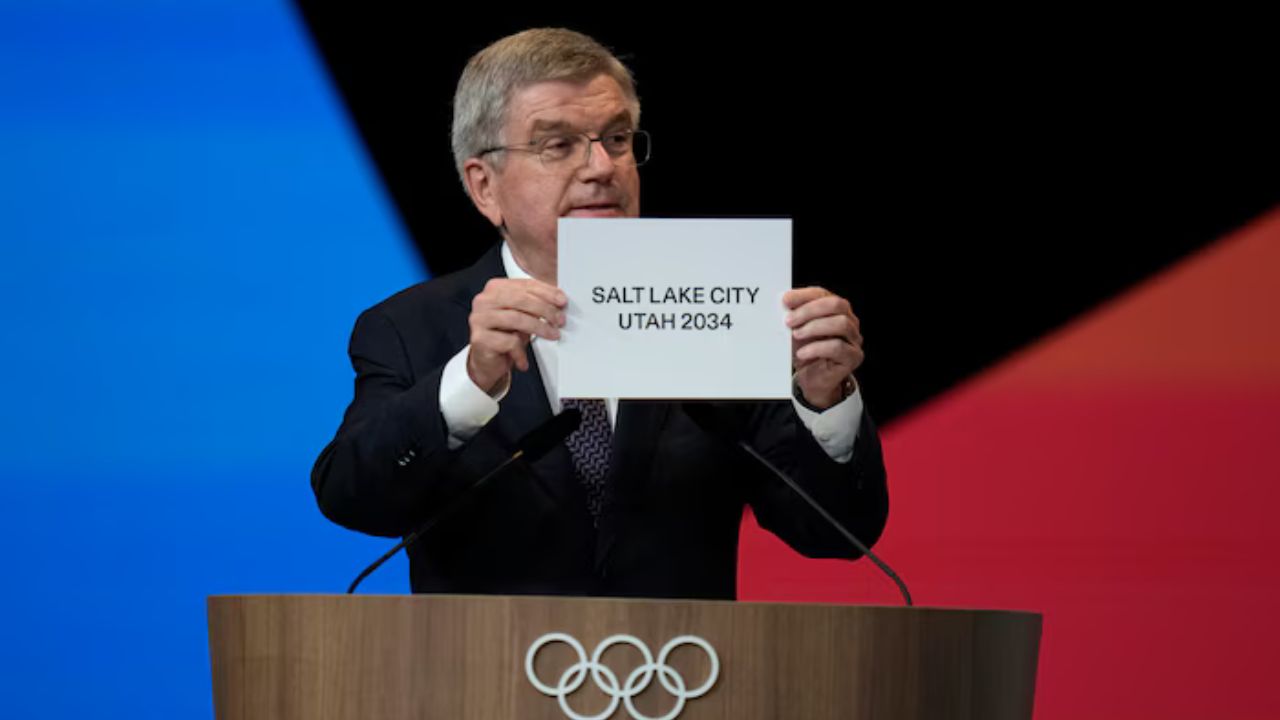
SALT LAKE CITY — City leaders in Utah’s capital were caught off guard after the Organizing Committee for the 2034 Olympic and Paralympic Winter Games decided last month to remove Salt Lake City from the official name of the global event. Despite the unexpected decision, local officials remain firmly committed to supporting and hosting the Utah 2034 Winter Olympics and Paralympics as preparations move forward.
Closed-Door Meeting Highlights Community Inclusion
On Tuesday, organizers of the Utah 2034 Olympic and Paralympic Winter Games met privately with Salt Lake City leaders, along with representatives from the business and tourism sectors, during a statewide listening tour. This tour is designed to engage host cities and ensure communities feel included in Olympic planning.
Although the discussion took place behind closed doors, organizers and city officials focused on ways to ensure Salt Lake City residents feel connected to the Games. Ideas included reserving event tickets for local residents and creating Olympic-themed experiences throughout the city, according to Fraser Bullock, president and executive chairman of the organizing committee, and Rachel Otto, chief of staff to Mayor Erin Mendenhall.
Notably, the controversial name change was barely discussed.
Salt Lake City Remains Central to the Games
“One thing we fully recognize is that Salt Lake City sits at the heart of the Games,” Bullock said, speaking near the city center where many events will be held.
Salt Lake City will host both the opening and closing ceremonies, making it the symbolic beginning and end of the 2034 Winter Olympics. The city will also remain home to the Olympic Village, and numerous competitions will continue to take place within city boundaries.
Acknowledging the city’s importance, organizers included Salt Lake City in the primary Olympic logo, offering reassurance that the capital remains a focal point.
“Salt Lake City will continue to be the hub,” Otto said. “At the same time, we want every Utahn to benefit from the Games. We’re excited to welcome the world, no matter what the event is officially called.”
Economic Impact and Downtown Business Planning
Both sides agreed it was essential to move past the naming issue and focus on community participation and business growth. Bullock emphasized that the name change is unlikely to reduce local involvement, as many events will happen close to residents’ homes.
Discussions also addressed downtown business continuity, particularly concerns about security checkpoints and congestion during the Games. Bullock pointed to the 2002 Winter Olympics, noting that early planning and clear communication helped downtown businesses succeed despite disruptions.
Major Downtown Transformations Ahead of 2034
City leaders also discussed how Salt Lake City’s downtown will look dramatically different by 2034. Smith Entertainment Group and Salt Lake County are finalizing a land purchase agreement that will enable a major redesign of the Salt Palace Convention Center, with completion targeted for 2031.
This project is part of a broader downtown revitalization, including upgrades around the Delta Center and the creation of a new plaza over 300 West. Meanwhile, Salt Lake City aims to finish its “green loop” encircling downtown before the Games begin.
Transportation improvements are also on the horizon. The Utah Transit Authority is considering a fourth light-rail line connecting Salt Lake City International Airport to Olympic venues at the University of Utah, traveling through downtown.
Unified Effort Toward a Global Event
“It’s incredibly motivating,” Otto said. “We’re pushing to complete construction and be fully prepared to welcome huge crowds and host world-class events. Everyone is working toward the same goal—making 2034 truly special.”
Listening Tour Continues Across Utah
The Salt Lake City meeting marked the first phase of the listening tour, focusing on host cities. Olympic organizers are scheduled to meet with leaders from West Valley City and Provo next month.
Additional phases will include visits to other Utah communities, ensuring residents statewide feel connected to Utah 2034, Bullock added.