
VERNAL, Utah — When longtime Dry Fork resident Richard McDonald first learned about Project Alley, his reaction was not positive. Living northwest of Vernal since 1987, McDonald described the area as a peaceful, rural neighborhood where homes are spread out among open fields.
When he found out that the house across the street had been purchased for a women’s addiction recovery home, he admitted his immediate response was anger and concern. “I was upset right away,” McDonald said. “That was my first feeling.”
However, after learning more about the program, McDonald’s perspective changed. Today, he is one of many local residents who support Project Alley, which welcomed its first five residents in late November.
“I see it now as another way to help people,” McDonald explained. “I decided to get involved because being a good neighbor means understanding what’s happening.”
Filling a Critical Gap in Eastern Utah
Project Alley operates similarly to the Thompsen House of Hope, a men’s addiction recovery home that opened in Vernal in 2019. While that facility has helped many men, organizers emphasized that eastern Utah lacked a comparable option for women struggling with addiction.
The nonprofit officially filed its status in early 2023 to address this gap.
“Addiction doesn’t choose who it affects,” said Heath McDougal-Deans, Project Alley’s director and a recovering addict himself. “It reaches every type of family and background. Sometimes it’s closer to home than people realize.”
Volunteers Bring the Vision to Life
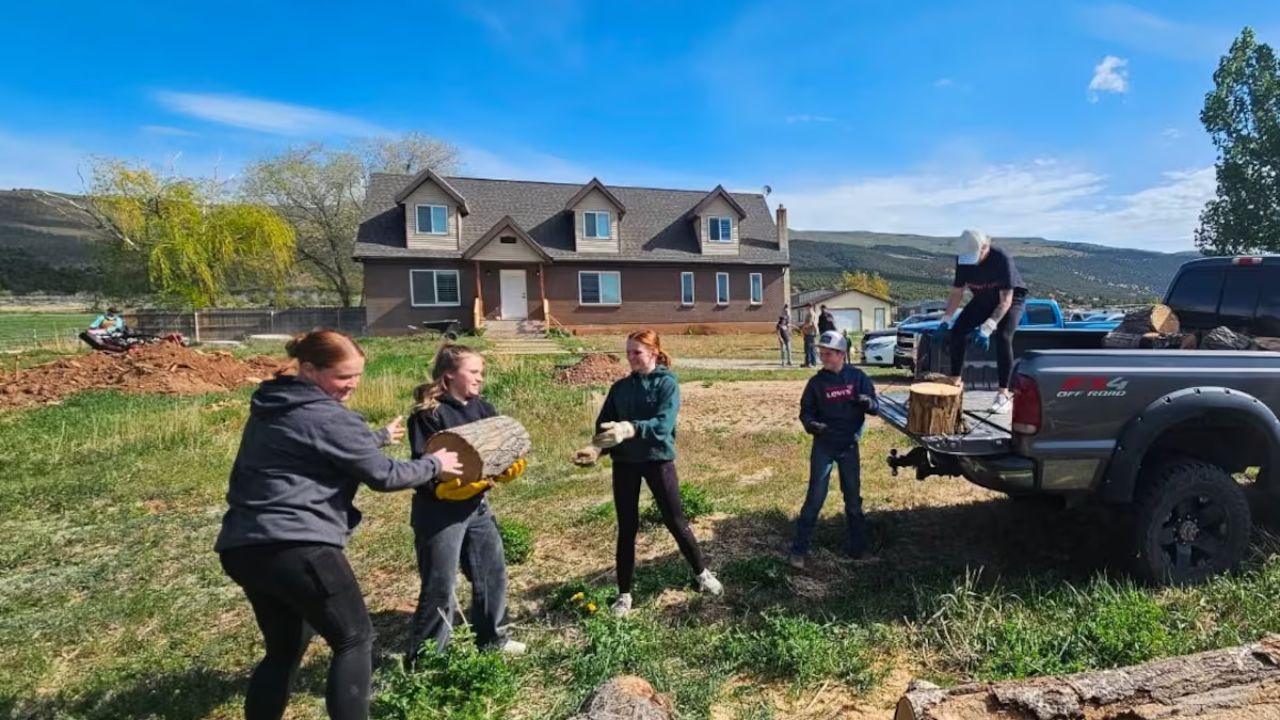
As awareness grew, community members stepped forward to support the women’s recovery home. Volunteers responded to service requests posted on JustServe, a volunteer platform run by The Church of Jesus Christ of Latter-day Saints.
Projects included landscaping, garden work, tree removal, and household tasks. Ken and Ro Jean Bassett were among those who volunteered their time.
Ken Bassett noted that initial hesitation among neighbors was common. “People are cautious at first,” he said. “But once they understand what’s actually happening, they want to help.”
He added that many residents appreciate having a local recovery option. “It means women can heal close to home instead of being sent far away.”
Strong Backing From Local Businesses
Project Alley has also received meaningful support from Vernal-area businesses. Strata Networks, the region’s phone and internet provider, contributed nearly $32,000 in 2024. Additionally, Hotel Vernal, a haunted attraction known for supporting charities, donated $34,000 in 2023 and followed up with another contribution last month.
Committee member Cathy Tesar said the impact of these donations has been transformative. “The community is beginning to truly understand why this recovery home is needed,” she said. “The support has been incredible, and I hope it continues to grow.”
Questions Remain About Long-Term Sustainability
Despite the strong start, organizers acknowledge concerns about maintaining the program long term. Residents are admitted through an application process and are expected to pay monthly fees during their three- to five-month stay. However, not every resident has the financial resources to cover those costs.
“Some of these women simply don’t have the means,” Tesar explained.
Kennedy Chivers, the home’s director of development, said the organization is still learning what model will work best. “Every recovery home operates differently,” she said. “Right now, our focus is on opening our doors, supporting these women, and understanding what sustainability looks like for us.”