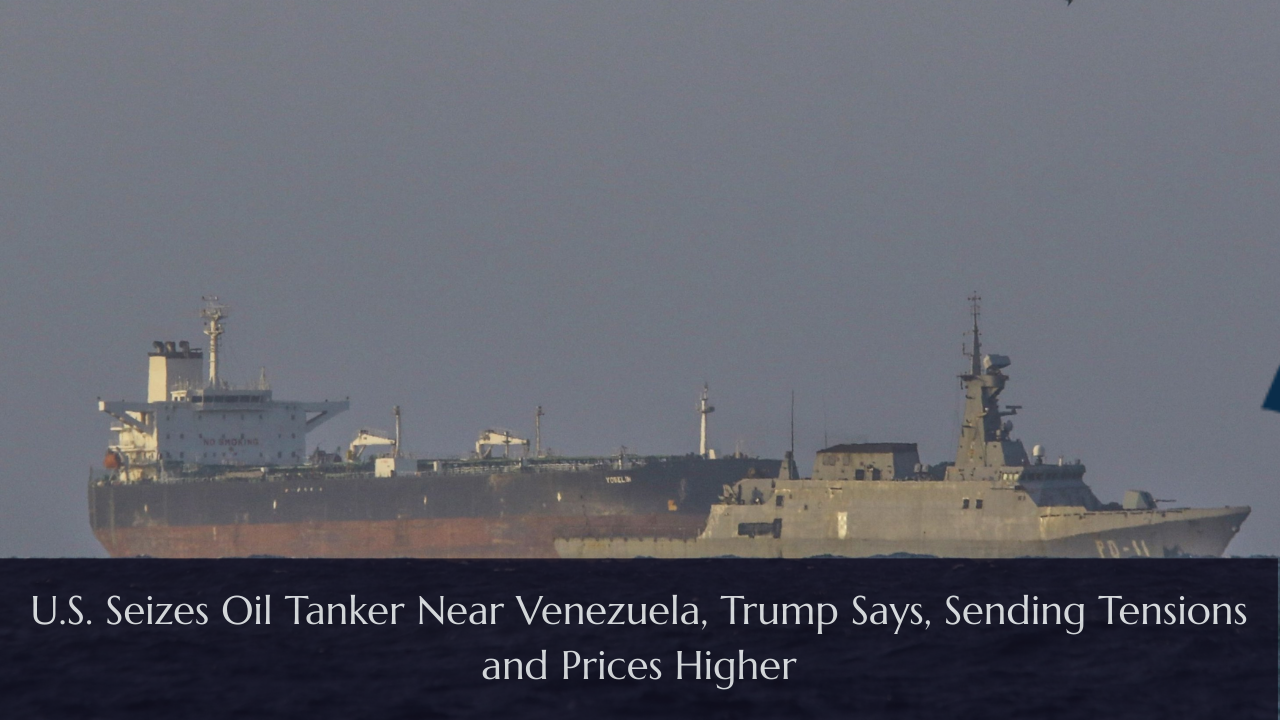
The United States has seized an oil tanker off the coast of Venezuela, President Donald Trump announced Wednesday, marking one of Washington’s most aggressive moves yet toward Caracas and immediately pushing global oil prices higher. The operation, carried out amid a major U.S. military buildup in the region, could signal intensified efforts to target Venezuela’s most critical economic lifeline: its oil industry.
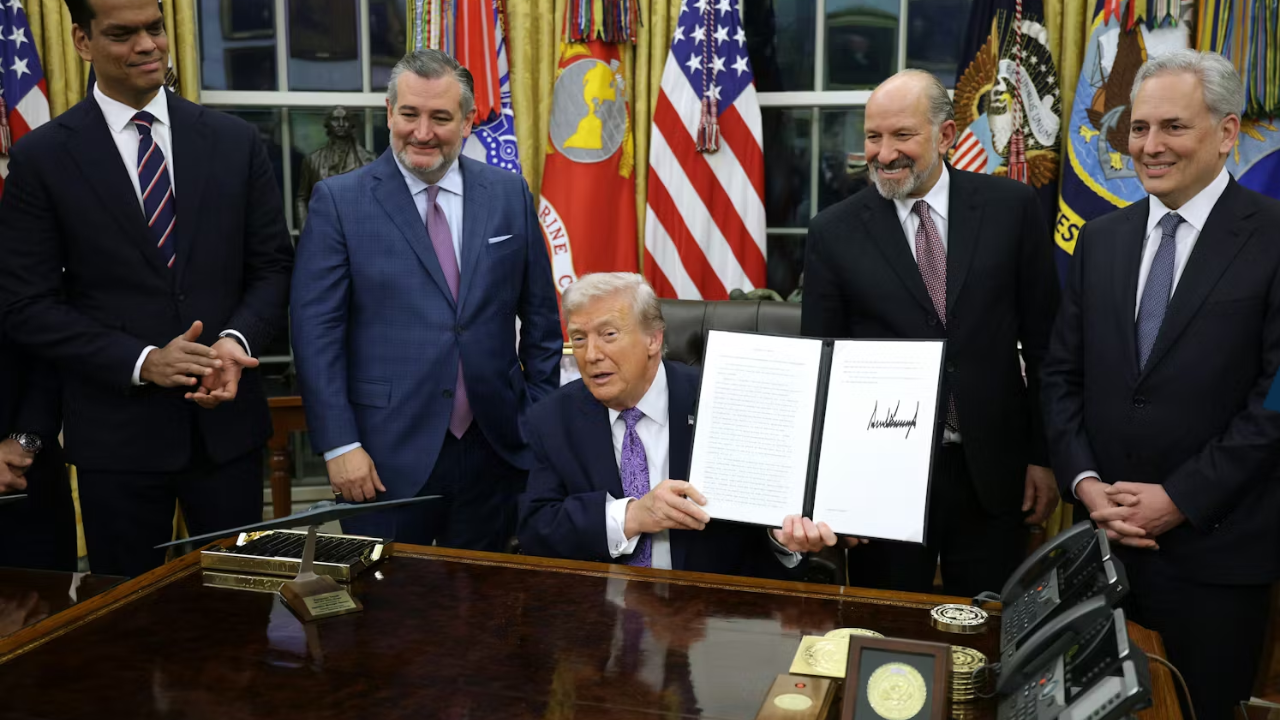
“We’ve just seized a tanker on the coast of Venezuela, very large tanker, the largest one ever actually,” Trump said during a roundtable at the White House. He offered no additional details on the ship or its ownership.
U.S. officials later confirmed that the operation was led by the U.S. Coast Guard, though they declined to disclose the tanker’s name, flag or exact location. A report from British maritime risk firm Vanguard identified the vessel as the Skipper, previously sanctioned under the name Adisa for alleged involvement in Iranian oil trading.
Oil Markets React Immediately
Oil futures bounced as the news broke. Brent crude rose 27 cents to settle at $62.21 per barrel, while West Texas Intermediate gained 21 cents to close at $58.46. Analysts say the seizure adds to existing geopolitical pressure on global supply, even if it does not immediately alter Venezuela’s export volumes.
“This is another geopolitical headwind hitting short-term supply availability,” said Rory Johnston of Commodity Context. “But it doesn’t fundamentally change the situation because these barrels were likely to remain stranded for some time.”
Venezuela exported over 900,000 barrels per day last month, its third-highest monthly average this year. State-run PDVSA has relied heavily on imported naphtha to dilute its extra heavy crude, while Beijing has demanded steep discounts as Venezuela competes with sanctioned oil from Russia and Iran.
The Venezuelan government, led by President Nicolás Maduro, did not respond to Reuters’ request for comment.
A Sharp Escalation in U.S. Pressure
Trump has already ordered a sweeping military buildup in the region, deploying an aircraft carrier, fighter aircraft and tens of thousands of troops. Maduro has repeatedly accused the administration of seeking to overthrow him and seize control of the country’s vast oil reserves — the largest in the world, according to the Organization of the Petroleum Exporting Countries (official website).
The seizure also comes as Washington intensifies maritime operations. Since September, the U.S. military has carried out more than 20 lethal strikes against suspected drug vessels in the Caribbean and Pacific, killing over 80 people. Critics argue these strikes may violate international law because U.S. officials have released little evidence that the targeted boats were transporting drugs or posed an imminent threat.
Concerns grew after reports surfaced that the commander overseeing the mission ordered a second missile strike on survivors of a previous hit.
A new Reuters/Ipsos survey published Wednesday found that a majority of Americans — including roughly 20 percent of Republicans — oppose the campaign of deadly strikes at sea.
Trump Signals Broader Strategic Shift
Trump has long raised the possibility of military intervention in Venezuela, and his administration’s latest moves align with a newly released strategic doctrine prioritizing renewed U.S. dominance in the Western Hemisphere. The document outlines aggressive measures to curb the influence of adversaries and restrict revenue flowing to governments Washington deems hostile.
For official U.S. policy updates, refer to the U.S. Department of State (official website).
With tensions rising, analysts warn that the tanker seizure may be an early sign of a wider crackdown on Venezuela’s oil routes, potentially reshaping markets and heightening geopolitical risk in the region.