As Republican-led states such as Texas and Virginia redraw their congressional districts under pressure from former President Donald Trump to strengthen the GOP’s hold on the U.S. House, a Trump-aligned “dark money” organization is funding out-of-state workers to gather signatures in Utah. Their goal: reverse a court-imposed congressional map that could give Democrats a competitive seat.
Utah GOP Targets Proposition 4 Repeal
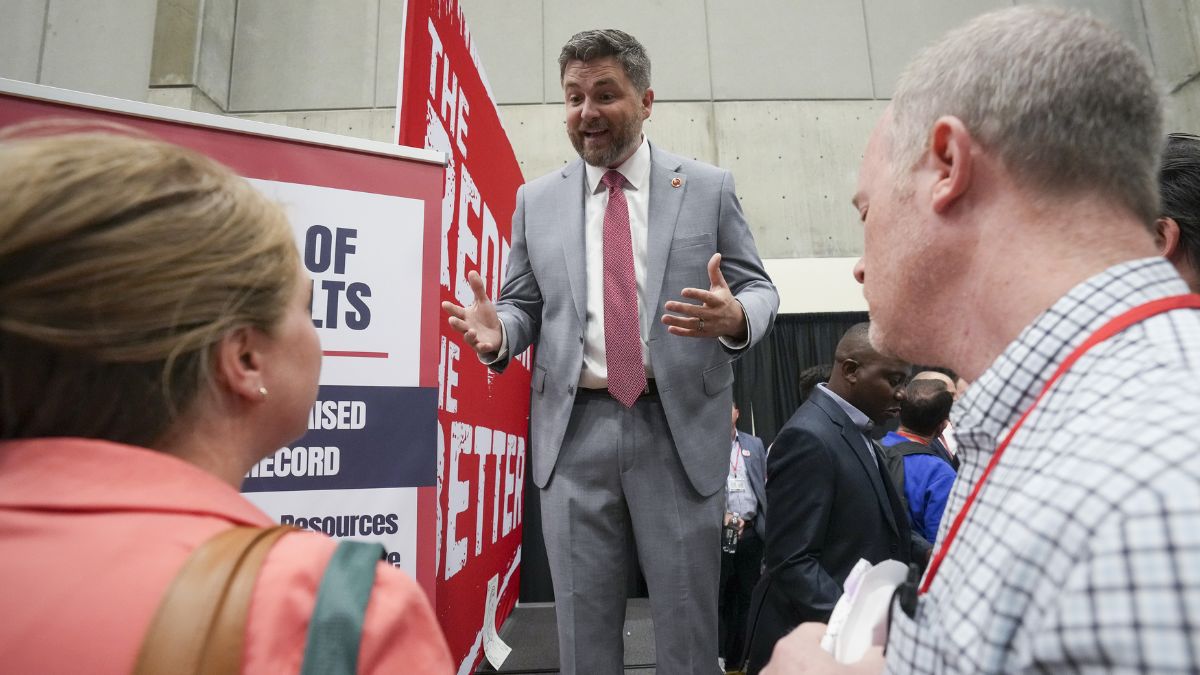
Utah GOP Chair Rob Axson recently confirmed that the party is pursuing an “all-of-the-above strategy” to collect nearly 141,000 valid signatures. The approach includes a mix of local volunteers and paid workers pulled both from within and outside Utah.
If the signature campaign succeeds, Utah voters will be asked next year whether to repeal Proposition 4, also known as Better Boundaries. Removing it would allow Utah lawmakers to eliminate the judge-ordered map that introduced a Democratic-leaning district centered in Salt Lake County.
Meanwhile, legislative leaders insist they will continue appealing the court’s decision in hopes of blocking the map from being used during the 2026 congressional elections.
Patriot Grassroots Leads Paid Signature Drive
The outside signature gatherers are being assembled by Patriot Grassroots, a political consulting firm registered in Wyoming but based in Washington, D.C.
The organization earned over $27 million in 2024 from Turnout for America PAC, a Trump-connected group funded heavily by Elon Musk to conduct a massive voter outreach campaign before the presidential election.
Axson noted that about half of Patriot Grassroots’ core team are returned Latter-day Saint missionaries or graduates of Utah schools. Company president Elijah Day, for instance, studied at Southern Utah University.
According to Axson, roughly half of the paid signature gatherers currently working in Utah are from out of state. While this significantly increases costs due to travel and lodging, he argued that bringing in outside workers helps ensure the signatures are collected in time.
Funding From Trump-Aligned Dark Money Network
The Utah GOP’s repeal initiative is being handled by a state political issues committee called Utahns for Representative Government. Its funding comes entirely from Securing American Greatness, Inc., a well-known Trump-aligned nonprofit.
Axson acknowledged the group’s political alignment and connection to Elon Musk’s 2024 turnout efforts. As a “dark money” entity, the organization does not disclose its donors, though it was operated in 2024 by Taylor Budowich, who later joined the Trump administration as deputy chief of staff before stepping down in September.
So far, Securing American Greatness has funneled more than $4.3 million into the Utahns for Representative Government committee. The committee does not need to release details about how the money is being used, including payments to signature gatherers, until January 12, 2026.
National Redistricting Battles Mirror Utah’s Fight
Across the country, Republicans are working aggressively to expand their House majority ahead of the 2026 midterms.
The U.S. Supreme Court recently allowed Texas to proceed—at least temporarily—with a redrawn map that adds five new Republican seats. Democrats in states like California are simultaneously redrawing their boundaries to offset GOP gains.
In Utah, however, importing paid signature collectors has caused internal friction within the Republican Party.
Internal Pushback From Utah Conservatives
Former GOP state representative Phil Lyman, who ran for governor as both a Republican and an independent last year, criticized the practice on social media. He highlighted an incident where a Michigan-based signature collector was gathering support for the repeal initiative outside a Salt Lake City grocery store alongside 22 other out-of-state workers.
Lyman questioned whether this approach reflects the values of the Utah Republican Party.
Republican leaders such as Senate President J. Stuart Adams have long condemned out-of-state influence over ballot initiatives, arguing that non-Utah organizations should not shape policies affecting the state.
Axson acknowledged those concerns but said the party cannot “tie its hands” while outside groups continue to spend money supporting the opposing side. To him, reversing Proposition 4 would simply restore decision-making power “back to Utah voters.”
Supporters of Proposition 4 Organize Opposition
Defenders of Proposition 4 have begun raising funds as well. Former Salt Lake County Council member Jim Bradley launched Defend Utah’s Ballot, which has already raised nearly $100,000—all from out-of-state political nonprofits such as Western Leadership and Western Futures Fund.
When the Better Boundaries initiative passed in 2018, about half of the $2.8 million raised also came from contributors outside Utah.
Signature Gathering Industry and Costs
Elizabeth Rasmussen, Better Boundaries’ executive director, emphasized that signature campaigns require extensive financial support to reach voters.
Salt Lake City Council member Alejandro Puy, whose firm Landslide Political oversaw signature collection for the 2018 Better Boundaries initiative, said professional signature gatherers often travel nationwide for such work.
However, he noted that hiring out-of-state contractors usually happens when organizers are short on time or need reinforcement, and it is generally more expensive and less preferred because non-local workers are unfamiliar with community issues.
When Landslide worked on Proposition 4 in 2018, all canvassers were local hires, Puy said.
Earlier this year, the labor-backed Protect Utah Workers committee hired Landslide again to help coordinate signature gathering for a union-led push to repeal a law limiting public employee unions. This effort relied mostly on volunteers, including union members who traveled at their own cost and stayed with local workers.
Utah GOP Confident Despite Challenges
Axson stated that the Utah GOP has strong financial support behind its repeal campaign. Although organizing a new statewide initiative has been a “Herculean effort,” he believes the party has the resources needed to succeed.
Signature gatherers are expected to begin submitting signatures to county clerks for verification in the coming weeks.
Utah has become one of the central battlegrounds in the national struggle over redistricting and political influence. While Republicans push to reverse the court-ordered map and regain control over the process, both sides are relying heavily on outside funding and professional signature collectors.
The escalating contest reflects broader national tensions around political power, redistricting, and voter-driven initiatives. As signatures begin rolling in, Utah voters will soon determine whether Proposition 4 stands—or whether the state’s congressional boundaries will shift once again.
FAQs
1. What is the goal of the Utah GOP’s signature campaign?
The campaign aims to repeal Proposition 4, which currently enforces court-ordered congressional maps that create a Democratic-leaning district.
2. Why are out-of-state signature gatherers being used?
Because organizers are on a tight timeline and need additional support to reach nearly 141,000 valid signatures, even though it increases costs.
3. Who is funding the repeal initiative?
A Trump-aligned nonprofit, Securing American Greatness, Inc., has contributed over $4.3 million to support the effort.