
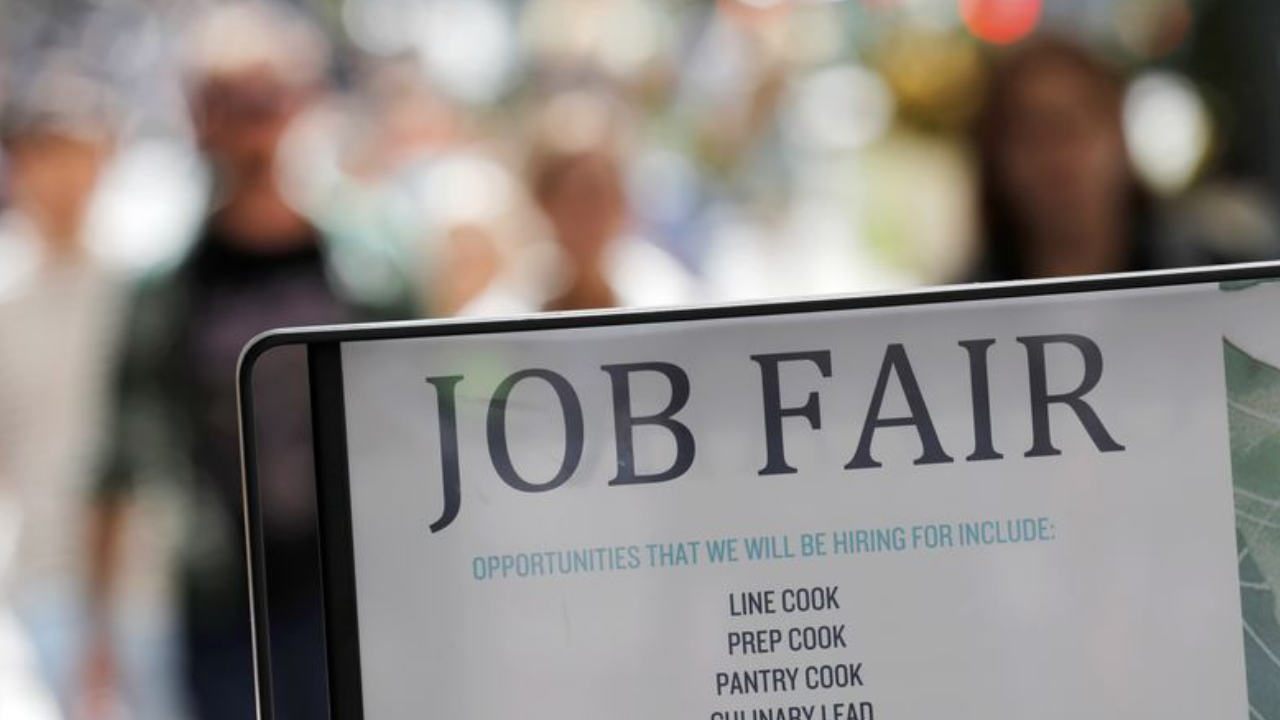
A new report from the U.S. Labor Department shows weekly jobless claims fell to 191,000 for the week ending Nov. 29—marking the lowest level since September 2022. The sharp decline surprised analysts, many of whom cautioned that the numbers may be distorted by Thanksgiving holiday adjustments, rather than signaling renewed labor market strength.
Still, the report offers a timely snapshot of employment dynamics at a moment when other private surveys have painted a far gloomier picture of November hiring.
Economy-wide job losses remain a concern. Independent employment tracker Revelio Labs reported the U.S. economy shed 9,000 jobs in November, while the ADP private payroll report recorded its biggest decline in more than two and a half years. Even so, the weekly claims data unlike most employment indices are viewed as the most immediate indicator of the market’s health.
Holiday Distortions Likely Contributed to Drop
Initial filings for unemployment benefits fell by 27,000 to 191,000. That drop was substantially larger than the decline predicted by the seasonal adjustment model used by the government.
Unadjusted claims plunged more than 49,000, driven primarily by steep declines in California, Texas, New York, Washington and Florida. Economists at Goldman Sachs noted that the seasonal factor expected a significantly smaller drop than what actually occurred.
Because jobless claims often swing sharply around holiday weeks including Thanksgiving many analysts warn against reading too deeply into the sudden improvement.
Job Losses Persist Beneath the Surface
Despite the encouraging headline number, the labor market still shows signs of stagnation:
- Layoffs continue in technology and small-to-medium-sized companies, partly due to rapid AI integration, which is reducing demand for entry-level roles.
- Planned job cuts from employers totaled 71,321 in November, according to Challenger, Gray & Christmas, down 53 percent from October but still part of an overall yearlong spike.
- For 2025 so far, companies have announced 1.17 million layoffs, a 54 percent increase compared to the same period in 2024.
At the same time, hiring remains sluggish. Planned hiring sits at its lowest level since 2010, reflecting corporate caution in an uncertain economic climate.
Fed Faces a Mixed Picture Ahead of Rate Talks
With the Bureau of Labor Statistics delaying the official November jobs report until Dec. 16 due to the 43-day government shutdown, policymakers will have to rely more heavily on private labor data and weekly claims at next week’s Federal Reserve meeting.
However, economists caution that alternate employment surveys should not overshadow broader trends. As Loyola Marymount University professor Sung Won Sohn noted, private data sources such as ADP represent “segments of the economy, not the macroeconomy.”
Division among Fed voting members continues, with at least five policymakers expressing skepticism about further rate cuts.
A Labor Market in “No Hire, No Fire” Mode
Economists increasingly describe current conditions as a “holding pattern” marked by low turnover:
- Workers are not being laid off at high rates.
- Employers are also not hiring aggressively, constrained by labor shortages, reduced immigration and elevated uncertainty attributed to shifting trade policies under the Trump administration.
Continuing claims—representing the number of people still receiving unemployment benefits—fell slightly to 1.939 million, though the broader trend suggests the unemployment rate may continue rising.
According to the Chicago Federal Reserve, the jobless rate likely hovered around 4.4% in November, reflecting difficulty among unemployed workers trying to secure new positions in a cooling labor environment.
As Boston College economist Brian Bethune summarized: “For the people that are laid off, it’s really hard for them to find new employment. You’ve got a really bifurcated market.”