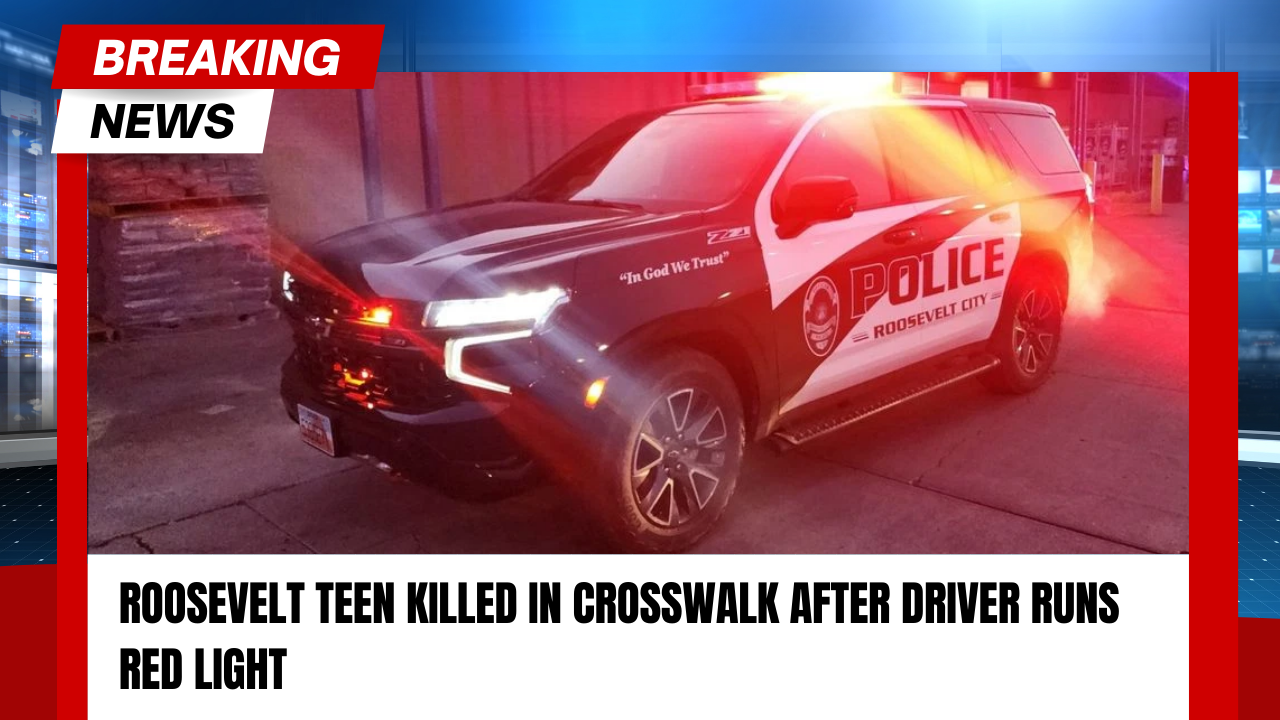
A 12-year-old Roosevelt girl identified by her community as Lydia Love was killed Wednesday afternoon after a driver ran a red light and struck her while she was crossing in a designated crosswalk. The tragic collision occurred just before 4 p.m. at the intersection of 200 East and 200 North in Roosevelt, marking the fifth fatal pedestrian crash in Utah since late November.
Details of the Wednesday Afternoon Collision
The Roosevelt City Police Department reported that Lydia was crossing 200 East in a designated crosswalk with a friend when a southbound vehicle disregarded a red traffic signal and struck her. Community members stated she was riding her scooter at the time of the collision.
Emergency responders transported Lydia to the Uintah Basin Medical Center in Roosevelt, where she awaited transport via LifeFlight to another medical facility. Tragically, she succumbed to her injuries before the medical helicopter could transport her.
The intersection where the collision occurred sits in a residential area near schools and parks where children frequently cross. The designated crosswalk and traffic signals are designed specifically to protect pedestrians at this location, making the driver’s alleged disregard for the red light particularly concerning.
Investigation Status and Legal Process
The Roosevelt City Police Department is conducting a comprehensive investigation in collaboration with the Utah Highway Patrol, with findings to be submitted to the Duchesne County County Attorney’s Office for review. As of Thursday morning, authorities had not announced whether charges would be filed or disclosed information about the driver’s identity or custody status.
The Roosevelt Police Department encouraged any witnesses to the collision to contact them at 435-722-2330. Witness statements often prove crucial in reconstructing traffic collisions and determining factors such as vehicle speed, traffic signal timing, and driver behavior leading up to crashes.
The investigation will likely examine multiple factors including the traffic signal cycle timing, potential distractions affecting the driver, weather and road conditions at the time, and whether alcohol or drugs played any role. Traffic camera footage from the intersection, if available, could provide definitive evidence about the signal status when the driver entered the crosswalk.
The Duchesne County Attorney’s Office will review the investigation findings to determine appropriate charges. Potential charges in cases involving drivers running red lights and causing fatal collisions can range from misdemeanor negligent homicide to second-degree felony automobile homicide, depending on factors such as whether the driver was impaired, speeding excessively, or engaged in other reckless behaviors.
Community Response and Support
Community members created a GoFundMe to support Lydia’s family, describing her as pure light who was outgoing, strong, full of joy, and the kind of child who naturally made the world around her feel warmer. The fundraising effort reflects the tight-knit nature of the Roosevelt community and the profound impact of losing a young life.
The Roosevelt City Police Department expressed their deepest condolences and prayers to the family during this tragic time. Local schools where Lydia attended or where her friends study will likely provide grief counseling resources to help students process the traumatic loss.
Roosevelt, a city of approximately 7,000 residents in Duchesne County, represents the type of close community where tragic events affecting one family reverberate throughout the entire town. The loss of a 12-year-old child particularly devastates communities, as young people’s deaths violate the natural order and rob families and friends of decades of shared future experiences.
Rising Pedestrian Fatality Concerns in Utah
Lydia’s death represents the fifth fatal auto-pedestrian accident in Utah since November 23, highlighting a concerning trend during the winter months when darkness arrives earlier and visibility conditions deteriorate. This clustering of pedestrian fatalities within less than two weeks suggests systemic safety issues requiring attention from traffic engineers, law enforcement, and policymakers.
The recent spate of pedestrian deaths includes diverse circumstances across different Utah communities. Each crash has its own unique factors, but the frequency suggests common underlying issues such as driver inattention, inadequate pedestrian infrastructure, poor lighting conditions, and behavioral factors affecting both drivers and pedestrians during winter months.
Utah consistently ranks among states with higher pedestrian fatality rates relative to population, with rural areas and smaller cities experiencing particular challenges. While urban areas like Salt Lake City have invested in pedestrian safety improvements including enhanced crosswalks, better lighting, and traffic calming measures, smaller communities often lack resources for comprehensive pedestrian safety infrastructure.
The Utah Department of Transportation maintains pedestrian safety initiatives including education campaigns, infrastructure improvements, and data analysis identifying high-risk locations. However, preventing pedestrian fatalities ultimately requires driver vigilance, especially at marked crosswalks and traffic signals where pedestrians have right-of-way.
Legal Rights of Pedestrians in Crosswalks
Utah law provides strong protections for pedestrians using marked crosswalks with traffic signals. When pedestrians cross with a walk signal or green light in their favor, drivers must yield and allow them to cross safely. Running red lights violates traffic laws and constitutes particularly dangerous behavior that frequently results in serious injuries or deaths.
Drivers who strike pedestrians in crosswalks while running red lights face both criminal prosecution and civil liability. Criminal charges address the public safety violation and seek appropriate punishment, while civil lawsuits filed by victims’ families seek compensation for medical expenses, funeral costs, lost future income, and emotional suffering.
In fatal pedestrian collision cases, families can pursue wrongful death claims against negligent drivers. These civil actions proceed independently from criminal prosecutions, with different standards of proof and objectives. Criminal cases require proof beyond reasonable doubt and focus on punishment, while civil cases require proof by preponderance of evidence and focus on compensating victims’ families for their losses.
Pedestrian Safety During Winter Months
The clustering of pedestrian fatalities in late November and early December corresponds with significant changes in daylight hours and weather conditions. Shorter days mean more pedestrians walk in darkness during evening commute hours, reducing visibility for both pedestrians and drivers.
Parents and schools should reinforce pedestrian safety education emphasizing the importance of wearing reflective clothing or bright colors when walking in low-light conditions. Children should understand that having the right-of-way does not guarantee safety, making it essential to verify drivers see them and are stopping before entering roadways.
Drivers must exercise heightened caution during winter months, particularly near schools, parks, and residential areas where children may be present. Reducing speed in areas with pedestrian activity, eliminating distracted driving behaviors, and maintaining full attention at traffic signals and crosswalks can prevent tragedies like the one that claimed Lydia’s life.
Traffic engineers and city planners should evaluate high-risk intersections for potential safety improvements including enhanced lighting, high-visibility crosswalk markings, pedestrian countdown signals, and in some cases, traffic cameras or speed enforcement to encourage compliance with traffic laws.
Broader Context of Traffic Safety
Motor vehicle crashes remain a leading cause of death for children and teenagers in the United States. While improvements in vehicle safety technology have reduced fatalities for vehicle occupants, pedestrians lack equivalent protective measures. When vehicles strike pedestrians, especially children, the size and weight differential typically results in catastrophic injuries.
Modern vehicle designs with higher front ends in trucks and SUVs have contributed to increased pedestrian fatality severity. These vehicles strike pedestrians higher on their bodies, causing more serious head and chest injuries compared to lower-profile sedan impacts.
Emerging vehicle safety technologies including automatic emergency braking with pedestrian detection show promise for reducing pedestrian collisions. However, these systems remain optional on many vehicles and may not function optimally in all conditions. Ultimately, preventing pedestrian deaths requires driver attention and compliance with traffic laws.
Support Resources for Grieving Community
Families and community members affected by Lydia’s death may benefit from grief counseling and support services. Schools typically provide crisis counselors following traumatic events affecting students, while community mental health centers offer specialized bereavement services.
Children and teenagers may struggle to process grief differently than adults, sometimes expressing emotions through behavioral changes rather than verbal communication. Parents and educators should watch for signs including withdrawal from activities, academic performance changes, sleep disturbances, or expressed anxiety about safety.
Community gatherings such as vigils or memorial services help people collectively mourn losses while supporting affected families. These events provide opportunities for shared grieving and can help communities begin healing processes following tragedies.
Conclusion
Lydia Love’s death represents an irreplaceable loss for her family, friends, and the Roosevelt community. The 12-year-old was following proper pedestrian safety protocols by crossing in a designated crosswalk with traffic signals when a driver’s alleged decision to run a red light ended her life.
The ongoing investigation by Roosevelt Police and Utah Highway Patrol will determine what criminal charges, if any, are appropriate based on the evidence. The Roosevelt Police Department remains committed to conducting a thorough investigation, though no actions can restore what was lost or adequately compensate the family for their grief.
As Utah experiences its fifth pedestrian fatality in less than two weeks, the tragedy underscores urgent needs for enhanced pedestrian safety measures, increased driver awareness, and continued enforcement of traffic laws protecting vulnerable road users. Every pedestrian death represents a preventable tragedy, with most occurring due to driver error, inattention, or deliberate traffic violation rather than unavoidable circumstances.
Communities across Utah must renew commitments to pedestrian safety through infrastructure improvements, education initiatives, and behavioral changes that prioritize protecting people walking and crossing streets. For Lydia’s family and the Roosevelt community, such improvements come too late, but may help prevent other families from experiencing similar devastating losses.