
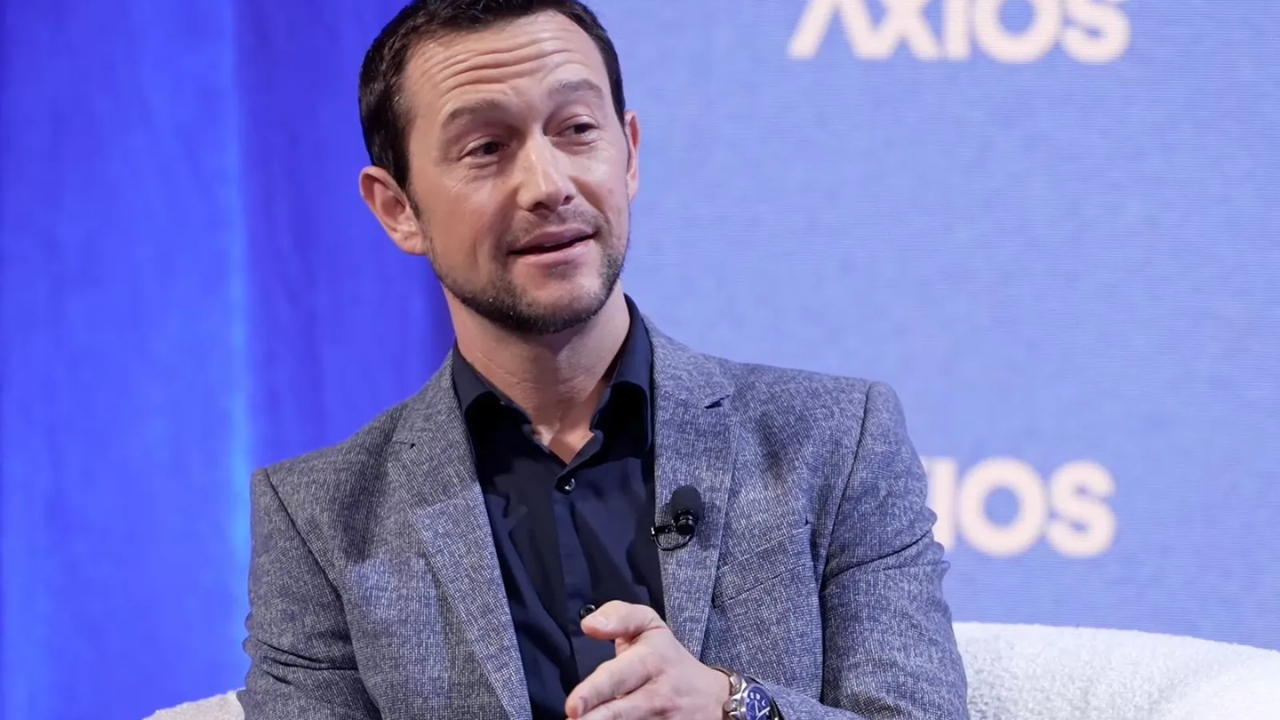
Hollywood actor and technology entrepreneur Joseph Gordon-Levitt delivered a powerful message about artificial intelligence risks during the 2025 Utah AI Summit in Salt Lake City, drawing from both his industry experience and concerns as a father of young children.
The Emmy-winning performer, recognized for roles in blockbuster films including Inception and The Dark Knight Rises, spoke candidly on Tuesday about the intersection of technology, child safety, and corporate responsibility in the rapidly evolving AI landscape.
Tech Founder Sounds the Alarm
Gordon-Levitt brought a unique perspective to the conference, having founded the collaborative creative platform HITRECORD years before artificial intelligence dominated mainstream conversations. This early exposure to digital technology platforms gave him insight into emerging threats that many of his Hollywood contemporaries lacked.
“I had an advantage over some colleagues in the entertainment industry when it came to understanding these issues,” Gordon-Levitt explained during his presentation at the Salt Palace Convention Center.
His dual identity as both a filmmaker and father of two young children has driven his advocacy on AI safety issues. The combination of professional knowledge and parental instinct has transformed him into an outspoken voice calling for stronger regulations.
“Despite my concerns, I remain hopeful about the technology’s potential benefits for my generation and my children’s future,” he stated. “However, I’m deeply worried that without proper safeguards beyond profit motives, AI could cause more damage than benefit, particularly for young people. That fear has motivated me to speak out publicly.”
Call for Government Intervention
The actor explicitly endorsed government involvement in establishing AI regulations, with specific emphasis on chatbot technology. He emphasized that regulatory focus should target implementation rather than development processes.
Utah Governor Spencer Cox echoed Gordon-Levitt’s sentiments during a separate panel discussion earlier that day, drawing clear boundaries around acceptable AI applications.
“Government shouldn’t dictate how companies develop AI technology,” Cox stated. “But the moment you deploy those tools to provide my child with sexualized chatbot interactions, it becomes our concern as parents and as government. We will intervene and establish clear guidelines about permissible uses.”
Meta Under Fire for Chatbot Policies
Gordon-Levitt gained national attention in September when he appeared in a New York Times opinion video challenging Meta’s AI chatbot practices and directly confronting statements by Meta CEO Mark Zuckerberg.
The video referenced leaked internal Meta documentation outlining chatbot behavioral guidelines that allegedly authorize the company’s AI systems to participate in conversations with minors that are described as having romantic or sensual elements.
“The language in these documents is shocking in its explicit nature,” Gordon-Levitt said. “The way this corporation is engineering synthetic intimacy to capture young users’ attention is deeply troubling. Ultimately, Meta operates an advertising-driven business model. The longer they maintain user attention, the greater their revenue becomes. Creating relationships with users represents an effective attention-capture strategy, which these AI companions are clearly designed to accomplish.”
Threats to Human Connection
Gordon-Levitt’s concerns extend beyond immediate safety issues to fundamental questions about civilization’s foundation. He argues that chatbot technology threatens the essential nature of human relationships and social development.
While current human-chatbot interactions occur primarily through text, he warned that photorealistic video interactions will arrive soon, intensifying the problem.
“When someone’s understanding of conversation and relationships develops through chatbot interactions, we’re creating a society of people who lack empathy, perspective, and the capacity for genuine human connection,” Gordon-Levitt explained. “Where does that leave our civilization? The potential outcomes seem genuinely frightening.”
Utah’s Leadership in Digital Protection
Gordon-Levitt praised Utah’s pioneering work in consumer data protection, specifically highlighting the state’s Minor Protection in Social Media Act despite ongoing legal challenges preventing its implementation.
The legislation would have mandated that social media platforms activate maximum privacy settings by default on accounts belonging to Utah minors. Companies would need to implement age verification systems and limit the searchability of children’s accounts, including preventing search engine indexing.
Margaret Busse, Executive Director of the Utah Department of Commerce, emphasized recent legislative achievements including HB418 and the Utah Digital Choice Act, which grant users control over their social media data.
These regulations not only empower individual users but also introduce competition into the social media marketplace, addressing a concern Gordon-Levitt considers critical.
Digital Feudalism and Data Ownership
Gordon-Levitt drew historical parallels to explain current digital power imbalances, comparing today’s data economy to medieval feudal systems.
“In the contemporary digital environment, data and content have become as valuable as land once was,” he observed. “All revenue flows from brokering this data and content. We as individuals generate enormous amounts of data and content but own none of it. Everything belongs to a small number of extremely powerful corporations.”
He compared this concentration of power to feudal kingdoms where monarchs controlled all land while common people who lived and worked on that land possessed no ownership rights.
“The digital realm should mirror our modern society rather than feudal systems,” Gordon-Levitt argued. “America’s greatness stems from eliminating monarchy and enabling ordinary people to own property and build their own futures. We need a comparable revolution online, similar to how the American Revolution transformed society two and a half centuries ago.”
A Vision for Democratic Digital Spaces
The actor and entrepreneur’s remarks at the 2025 Utah AI Summit reflected growing concerns among technology observers, parents, and policymakers about AI’s societal impact, particularly regarding vulnerable populations like children.
His message emphasized the urgent need for balanced approaches that encourage innovation while establishing protective frameworks, especially for young users who may be most susceptible to AI-driven manipulation and exploitation.
As artificial intelligence capabilities continue expanding rapidly, voices like Gordon-Levitt’s serve as important reminders that technological advancement must align with human values and societal wellbeing rather than purely commercial interests.