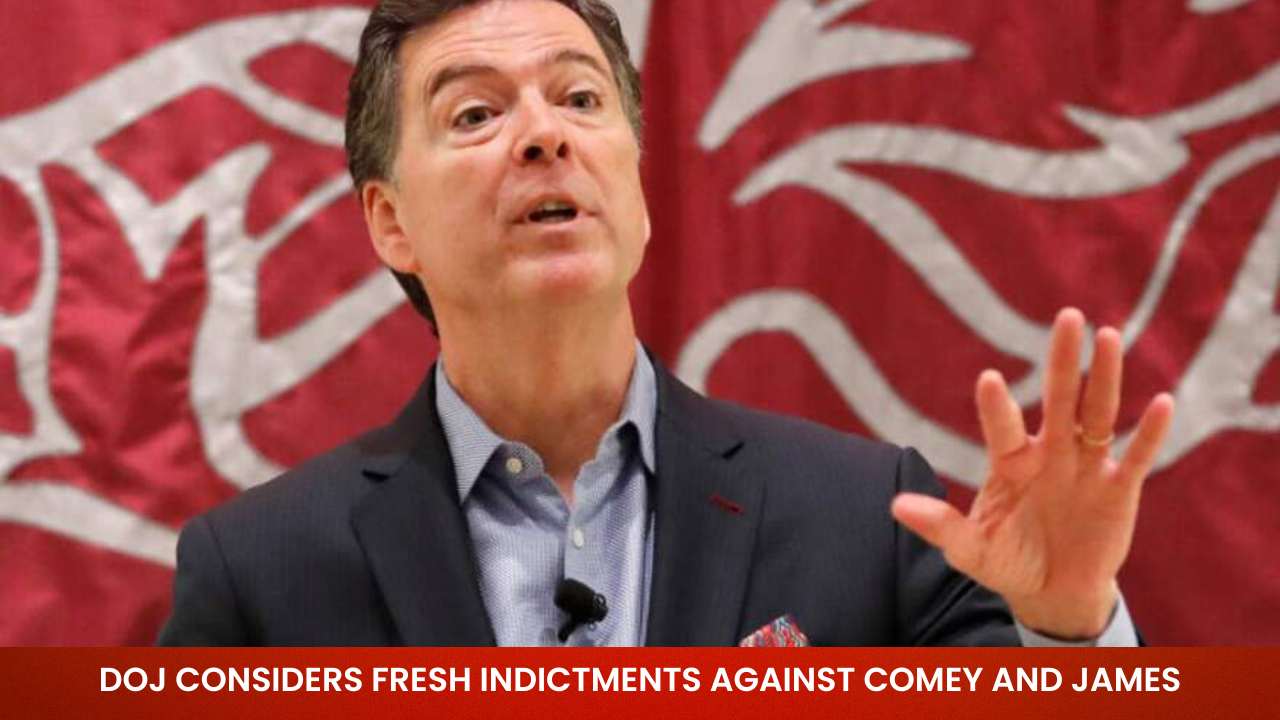
The Department of Justice is evaluating whether to pursue new criminal charges against former FBI Director James Comey and New York Attorney General Letitia James following a federal judge’s dismissal of their original indictments last week. The development marks the latest chapter in a politically charged legal saga that has drawn intense scrutiny from both critics and supporters of the prosecutions.
Background of the Dismissed Cases
A federal judge ruled last Monday that the appointment of interim U.S. Attorney Lindsey Halligan in Alexandria, Virginia, was invalid, effectively nullifying all actions she took in that capacity. Judge Cameron McGowan Currie determined that all proceedings flowing from Halligan’s improper appointment, including the indictments against Comey and James, constituted unlawful exercises of executive power.
The original charges against Comey centered on allegations that he made false statements to Congress and obstructed a congressional proceeding. Prosecutors accused the former FBI director of misleading testimony and authorizing improper disclosures to news media. James faced separate allegations of bank fraud and making false statements on mortgage applications.
The Constitutional Question
The dismissals hinged on a technical but significant constitutional issue regarding how interim federal prosecutors can be appointed. Federal law permits the Attorney General to appoint interim U.S. attorneys for only 120 days unless they receive Senate confirmation. Defense attorneys successfully argued that this 120-day window had already expired when Halligan took the position.
Judge Currie found that Erik Siebert’s 120-day clock as interim U.S. Attorney began on January 21, 2025, meaning the appointment window closed in May. When Siebert was removed from his position in September, district court judges should have handled any new interim appointment rather than Attorney General Pam Bondi.
The judge expressed concern about the broader implications of allowing such appointments. In her ruling, Currie warned that accepting the government’s position would mean any private citizen could be sent into a grand jury room to secure an indictment as long as the Attorney General approved after the fact.
Halligan’s Controversial Appointment
Lindsey Halligan, described in court documents as a former White House aide with no prior prosecutorial experience, was the sole prosecutor to present both cases to grand juries and sign the indictments. This unusual arrangement raised immediate red flags among legal observers and defense attorneys.
Career prosecutors in the U.S. Attorney’s office had previously recommended against charging Comey and James, citing insufficient evidence for securing convictions. The refusal of experienced prosecutors to participate in the cases underscored concerns about their legal foundation.
President Trump announced Halligan’s appointment on September 20, just one day after removing Siebert from the position. Siebert had resisted pressure to prosecute Comey and James before being forced out, creating the appearance that his replacement was specifically chosen to pursue these particular cases.
Political Context and Motivations
The prosecutions emerged against a backdrop of longstanding tensions between Trump and both defendants. Comey, as FBI director, oversaw investigations into alleged connections between Trump’s 2016 campaign and Russian interference, ultimately leading to his firing in 2017.
James has been equally prominent as a Trump adversary. The New York Attorney General successfully sued Trump and his family real estate business for fraud, securing significant judgments against the former president and his organization.
Both Comey and James have consistently characterized their prosecutions as politically motivated retaliation. Following the dismissal, Comey wrote on social media that the case demonstrated why the President cannot use the Department of Justice to target political enemies, calling such actions fundamentally un-American.
James’ attorney, Abbe Lowell, stated his client would challenge any further politically motivated charges through every lawful means available. James herself has described the allegations as baseless throughout the proceedings.
Current Status and Next Steps
Sources familiar with Justice Department deliberations indicate prosecutors could present new indictments to grand juries as early as this week. The dismissals were rendered without prejudice, meaning prosecutors retain the legal option to refile charges under proper procedural circumstances.
However, significant obstacles remain, particularly regarding Comey’s case. The five-year statute of limitations on charges related to Comey’s September 2020 congressional testimony expired on September 30, 2025. Defense attorneys argue that because the original indictment was void, prosecutors have no additional time to bring new charges.
Judge Currie indicated in her opinion that she agreed with this interpretation, noting that everything Halligan did before the grand jury was invalid, including her presentation to the grand jury. This legal reasoning could prevent any future prosecution of Comey on the same allegations.
The timing constraints appear less restrictive for the James case, though her defense team is prepared to mount aggressive challenges to any renewed prosecution efforts.
Administrative Response and Appeals
Attorney General Pam Bondi announced that the Justice Department would appeal the judge’s ruling, though as of early December, no formal notice of appeal had been filed with the court. Federal procedural rules provide 30 days for such notification.
White House Press Secretary Karoline Leavitt characterized Judge Currie’s decision as an unprecedented action to shield the defendants from accountability. She emphasized that the administration views the dismissals as based on technical grounds rather than the merits of the underlying allegations.
Legal experts have suggested that the most straightforward path forward would involve replacing Halligan with a properly appointed prosecutor. Legal analysts noted that having Halligan step down would resolve the procedural complications, though the Trump administration has shown no indication of pursuing this option.
Investigative Issues and Grand Jury Concerns
Beyond the appointment questions, the prosecutions faced other significant problems that emerged during judicial scrutiny. Judge William Fitzpatrick identified what he termed a disturbing pattern of profound investigative missteps, including misleading statements from the prosecutor and improper use of search warrants.
Court records suggested the final indictment against Comey had never been fully presented to the grand jury as required by law. In separate proceedings, Justice Department officials acknowledged this procedural failure.
Judge Fitzpatrick also noted that the grand jury transcript in Comey’s case appeared incomplete, raising questions about whether proper procedures were followed during the indictment process.
Broader Implications for the Justice Department
The dismissals and potential refilings have sparked broader discussions about the appropriate use of prosecutorial power and the independence of the Justice Department. Legal scholars have observed that when politically motivated prosecutions meet the scrutiny of courtrooms, they tend to encounter significant obstacles.
The cases revealed that qualified prosecutors at the Justice Department who understand and respect legal procedures have been unwilling to carry out certain demands from political leadership. The refusal of career prosecutors to participate in the Comey and James cases exemplifies this dynamic.
Deputy Attorney General Todd Blanche defended the department’s actions, rejecting characterizations of the prosecutions as weaponization of the justice system. He maintained that the underlying facts in both cases remain unchanged despite the procedural dismissals.
What Happens Next
The coming days will reveal whether prosecutors move forward with fresh indictments. Any new charges would need to be presented by a lawfully appointed U.S. Attorney, likely requiring either a permanent appointment confirmed by the Senate or an interim appointment properly authorized by the district court judges.
For Comey, the statute of limitations issue presents a potentially insurmountable barrier to renewed prosecution on the same allegations. His legal team has made clear they will vigorously contest any attempt to circumvent this time limitation.
James faces a different timeline but appears equally prepared to fight any new charges. Her legal representation has extensive experience in high-profile cases and has already demonstrated willingness to challenge every aspect of the prosecution.
The broader question remains whether the Justice Department will continue pursuing cases that experienced prosecutors have deemed problematic. The dismissals have provided ammunition to critics who argue these prosecutions represent inappropriate politicization of federal law enforcement.
Supporters of the prosecutions maintain that both cases involve legitimate allegations of criminal conduct that warrant investigation and potential trial. They view the dismissals as technical impediments that should not prevent accountability if genuine wrongdoing occurred.
As this legal drama continues, it highlights fundamental tensions between political accountability, prosecutorial independence, and the proper administration of justice. The resolution of these cases will likely influence how future administrations approach the investigation and prosecution of political figures, regardless of party affiliation.