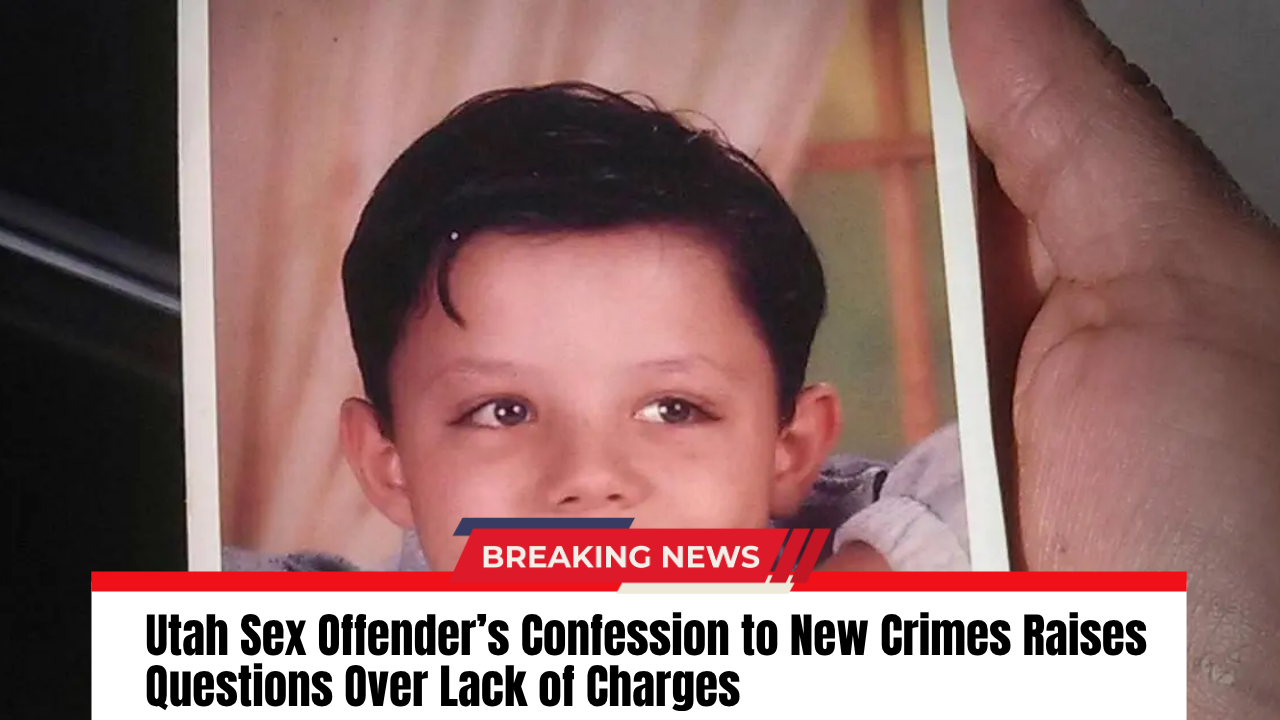
A convicted child sex offender in Utah confessed to committing additional crimes against minors but never faced new charges — a failure that experts are calling a rare and troubling breakdown in the justice system.
Confession Ignored Despite Details
In July 2022, Wesley Salisbury, a convicted sex offender serving time in San Juan County Jail, voluntarily confessed to two uncharged sexual crimes involving previously undisclosed victims. According to body camera footage obtained by KSL-TV, Salisbury provided specific names, locations, and dates of his offenses, hoping to “balance the scales” and ensure all his victims received justice.
A deputy from the San Juan County Sheriff’s Office documented the confession in a three-page report. However, records show no follow-up investigation or communication with the other counties where Salisbury admitted his crimes occurred — Uintah and Duchesne.
Former FBI agent and prosecutor Greg Rogers called the lack of action “inexplicable.” “You don’t need a year to corroborate a confession — you need days,” he told investigators. “This should have been treated with urgency.”
Paroled Despite Confession and Victim Pleas
Less than a year later, Salisbury appeared before the Utah Board of Pardons and Parole. During his 2023 hearing, he acknowledged having five total victims — only three of whom were linked to his conviction. Despite his admission and objections from survivors, the board granted his parole, moving his release date from July 2024 to February 2024.
Salisbury served just over five and a half years of a six-to-life sentence, receiving early release credit for his participation in prison rehabilitation programs.
Repeated Attempts to Come Clean
In February 2024, shortly before his release, Salisbury again confessed — this time to Taylorsville Police — that he had previously disclosed his uncharged crimes but had not heard back from authorities. “I was just trying to balance all the scales,” he told officers.
Despite these repeated confessions, Taylorsville Police closed their case after contacting the victims, who declined to pursue charges. Prosecutors opted not to file new cases, citing lack of cooperation.
Yet experts argue that the suspect’s own confession should have been sufficient grounds for prosecution. “There are numerous cases where victims don’t want to go forward, but charges are still filed,” Rogers noted. “This suspect was practically begging to be held accountable.”
Administrative Missteps and Accountability Gaps
Emails obtained by KSL reveal that law enforcement agencies failed to coordinate jurisdictionally. San Juan County deputies left messages for Uintah and Duchesne counties but received no response. Both counties later confirmed having no record of any investigation related to Salisbury.
Sheriff Lehi Lacy defended his department, stating they could not file charges because the alleged crimes occurred outside their jurisdiction. But experts, including Rogers, dismissed that reasoning: “That’s administrative nonsense that should never interfere with a child sexual abuse case.”
A Rare and Troubling Case
Salisbury’s case highlights systemic weaknesses in communication between jurisdictions and a broader failure to prioritize child sexual abuse investigations — even when the offender confesses.
Neither Salisbury nor his attorney have commented on the ongoing scrutiny surrounding his parole.
For those affected by child abuse or seeking support, resources are available through the Utah Domestic Violence Coalition and the Utah Division of Child and Family Services.